

When the Diocese of Parramatta first established its network of Deanery Pastoral Councils in 2017, the vision was, in many ways, ahead of its time. Long before synodality was part of our everyday language, our Diocese had already put in place a three-tiered system of Parish, Deanery and Diocesan Pastoral Councils.
These advisory bodies were designed to help the people in our communities participate more meaningfully in the life of the Church, especially through their involvement in local discernment and decision-making around pastoral priorities and mission.
Now, almost a decade on, that original vision has been through a thorough process of review and renewal, one shaped by consultation, prayerful reflection and no small amount of honest conversation about what has worked, what hasn’t, and what a truly synodal Church could look like in Western Sydney and the Blue Mountains.

A view of the 2024-2028 Diocesan Pastoral Plan for a Synodal Church during its official launch at the Western Sydney Conference Centre, Penrith. Image: Alphonsus Fok/Diocese of Parramatta
An Idea Ahead of the Wave
As part of the renewal project Br Graham Neist FMS was asked to support the process as a formator on reflection days with the councils and became a critical friend sharing reflections with the Diocese’s Mission Enhancement Team.
He observed early on that the insight to imagine and set up Deanery Pastoral Councils was “ahead of its time“, anticipating the wave of synodality that would later sweep the universal Church.
But being ahead of the wave brings its own challenges. When something is built before the surrounding culture and language have caught up, the vision can remain clear even as the details of implementation need adjusting along the way.
By 2022–23, it was evident that the five Deanery Pastoral Councils then in operation were functioning at very different levels of effectiveness. Some members were unsure of their purpose while others found the connection between the Council and their local Catholic communities weak. Underneath some practical confusion, deeper questions began emerging about the different understandings of Church, of authority, and of what it means to be an advisory, rather than governing, body.
Listening at Every Level
In March 2023, Br Graham and I met with Bishop Vincent Long OFM Conv to discuss a way forward. Central to that conversation was a clarification that has since shaped the whole renewal: Pastoral Councils are not, and cannot be, part of a hierarchical reporting line, with authority flowing down from one level to the next. Rather, communication travels up and down between Parish, Deanery and Diocesan levels, while advice and collaboration happen horizontally with the Parish Priest, the Dean and the Bishop, each drawing on the wisdom of their respective councils.
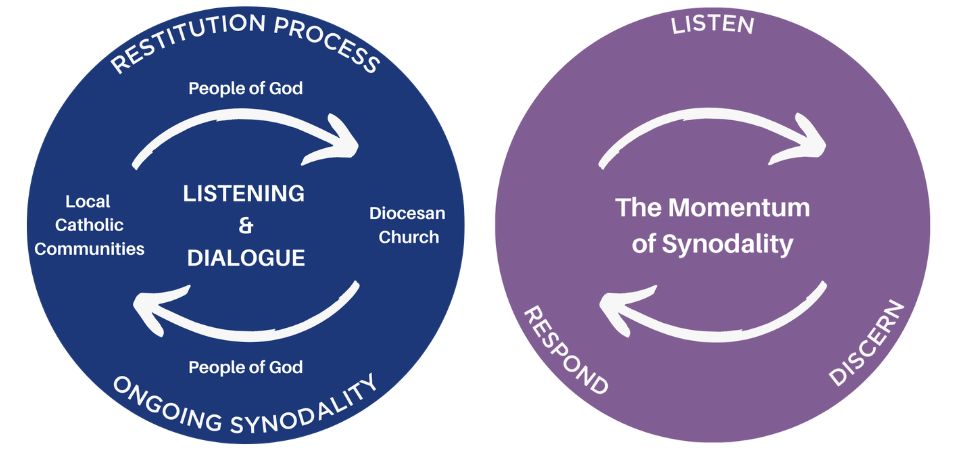
Out of that meeting came a commitment to an extensive review of the Deanery Pastoral Councils . Through 2023, this took shape as a genuine exercise in listening: gatherings with Deanery Pastoral Council executives and chairs; an invitation for members to extend or conclude their terms with dignity during a liminal season; and an emerging framework of listening, discerning and responding based on the restitution process from the universal synod, an ongoing rhythm of dialogue, at every level, with every person.

Members of the parish pastoral council of Our Lady of the Way Parish, Emu Plains. Image: Supplied
That rhythm or momentum of synodality – listening, discerning, responding – is more than just a framework, but in fact flows from something deeper in our tradition, the ancient Christian understanding of perichoresis, the mutual indwelling and “circular dance” of the Trinity. Or as Bishop Vincent put it in his Welcome for the Diocesan Pastoral Plan: “In this way, being synodal is synonymous with being Catholic; it means enacting a circular, symbiotic, co-operative and relational model as that of the Trinity itself.”
Just as the Persons of the Trinity exist in a flow of self-giving love, so too a synodal Church is called into relationship and a continual movement of listening discerning and responding, a theology of communion translated into the practical life of Pastoral Councils.
What the Consultation Revealed
The review culminated in a formal consultation for the Second Assembly of the Synod on Synodality in March 2024, gathering Pastoral Council executives and chairs from across the Diocese. A pre-survey, a face to-face gathering, and a post-event survey together painted a rich picture of a network in its seventh year of operation and ready for renewal.
The feedback highlighted the following four common convergences:
- Untapped potential: for a variety of factors, the purpose and contribution of participatory bodies do not fully realise the potential of their unique voice.
- Clergy support: The success of participatory bodies depends on the support, attendance and engagement of their Clergy leaders.
- Formation in synodality: To enhance impact, members of participatory bodies are seeking formation and experience in practicing discernment and synodality.
- Training: As volunteer contributors, there is an appetite for training and further support to grow in their role, considering they are leaders co-responsible in mission.
Participants spoke candidly. Some described feeling like “in-person suggestion boxes” when clergy held an unspoken veto over decisions. Others noted that the same small group of committed parishioners often wears “many hats” across a parish’s liturgical, catechetical and administrative life, a pattern that can quietly discourage new volunteers from stepping forward. More than half of survey respondents had served for over six years, a sign both of deep commitment and of a network that needed fresh energy and clearer pathways for succession.
Yet alongside the honest critique came stories of real hope: a shared desire for genuine co-responsibility, and confidence that these councils connecting parish, deanery and diocese remain a vital expression of communion and participation at the service of mission in a synodal Church.

Participants in discussion during a Diocesan Plan Think Tank session at Holy Family Parish, Emerton. Image: Diocese of Parramatta
A New Deanery Structure
This renewal did not happen in isolation from the practical life of the Diocese. Vicar General Fr Peter Williams AM issued a decree establishing a new Deanery structure, effective 5 March 2025. The Diocese’s parishes were reorganised into seven Deaneries: Nepean, Hawkesbury, Blacktown, Mountains, Cumberland, Parramatta and Hills, each under its own Dean, providing a clearer and more geographically coherent foundation on which to rebuild the Deanery Pastoral Councils.
A Renewed Vision
Drawing together the fruits of all this consultation and using the best available pastoral research, I developed A Renewed Vision for Pastoral Councils Parramatta Diocese in 2025. It reaffirms the three-level structure – Parish Pastoral Councils, Deanery Pastoral Councils and the Diocesan Pastoral Council – as having in common the roles of being representative, synodal, advisory bodies, each mission-focused and visionary in nature, while sharpening their own particular role of each level.
Parish Pastoral Councils remain focused on discerning with their Parish Priest the pastoral priorities of the local community. Deanery Pastoral Councils are tasked with listening deeply across their local Catholic communities, sharing the successes and challenges of implementing the Diocesan Pastoral Plan, and acting as a conduit of formation and information between parish and Diocese. The Diocesan Pastoral Council continues to advise the Bishop on the pastoral life and missionary direction of the whole Diocese.
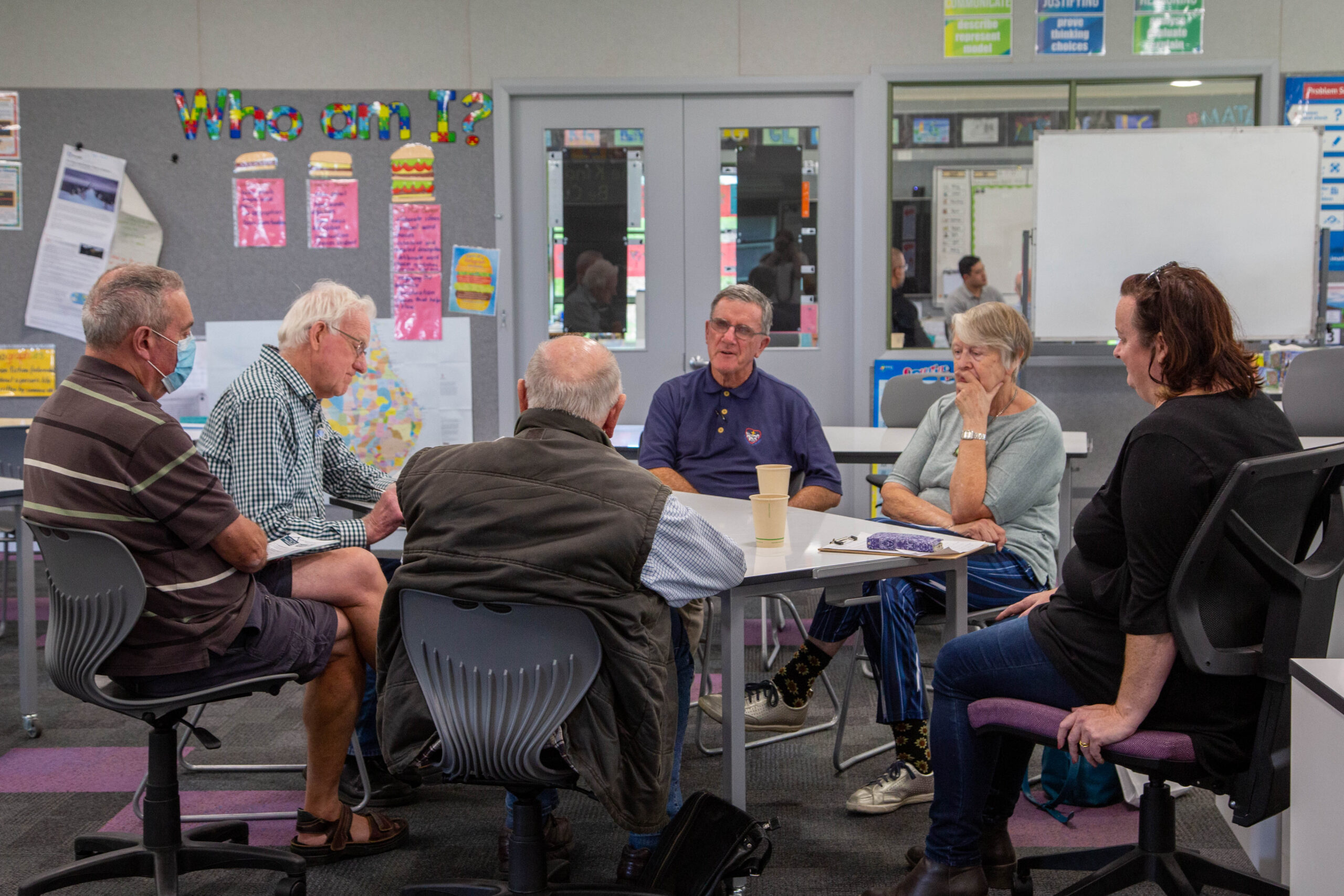
Parishioners from the various parishes of the Blue Mountains in discussion during the ‘Blue Mountains Catholics Take Action’ event at St Thomas Aquinas Primary School, Springwood in 2022. Image: Diocese of Parramatta
The renewed model gives Deanery Pastoral Councils clearer shape: three-year terms for members, four council meetings per year, and a simple but disciplined practice for closing every meeting with a reflection that distils three main discussion points into a communication to share more widely with their parishes and other councils. The most important work of Deanery Pastoral Councils is listening and so the members are also tasked with developing their own listening questions ahead of the next meeting, then doing the work of listening to those in their communities who are most affected by any given pastoral reality.
For example, if a council finds themselves discerning the need to support young families in their parishes, the members will craft a question that they can pose to the real young families in their communities to better inform the discernment of the Deanery Pastoral Council meeting. Then the councillors take that discernment and return to their parishes to develop a response, such as a mission plan to engage young families in their faith community.

Members of the St Anthony of Padua Parish Pastoral Council during their annual general meeting and parish planning day at St Antony of Padua Primary School, Girraween. Image: Supplied
Ongoing Listening, Ongoing Renewal
Perhaps the most significant part of this renewal is that it does not treat itself as finished. As the letter inviting new members to the reconstituted Deanery Pastoral Councils make clear, these bodies exist to strengthen the ongoing listening and discernment of the needs and pastoral priorities in our local Catholic communities, a task that is never complete!
Bishop Vincent has described this time in the life of the Diocese as one of moving “toward an era of Baptismal Leadership and Missionary Discipleship” that is, all of the baptised being called into our rightful place of leadership and discipleship, always focused on the mission of the church in the world. The Renewed Vision for Pastoral Councils, refined through years of honest listening, theological and pastoral reflection and practical adjustments is one of the concrete ways through which that vision continues to take shape in the Diocese of Parramatta, parish by parish, deanery by deanery, one conversation at a time.
Alison Ryan works in Formation and Engagement, as part of the Mission Enhancement Team in the Diocese of Parramatta.
This renewed model for Pastoral Councils is an example of the Diocesan Pastoral Plan priorities of Mission, Formation and Listening, Dialogue & Discernment. Visit Synodality to find out more.