

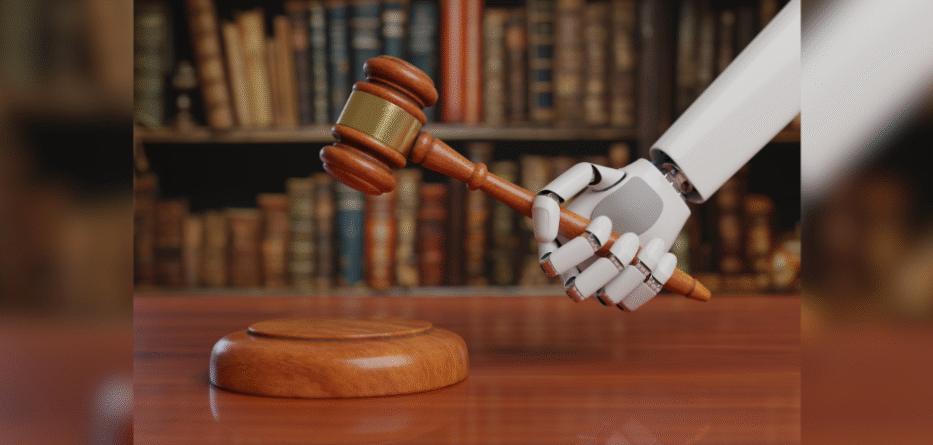
In 2016, the Wisconsin Supreme Court upheld a six-year prison sentence that had been set, in part, based on a risk score generated by proprietary software.
The defense had asked how the algorithm worked. The answer: trade secret. The defendant had to accept punishment without being able to challenge one of the criteria that produced it.
Last Tuesday, in Rome, Cardinal Pietro Parolin, the Vatican’s secretary of state, put this kind of scenario at the center of an address at the Pontifical Gregorian University, marking the 150th anniversary of its Faculty of Canon Law.
He drew on the fifth chapter of Magnifica Humanitas, Pope Leo XIV’s encyclical on artificial intelligence (AI).
In 1891, Leo XIII addressed the Industrial Revolution in Rerum Novarum; his successor is addressing the AI revolution.
The document has been working its way deep into Church circles and into the worlds of politics, economics, and technology, wherever people are asking what will become of our humanity.
Parolin’s was a jurist’s argument. A ruling has to give its reasons: the judge explains why, and the loser can contest the explanation.
Hand the decision to a predictive system, and the reasoning disappears; law dwindles into an efficient technique, emptied of justice. The encyclical calls this a “culture of power.”
The second point concerns who holds that power.
Technological power today, Parolin observed, wears a largely private face: transnational corporations with more resources than many governments.
Meanwhile, the instruments states once used to restrain force, such as the separation of powers and the rule of law, arrive too late. This is the most delicate matter of all, the relationship between technology and power.
And it is worth noticing that the Church is the one raising the question and raising it squarely.
Legal systems rooted in traditions far apart are trying to respond.
The European Union classifies AI systems used in the administration of justice as “high-risk.”
In March, Zhang Jun, the president of China’s Supreme People’s Court, told the National People’s Congress that AI must remain an aid in the courts and that only judges can be accountable for decisions.
Setting down the principle matters. Verifying it is harder once a system that summarizes and suggests has slipped into a judge’s work before he notices.
To the jurists and diplomats in the hall, the cardinal offered three criteria drawn from the encyclical: disarm words; see through the eyes of the victims; and cultivate a healthy realism that neither reduces politics to morality nor surrenders it to violence, but works through credible institutions and verifiable guarantees.
He also recalled that Leo XIV asks us to move beyond the theory of “just war,” because modern weapons produce effects that no one can contain.
In truth, justice is decided when an algorithm is designed, long before any case reaches a courtroom.
Leo XIV asks us to “be a body,” to act together, so that whoever asks why a sentence was handed down will still find someone—a human being—to answer.
With thanks to Antonio Spadaro SJ and Global Catholic, where this article originally appeared.