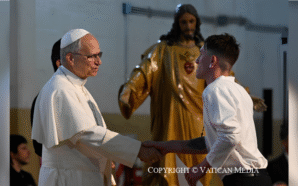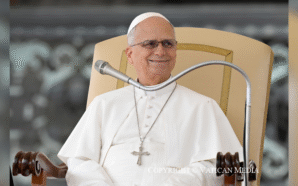


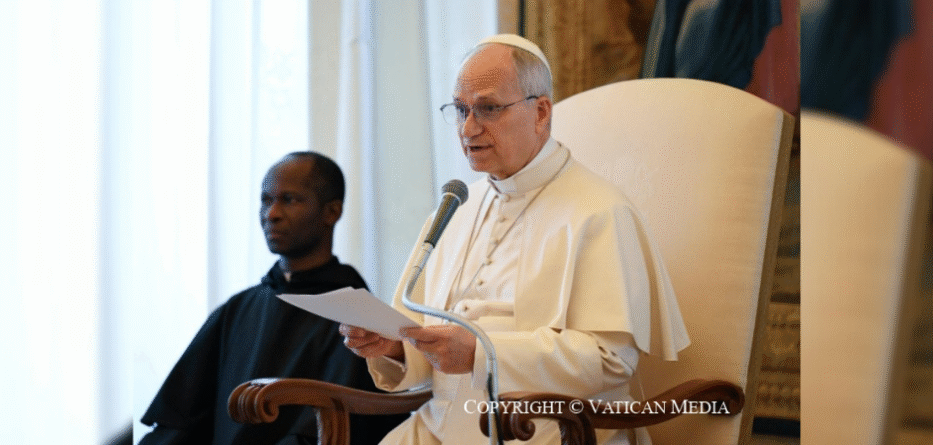
“Someone who says, ‘I’m against abortion,’ but says, ‘I’m in favour of the death penalty’, is not really pro-life” – Pope Leo XIV.
What 1000 comments on the death penalty taught me about our preaching.
On the evening of September 30, the State of Tennessee tried to put Christa Pike to death for a brutal murder she committed in 1995. It failed. Strapped to the gurney, she told the witnesses, “My arm feels like it’s about to bust.” The lethal drug was administered, the curtains were closed and opened and closed again, and more than an hour later she was still breathing. She was taken to a hospital in critical condition, where the same state that had been trying to kill her began trying to save her life. The governor has since paused the remaining executions for the year and ordered an outside review. The prison warden has subsequently resigned. It was Tennessee’s second failed execution in five months.
That is what prompted me several days ago to post on Facebook a simple meme seen above. It carried a single sentence from Pope Leo XIV, spoken to reporters outside Castel Gandolfo on September 30, 2025, one year to the day before that gurney in Tennessee: “Someone who says ‘I’m against abortion but says I am in favor of the death penalty’ is not really pro-life.”
As of this writing that post has drawn some 4,500 likes and more than 1000 comments and I’m still counting as I write. I keep my posts public by design. I have no interest in speaking only to the choir. That means I cannot sort the comments into Catholic and non-Catholic, and it means I hear things I would never hear in a parish hall. What I heard this time I found interesting, unsettling, and extremely instructive.
The pushback was vigorous, and it ran along a very few lines. The Pope is an “antipope,” a “false prophet,” a man who “hasn’t read his Bible.” God “has no problem with capital punishment.” And above all, repeated in hundreds of variations: the baby is innocent, and the person on death row deserves what he gets.
I do not write to scold the commenters. I write because their comments are a mirror, and what I see in that mirror is us: the priests and teachers of the faith. We have done a fine job of conveying what the Church teaches about the evil of abortion. We have done a terrible job of conveying what she teaches about the dignity of every human person, without qualifiers.
“The baby is innocent”
Let me begin by granting what is true in the objection. The unborn child is innocent, and the murderer is not. No one disputes it. The Church does not dispute it, and neither does the Pope. One commenter wrote, in capitals, that abortion is INTRINSICALLY evil and capital punishment is not. On the technical point he is correct: the Church has not placed the two in the same moral category.
But notice what the objection assumes. It assumes that the right to life is something we earn by innocence and forfeit by guilt. That is precisely what the Church denies. Human dignity is not a wage. It is not conferred by the state or by good behavior, and so it cannot be revoked by the state or by bad behavior. It comes from being made in the image and likeness of God, and the image of God is not erased by sin, not even by heinous sin.
This is not a novelty of recent pontificates. St. John Paul II, reflecting on the mark God placed on Cain, wrote in Evangelium Vitae: “Not even a murderer loses his personal dignity, and God himself pledges to guarantee this.” In St. Louis in 1999 he said that “the dignity of human life must never be taken away, even in the case of someone who has done great evil.” The Catechism, as revised in 2018, draws the conclusion: “the death penalty is inadmissible because it is an attack on the inviolability and dignity of the person.”
One comment described those on death row as “subhuman savages.” I quote it because it says aloud what the innocence argument quietly requires. If there is such a thing as a human being who has become subhuman, then dignity is conditional, and once it is conditional for the guilty it is conditional for everyone. That is the very logic by which the unborn child was declared less than a person. The pro-life cause cannot survive that logic. It can only stand on the ground that there are no exceptions.
“Pope Leo ought to read the Old Testament”
The second great theme was Scripture, and almost always the Old Testament. The Law of Moses prescribes death for the murderer; therefore God approves of the death penalty; therefore the Pope is contradicting God.
A Catholic does not read the Bible that way. We read the Old Testament in the light of the New, because Christ is the one who fulfills it. “Do not think that I have come to abolish the law or the prophets. I have come not to abolish but to fulfill” (Matthew 5:17). And what fulfillment looks like he tells us a few verses later:
“You have heard that it was said, ‘An eye for an eye and a tooth for a tooth.’ But I say to you, offer no resistance to one who is evil. When someone strikes you on [your] right cheek, turn the other one to him as well.” (Matthew 5:38-39)
“You have heard that it was said, ‘You shall love your neighbor and hate your enemy.’ But I say to you, love your enemies, and pray for those who persecute you.” (Matthew 5:43-44)
“You have heard that it was said… But I say to you.” That is the Lord himself teaching us that revelation unfolds, and that the earlier word is not the last word.
Even the Old Testament is less tidy than my commenters suppose. The first murderer in Scripture is not executed. “So the LORD put a mark on Cain, so that no one would kill him at sight” (Genesis 4:15). Through Ezekiel God declares, “I take no pleasure in the death of the wicked, but rather that they turn from their ways and live” (Ezekiel 33:11). And when Jesus is presented with a capital case the Law plainly covered, the woman caught in adultery, his answer is: “Let the one among you who is without sin be the first to throw a stone at her” (John 8:7).
We might also remember that the Lord we worship was himself put to death by the state, after due process, as a criminal. And the first person he promised Paradise was a condemned man dying beside him.
How teaching matures
Several commenters pointed out that the Church herself long accepted capital punishment, and that the Papal States kept an executioner. They are right, and I will not be disingenuous about it. The question is what follows.
What follows is that the Church’s understanding can mature in time. Many Catholics, and many others, have very little sense of this. They imagine that for a teaching to be true it must always have been stated in its present form. St. John Henry Newman knew better, and so did the Council: the tradition that comes from the apostles “develops in the Church with the help of the Holy Spirit” (Dei Verbum 8). A living thing grows. It does not become something else, but neither does it stay the size it was.
The obvious example is slavery. Fifteenth-century papal bulls gave sanction to the subjugation of peoples. Leo XIII condemned slavery in 1888. And this past May, in his encyclical Magnifica Humanitas, Pope Leo XIV wrote of the suffering and humiliation endured by the enslaved and said: “For this, in the name of the Church, I sincerely ask for pardon.” No one today argues that because popes once tolerated slavery, Catholics remain free to defend it.
The same is true of the Church’s relationship to the Jewish people. Centuries of contempt gave way to Nostra Aetate, and on the Day of Pardon in March 2000 St. John Paul II asked God’s forgiveness for the sins of Christians against the people of Israel.
Capital punishment belongs on this trajectory. The principle has been constant: the person has dignity, and society has the right to protect itself. What has matured is the Church’s judgment of what that dignity demands. John Paul II taught in 1995 that cases where execution is truly necessary are “very rare, if not practically non-existent.” Benedict XVI, whom one commenter invoked against me, publicly encouraged efforts to abolish the death penalty. Francis revised the Catechism. Leo XIV has now spoken in the same line. That is four successive popes over more than thirty years. It is not one man’s opinion.
I cannot trace the whole of that history here. For readers who want it, I commend the theologian Robert Fastiggi’s excellent summary, “The Death Penalty and Doctrinal Development”, published at Tradition & Renewal.
Vengeance by another name
Running beneath many of the comments was something I can only call a thirst for vengeance. “Capital crimes deserve capital punishment.” Murderers “put themselves on death row.” Why keep them alive “at the taxpayers’ expense”?
I understand the anger, and the grief of a murder victim’s family deserves more than a slogan from me. But vengeance is unworthy of a Christian. St. Paul could not be plainer: “Beloved, do not look for revenge but leave room for the wrath; for it is written, ‘Vengeance is mine, I will repay, says the Lord’” (Romans 12:19).
The Church has always held that punishment should serve the protection of society and, wherever possible, the amendment of the offender. Ask what an execution contributes to either. Its rehabilitative power is, by definition, none. It ends the very life in which repentance might have happened. And a modern state can protect its citizens by imprisonment. Once protection is secured and rehabilitation is foreclosed, what remains is retribution alone, exacted on a person already rendered harmless.
Then there is the matter of error. The argument from innocence, which my commenters press so hard on behalf of the unborn, cuts against them here. A 2014 study in the Proceedings of the National Academy of Sciences estimated that at least 4.1 percent of those sentenced to death in the United States are innocent (summary). That is one in twenty-five. Since 1973 more than two hundred people have walked off death row exonerated. Anyone who defends the death penalty because the condemned “deserve it” must reckon with the certainty that some do not, and that an execution cannot be undone.
Cafeteria Catholicism, right-hand line
“Antichrist.” “Pseudocardinal antipope.” “The Pope is just a man.” Some of this came from non-Catholics, and I expect it from them. Much of it, I fear, came from Catholics, and from Catholics who regard themselves as the most orthodox in the room.
This reveals a crisis in understanding the magisterium and the ordinary teaching role of the universal shepherd. A Catholic is not bound only by solemn definitions. The Council teaches that “religious submission of mind and will must be shown in a special way to the authentic magisterium of the Roman Pontiff, even when he is not speaking ex cathedra” (Lumen Gentium 25). The Catechism is not a suggestion. To be Catholic is to believe cum Petro et sub Petro, with Peter and under Peter, and not only when Peter agrees with us.
For decades Catholics on the “right” have criticized Catholics on the “left” for “cafeteria Catholicism,” for taking what they like from the Church’s moral teaching and leaving the rest. The criticism was often fair. But on the death penalty the cafeteria is open for business on the other side of the aisle, and the line is long. One cannot demand assent to the Church’s teaching on abortion in the name of fidelity to the magisterium, and then dismiss the same magisterium as the Antichrist when it speaks about the execution chamber. There is not a scintilla of consistency in that position.
Some will cite Cardinal Ratzinger’s 2004 memorandum allowing “a legitimate diversity of opinion even among Catholics” on the death penalty. It was written fourteen years before the Catechism was revised. A Catholic may still discuss how the teaching is to be understood and applied. What a Catholic may not do is treat it as though it had never been taught.
We are to blame
Here is the bottom line, and I include myself in it. If so many Catholics hold capital punishment to be perfectly acceptable, it is because we who preach have not told them otherwise. For many of the faithful this remains an unreceived teaching. It is in the Catechism and it has been on the lips of four popes, but it has not reached the pews, because it has so rarely come from the pulpit.
Part of the fault lies in our own vocabulary. For years we have spoken of abortion as the “pre-eminent” moral issue. I do not question the gravity of abortion for a moment. But I have come to see how the word was heard. Many of our people heard “pre-eminent” as “only.” They concluded that one could be against abortion and have fulfilled the whole of the Gospel of Life, with everything else left to private opinion or prudential judgement. The comments on my post are the harvest of that catechesis.
It did not have to be so. In 1983, at Fordham University, Cardinal Joseph Bernardin proposed a consistent ethic of life, which came to be known by the image of the seamless garment. He never claimed that every issue was of equal weight. He claimed that they were linked, that reverence for life is one cloth, and that it tears if you pull at any thread. For this he was castigated, sadly, by some of his brother bishops, who feared he was diluting the witness against abortion.
He was profoundly prescient. Had we heard him loud and clear, we would not now have a generation of Catholics who can recite the Church’s teaching on the unborn and regard her teaching on the condemned as liberal ‘woke’ politics. Pope Leo’s sentence, the one on my little meme, is the seamless garment in twenty-odd words.
The remedy is not complicated, but it will take courage. We must preach the whole of it: the child in the womb and the man in the cell, the same dignity, from the same God, with no qualifiers. “Amen, I say to you, today you will be with me in Paradise” (Luke 23:43). He said that to a criminal the state had judged worthy of death.
Sources
- Pope Leo XIV’s remarks at Castel Gandolfo: PBS NewsHour
- Magnifica Humanitas and the apology for slavery: EWTN News
- The 4.1 percent estimate (PNAS, 2014): Innocence Project
- The failed execution of Christa Pike: Death Penalty Information Center
- The history of the teaching: Robert Fastiggi, “The Death Penalty and Doctrinal Development”, Tradition & Renewal
With thanks to Liturgy & Truth and Monsignor Arthur Holquin, S.T.L., where this article originally appeared.