

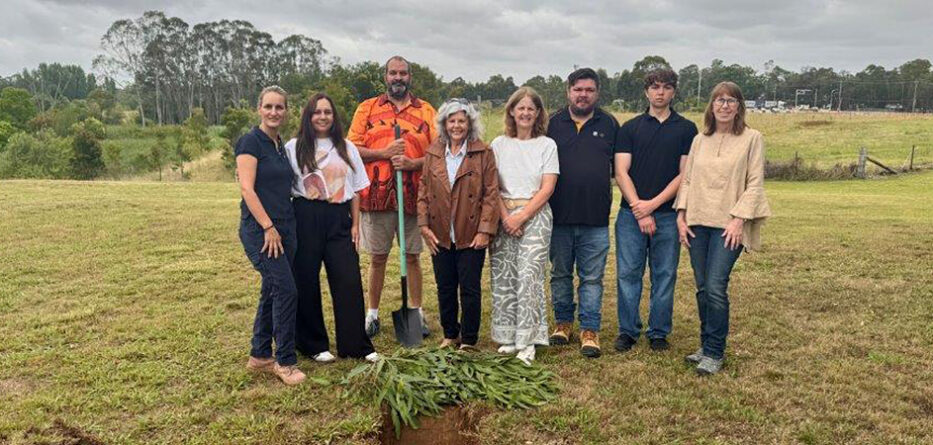
On Tuesday 16 December, Catholic Care’s Mamre homestead in Orchard Hills became a place of reburial and rest for Aboriginal artefacts uncovered during an archaeological dig by Transport for NSW ahead of roadworks along Mamre Road.
The artefacts were repatriated in a ceremony onsite, which included a traditional smoking ceremony led by Aunty Thelmerie Rudd and Uncle Paul Webb. Catholic Care staff and members of the local Aboriginal community were welcomed to Country as part of this important act of cultural care and respect.
“Mamre has always been a place of connection and care,” said Lisa Malcher, Catholic Care’s Community Engagement Coordinator.
“Being able to provide a safe, respectful place for these artefacts to return home honours the deep custodianship of the Darug people and strengthens our shared commitment to reconciliation.”

The indigenous artefacts during a repatriation ceremony at Catholic Care’s Mamre House in Orchard Hills. Image: Supplied
Catholic Care Executive Director Helen Emmerson said artefacts repatriated and cared for at Mamre acknowledge the Darug people of Wianamatta, the traditional owners and custodians of the lands and waters where this project is undertaken.
“Catholic Care expresses gratitude for their ongoing stewardship of Country and for the opportunity to play a part in preserving and respecting their cultural heritage,” Helen said.
Cultural conversations
Prior to the road widening project, Transport for NSW held consultation sessions with Darug people at Mamre to discuss the creation of a First Nations Heritage Node near Catholic Care’s visitor carpark. The node is designed to provide visitors with a space to reflect, learn, and engage with the cultural history of the area.
The heritage node will feature relocated decorative and wayfinding elements, including painted logs, the existing ‘Mamre’ sign, decorative gates, a memorial cairn, and a post-and-rail fence.
“Visitors will also be able to experience an Indigenous garden with native Cumberland Plain species and a yarning circle with a firepit for storytelling and reflection,” Lisa said.
Mamre House and Farm – a place steeped in First Nations history
Mamre House, originally established around 1822 by Reverend Samuel Marsden and his wife Elizabeth and cared for by the Sisters of Mercy RSM Parramatta before being assumed by Catholic Care, is listed on the State Heritage Register – recognising its cultural and historical significance.

Mamre House. Image: supplied
Mamre sits on the Wianamatta water system, which includes South Creek – a traditional meeting place of freshwater and saltwater peoples.
The land and waterways of Mamre, on Darug Country, have been cared for by Aboriginal people for tens of thousands of years.
Tangible reminders of this enduring custodianship include:
- Grinding grooves: indentations in rock surfaces created during food preparation or tool-making.
- Scar trees: trees deliberately modified for practical purposes such as making canoes, shields, or rope.
- Archaeological deposits: layers of soil containing evidence of past human activity, including stone tools, shell middens, and charcoal.
Local Aboriginal communities continue to maintain deep connections to Wianamatta and the surrounding area.
Uncovering the past
As roadworks continue further south along the Mamre House property line, additional artefacts may be repatriated, continuing this important partnership between Catholic Care, First Nations custodians, Transport for NSW, and the local community.
Towards healing
As the Diocese of Parramatta moves towards healing and reconciliation with First Nations people, initiatives like the care and repatriation of artefacts at Mamre House reflect a commitment to honouring Aboriginal custodianship and cultural heritage.
By creating spaces such as the First Nations Heritage Node, fostering dialogue, and supporting respectful partnerships, the Diocese seeks to build relationships grounded in respect, understanding, and shared stewardship of Country.
This initiative underpins our priority of Listening and Community, and our objective to become a humble and healing Church. Visit Synodality to learn more.