

Homily for the 14th Sunday in Ordinary Time
Readings: Zechariah 9:9-10; Psalm 145; Romans 8:9, 11-13; Matthew 11:25-30
9 July 2023
In today’s gospel from Matthew, we hear a few catchy declarations of Jesus bundled together and placed in a context which does not quite fit. Two of those very consoling but mystifying declarations are well known to us:
‘I give praise to you, Father, Lord of heaven and earth,
for although you have hidden these things
from the wise and the learned
you have revealed them to little ones.’
‘Come to me, all you who labour and are burdened,
and I will give you rest.
Take my yoke upon you and learn from me,
for I am meek and humble of heart;
and you will find rest for yourselves.
For my yoke is easy, and my burden light.’
Listen at https://soundcloud.com/frank-brennan-6/homily-9723
We don’t have to be geniuses or PhDs to understand Jesus’ message. In fact it might even be helpful to be uneducated, not having tickets on ourselves, not thinking we can reach an understanding of God’s purposes just by the use of our own reason and learning. Even if we be most learned, our learning should lead us to the brink of human achievement able to look into the abyss of mystery and God’s grace beholding ourselves as one of the ‘little ones’.
When we are feeling overburdened, weighed down with life’s challenges or responsibilities, the Lord offers us rest, for his yoke is easy and his burden light.
These sayings have been placed by Matthew in the midst of other materials which are not related to the content of the sayings. But earlier in the gospel we read (at 10:42): ‘If anyone gives so much as a cup of cold water to one of these little ones because that person is a disciple, then in truth I tell you, he will most certainly not go without his reward’. Then later in the gospel when the disciples ask why Jesus speaks in parables, he answers (at 13:11): ‘Because to you is granted to understand the mysteries of the Kingdom of heaven but to them it is not granted.’
There is a special place for the little ones who lack learning but who have learnt the lessons of life through difficult experience. Scripture scholar Daniel Harrington highlights the novelty of this privileged access by the little ones: ‘Those who receive the revelation are described as nēpioi (“infants”), which seems to be a way of referring to the disciples of Jesus both during his earthly ministry and in the Matthean community. They are contrasted with “the wise and understanding.” In fact, in most Jewish writings of the time the recipients of divine revelations are wise and understanding: the great heroes of old (Pseudepigrapha), community leaders (Qumran scrolls), all Israel (rabbinic literature), the individual sage (Philo), the righteous one (Wisdom), etc.’ Harrington tells us that the key verse in today’s gospel about the ‘little ones’ ‘is closest to the Jewish and early Christian celebration of the “humble” or “lowly” that is expressed so dramatically in Mary’s Magnificat (Luke 1:46–55).’[1]
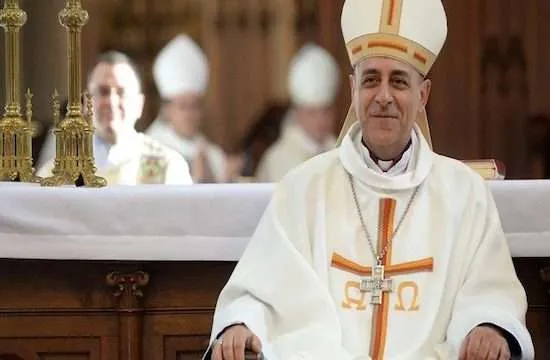
During the week while pondering what hidden things have been revealed to us little ones while they remain hidden from the wise and the learned (which presumably includes some of the Church’s most highly trained theologians), I came across the latest extraordinary reform of the Roman Curia by Pope Francis. He appointed his principal theological adviser from Argentina, Archbishop Víctor Manuel Fernández, as the new head of the Dicastery for the Doctrine of the Faith (what used be known as the CDF). Now, there’s nothing out of the ordinary in the pope appointing one of his own – from his own theological stable, and even from his own country. After all, the papacy is one of the few remaining monarchies able to exercise complete jurisdiction and unfettered discretion in all such matters. What was extraordinary was Francis’ decision to publish the letter of appointment he wrote to the new prefect.
Francis wrote: ‘I entrust to you a task that I consider very valuable. Its central purpose is to guard the teaching that flows from the faith in order “to give reasons for our hope, but not as an enemy who critiques and condemns”. The Dicastery over which you will preside in other times came to use immoral methods. Those were times when, rather than promoting theological knowledge, possible doctrinal errors were pursued. What I expect from you is certainly something very different.’ [2]
Quoting from his own Apostolic Exhortation Evangelium Gaudii of which Fernandez is thought to have been a key contributing author, Pope Francis went on to say: ‘Moreover, you know that the Church (can) “grow in her interpretation of the revealed word and in her understanding of truth” without this implying the imposition of a single way of expressing it. For “Differing currents of thought in philosophy, theology and pastoral practice, if open to being reconciled by the Spirit in respect and love, can enable the Church to grow”. This harmonious growth will preserve Christian doctrine more effectively than any control mechanism.’ Words all too familiar to Archbishop Fernández.
Francis concluded: ‘You are well aware that there is a harmonious order among the truths of our message, and the greatest danger occurs when secondary issues end up overshadowing the central ones.’
This was music to my ears. Five years ago, I was run into the CDF during the same-sex marriage plebiscite because I had said: ‘Though I am a committed Catholic, I could vote “yes” in a survey on same-sex marriage while hoping and demanding that the parliament do the hard work on religious freedoms when considering amendments to the Marriage Act. I am one of those Australians who will be pleased when same-sex marriages are recognised by Australian law but with adequate protection or religious freedoms.’
The then prefect of the CDF wrote to the superior general of the Jesuits saying: ‘The position of Fr Brennan is not acceptable, and it must be publicly retracted. This Dicastery kindly asks you to duly notify as to when the retraction has been accomplished.’ The prefect quoted a 2003 document published by the CDF describing any civil law recognising homosexual unions as a gravely unjust law and that ‘clear and emphatic opposition is a duty’[3].
Now I am not going so far as to assert that in my case the CDF used ‘immoral methods’. But suffice to say, its methods were outdated, unnuanced, and completely out of synch with what is now being proposed by Pope Francis. As it was, I made no retraction, and as far as I know, I am still a priest in good standing. It’s interesting to note that the new prefect when asked about the possibility of blessing a same sex couple was careful to distinguish any such union from a sacramental marriage, but he did go on to say: ‘Now, if a blessing is given in such a way that it does not cause … confusion, it will have to be analysed and confirmed. As you will see, there is a point at which we leave a properly theological discussion and move on to a question that is rather prudential or disciplinary.’[4]
‘I give praise to you, Father, Lord of heaven and earth,
for although you have hidden these things
from the wise and the learned
you have revealed them to little ones.’
‘Come to me, all you who labour and are burdened,
and I will give you rest.
Take my yoke upon you and learn from me,
for I am meek and humble of heart;
and you will find rest for yourselves.
For my yoke is easy, and my burden light.’[5]
Fr Frank Brennan SJ is the Rector of Newman College, Melbourne, and the former CEO of Catholic Social Services Australia (CSSA).
[1] Daniel J. Harrington, The Gospel of Matthew, Sacra Pagina Series (Collegeville, MN: Liturgical Press, 2007), p.169.
[2]Letter of the Holy Father to the new prefect of the Dicastery for the Doctrine of the Faith, 1 July 2023, available at https://press.vatican.va/content/salastampa/en/bollettino/pubblico/2023/07/01/230701a.html
[3] Congregation for the Doctrine of the Faith, Considerations Regarding Proposals to Give Legal Recognition to Unions Between Homosexual Persons, 2003, #5, available at https://www.vatican.va/roman_curia/congregations/cfaith/documents/rc_con_cfaith_doc_20030731_homosexual-unions_en.html
[4] ‘New DDF prefect addresses ‘confusion’ over same-sex blessings’, The Pillar, 6 July 2023, available at
https://www.pillarcatholic.com/p/new-ddf-prefect-addresses-confusion
[5] Meanwhile, my latest address on the Voice delivered to the annual parish dinner of St Peter’s and St Paul’s Goulburn on Friday night is available at https://soundcloud.com/frank-brennan-6/goulburn-parish-dinner