

The pope can lead a large, diverse organization.
In early January, Pope Leo XIV called a meeting of the world’s cardinals to continue their conversation about the future of the Catholic Church, which they’d begun at the conclave last spring. This consistory effectively marked the beginning of Leo’s papacy, since much of his agenda in 2025 had been set by his predecessor. Nine months in, we are starting to learn more about Leo’s leadership—and it looks like he’s got some decent management skills.
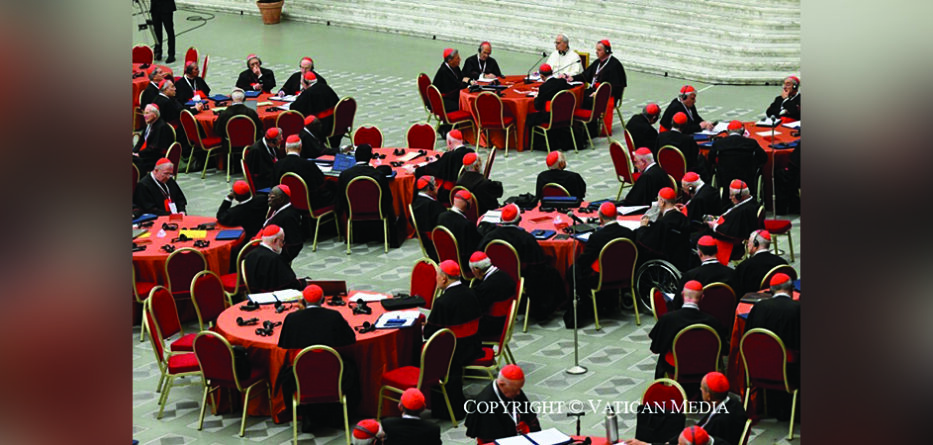
The consistory was a response to a call from the cardinals, many of whom felt left out during the Francis papacy. Instead of holding regular consistories for discussion, Pope Francis met with select advisors through the so-called “C-9” Council of Cardinals, a group of nine men initially tasked with reform of the Vatican administrative institutions or Curia. By contrast, about 170 cardinals attended Leo’s first consistory on January 7-8. He has already scheduled a second meeting in June and promised to hold yearly consistories from then on.
In advance of the January meeting, Leo chose four topics for possible discussion: synodality, curial reform, evangelization, and liturgy (all four also priorities of his predecessor). He then directed four Vatican officials to draft brief papers on each of the subjects, shared those documents with the cardinals, and had them vote on which two topics to tackle first. They chose synodality and evangelization. Although he gave several addresses during the meeting, Leo’s emphasis was on listening. By most reports, the consistory was a success, garnering praise from across the ideological spectrum.
New leaders know they have to gain the trust of their team by getting to know them and listening to their input. At the same time, they must clearly and strategically communicate their vision, both internally and externally. An effective manager must demonstrate commitment to the organization’s mission while being decisive about any necessary changes to address problems or weaknesses. And all this while also using interpersonal skills to build one-on-one relationships with various constituencies.
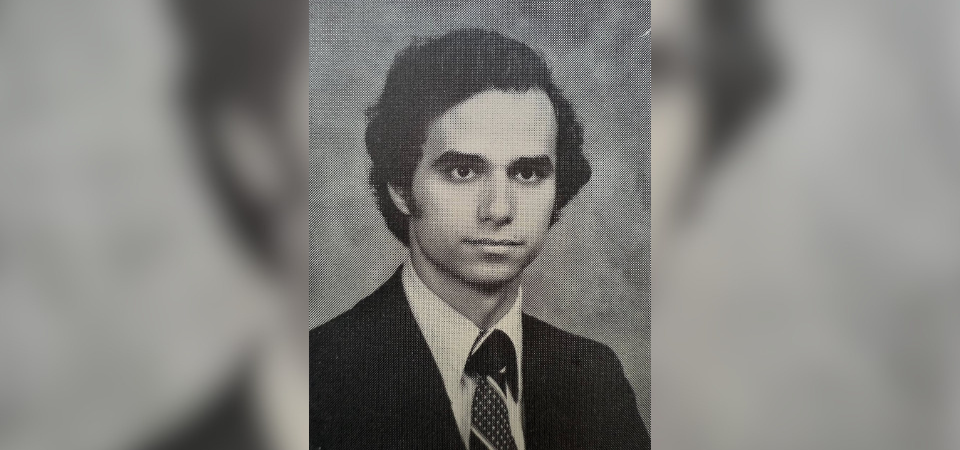
By most reports, Leo is demonstrating an aptitude for many if not all of these skills. Because he was relatively unknown when elected, many commentators have been reluctant to make definitive pronouncements or predictions about how he would lead, beyond his obvious experience identifying other leaders while he was prefect of the Dicastery for Bishops. But the consistory and other actions point to him having the personality and skills necessary to be an effective manager, even of an organization as massive and complicated as the global Catholic Church.
Most Catholics on both the left and the right remain cautiously optimistic about Leo, although those who bordered on schism during the Francis papacy are getting nervous. Leo sounds an awful lot like Francis—with a strong defense of migrants and a clear condemnation of war and violence—but, so far, he has been careful to also acknowledge the concerns of conservative Catholics who felt unheard or dismissed under Francis.
Pope-watchers have noticed these differences, including speakers at a recent academic meeting of historians in Leo’s hometown. While Francis and Leo share many views and priorities, Leo has a different personality and style, said panelists at a January 9 presentation on the pope at the American Catholic Historical Association convention in Chicago. The current pope has the mind of a mathematician and canon lawyer. He’s more cautious, a careful listener, and he thinks before speaking. He is less likely to blurt out, for example, “Who am I to judge?”
“He knows how to get out of the way,” said Brian Flanagan of Loyola University in Chicago, one of the panelists at the historical association’s convention. Kathleen Sprows Cummings of the University of Notre Dame noted, however, that it was not Cardinal Robert Prevost’s reserved personality that moved him to the top of cardinal-electors’ lists, but rather his combination of administrative savvy, pastoral presence, and global vision.
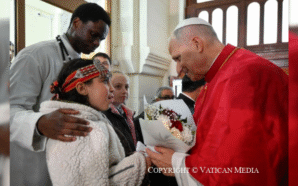
As the first pope in centuries to have been administrator of a religious order, Leo is used to having to get other people on board before implementing a decision. “He’s a manager who reads the full reports before a visit, but also knows how to make the papacy not the top of a pyramid, but the center of a conversation,” Flanagan said. Those consensus-building skills will be necessary for creating unity in a fractured Church. Leo has already shown openness to diverse voices, meeting with both Fr. James Martin, who advocates for LGBTQ inclusion, and retired Cardinal Raymond Burke, who supports the Latin Mass.
But effective managers have to do more than make nice with everyone; they have to make decisions, often hard ones. Fr. Thomas Reese, who literally wrote the book on the politics and organization of the Vatican, believes tough American management practices are needed in Rome to avoid further scandals in the Church. Reese is not against a pastoral approach that appeals to a “conversion of heart,” but sometimes an ineffective employee has to be fired. “That includes anyone in the Curia, including cardinals, who do not support the pope’s agenda,” Reese writes.
Pope Leo doesn’t seem indecisive or afraid of speaking truthfully and forcefully, even when his words may be controversial. He defended Chicago cardinal Blase Cupich for his plans to honor pro-choice Sen. Dick Durbin, noting that being “pro-life” involves more than opposing abortion. He has criticized the Trump administration for its treatment of immigrants and for its foreign policy in Venezuela, and continues to press for a two-state solution in Israel/Palestine. His own Trump-loving brother has noted that Leo is “neither quiet nor shy—if he has something to say, he will say it.”
Flanagan, who is an ecclesiologist, believes that Leo may signal a shift away from the singular focus on the pope as a personality, but that may be nearly impossible in today’s celebrity media environment. And while some journalists are concerned that Leo may be less quotable than his predecessor, so far he has been far more accessible to the media. Francis initiated the practice of freewheeling press conferences aboard the papal plane, but reporters have found Leo willing to answer questions nearly every week outside Castel Gandolfo on his “day off.”
A seemingly healthy seventy-year-old, Pope Leo may have a long tenure with which to demonstrate his communication and other management skills. While Francis was “a man in a hurry,” Leo is not in a rush, journalist Colleen Dulle of America magazine said at the convention panel. “He’s playing the long game.” That, too, is an important managerial skill, especially for a person guaranteed his job for life.
Heidi Schlumpf is Commonweal’s senior correspondent.
Reproduced with permission from Commonweal.