

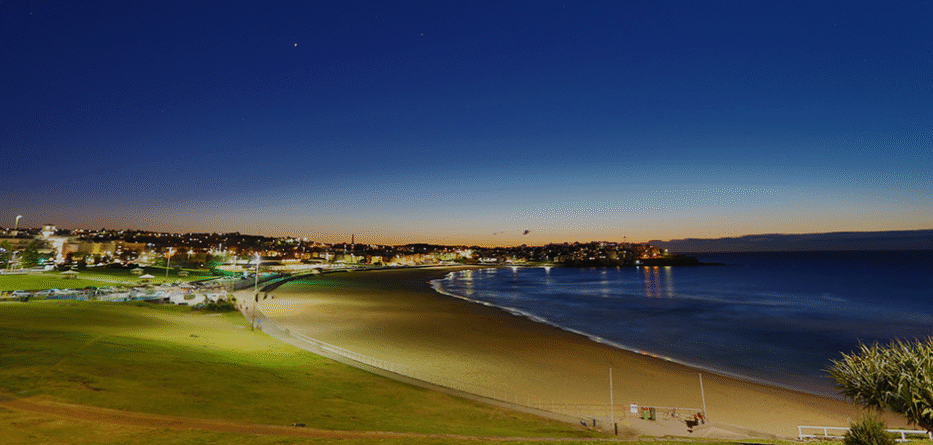
Homily for 6th Sunday of Easter 2026
Readings: Acts 8:5-8,14-17; Psalm 66; 1 Peter 3:15-18; John 14:15-21
Listen at: soundcloud
Today’s second reading from the first letter of Peter has us focus on hope. Peter says: ‘Always be ready to give an explanation to anyone who asks you for a reason for your hope, but do it with gentleness and reverence, keeping your conscience clear, so that, when you are maligned, those who defame your good conduct in Christ may themselves be put to shame. For it is better to suffer for doing good, if that be the will of God, than for doing evil.’
When I was studying theology as a student I was very impressed by Karl Rahner’s introduction to his Foundations of Christian Faith. He took as his starting point Peter’s challenge that we be able, with a clear conscience, to give an account of our hope. He wrote:[1]
‘Ultimately what we want to do is merely reflect upon the simple question: “What is a Christian and why can one live this Christian existence today with intellectual honesty?” The question begins with the fact of Christian existence, although this existence looks very different today in individual Christians. This difference is conditioned by personal levels of maturity, by very different kinds of social situations and hence also of religious situations, by religious differences, and so on. But we also want to reflect here upon this fact of our Christian existence, and we want to justify it before the demands of conscience and of truth by giving an “account of our hope” (1 Peter 3:15).’
This past week, we have heard the first oral testimony at the Royal Commission on Antisemitism and Social Cohesion. Those of us who are not Jews are called to be very attentive and respectful to our fellow citizens who are coming forward and giving an account of their lived experience as Jews in contemporary Australia. With hope, we are wanting to hear their expressions of hope for our society and for their communities. How can we as Christians give an account of our hope when living in a society where Antisemitism is a lived reality for many of our fellow citizens?
Speaking on national radio, Julian Leeser, one of the nation’s most prominent Jews in the Commonwealth Parliament, asked ‘how a country that uniquely in human history has been good to the Jewish people, which never had discriminatory laws which allowed (discrimination) – unlike so many other countries, but (which allowed )Jewish Australians to have full participation in this country (and) which has been a beacon to the world has turned into a hotbed of anti-Semitism’.[2] I had never considered this part of our proud history, that we were almost unique in the community of nations, being founded without any entrenched, legislative discrimination against Jews. But this proud record makes any contemporary antisemitism all the more reprehensible.
Ms Sheina Gutnick whose father was killed in the Bondi massacre told the commission:[3]
‘I always grew up hearing stories on both my mother’s and father’s side where my grandparents had to keep their Judaism in secret under the cruel establishment of the USSR. Being Jewish was dangerous, the identity they held, and they always practised their Jewish customs in secret. And then my father Ruben Morrison, fled to Australia from the Ukraine at 14 years old. He was deeply proud to have moved to Australia and been an Australian citizen and grateful for a nation that welcomed Jews when so many others turned them away at that time.’
Ms Gutnick concluded her testimony with these words:[4]
‘I think about our history as a Jewish nation. The attack at Bondi occurred on the first night of Hanukkah, a festival which tells a story of Jews being told they could stay, but only if they abandoned who they were. A small group refused. They fought not only for land but for identity and faith. And, when they won, they didn’t celebrate with power; they lit a flame, a small unwavering light in desecrated space.
‘This is our story. We answer darkness with light. We light menorahs at home and put them in our windows and doorframes so that the light shines outward into the world. Our message now remains the same. Our identity does not bend to outside pressure. We are guided by the Torah, a moral and eternal guide for life. I would also like to say that I am deeply grateful to the many Australians of all backgrounds and faiths who have stood beside our community with compassion and decency, not only in the aftermath of Bondi but also we are proud Australians and this is our home.’
Ms Stefanie Schwartz spoke to the royal commission about the antisemitism experienced by her children at school. But she found hope:[5]
‘Our current principal wouldn’t let up, and he really saw it as a key priority. So he engaged with Together For Humanity, which is a not-for-profit organisation. They too spent months trying to find schools who might want to engage with us. There were initially a few bites, but generally most of them later withdrew. But I am very happy to say that today, actually, the interfaith program has started again with a local Catholic school with the help of Together For Humanity, and I really hope that that sets the tone of the interfaith program going forward and that other schools are willing to engage with us as well.’
The royal commission has a long way to run, and undoubtedly there will be many harrowing accounts. But we give thanks for those Jews who find hope – both in our nation’s past and in the present actions and commitments of their fellow citizens. Our hope is grounded in the hope of those who have suffered antisemitism yet profess hope for themselves and our society. As Christians we profess hope in good conscience that we and our fellow citizens can find forgiveness, reconciliation and peace.
Let all the earth cry out to God with joy.
Shout joyfully to God, all the earth,
sing praise to the glory of his name;
proclaim his glorious praise.
Say to God, “How tremendous are your deeds!”
Let all the earth cry out to God with joy.
“Let all on earth worship and sing praise to you,
sing praise to your name!”
Come and see the works of God,
his tremendous deeds among the children of Adam.
Let all the earth cry out to God with joy.
He has changed the sea into dry land;
through the river they passed on foot;
therefore let us rejoice in him.
He rules by his might forever.
Let all the earth cry out to God with joy.
Hear now, all you who fear God, while I declare
what he has done for me.
Blessed be God who refused me not
my prayer or his kindness!
Let all the earth cry out to God with joy.
Fr Frank Brennan SJ AO, Adjunct Professor of Thomas More Law School at ACU and Adjunct Research Professor at the Australian Centre for Christianity and Culture, is a former Rector of Newman College, University of Melbourne, and CEO of Catholic Social Services Australia (CSSA). His latest books include Pope Francis: the Disruptive Pilgrims Guide (ATF Theology, 2025), and Gerard Brennan’s Articles and Speeches: Maintaining the Law’s Skeleton of Principle (2 volumes) (Connor Court, 2025).
[1] Karl Rahner, Foundations of Christian Faith, Crossroad, New York, 1978, p.2.
[2] Listen at https://www.abc.net.au/listen/programs/radionational-breakfast/julian-leeser-on-death-of-kumanjayi-little-baby/106636122
[3] Transcript of Proceedings, Royal Commission on Antisemitism and Social Cohesion, , 4 May 2026, P-25
[4] Ibid, PP-28-9.
[5] Ibid, P-65