

If you sit on the left-hand side of the nave during Sunday morning Mass at the Basilica of St. Mary Major, you will likely miss the homily.
Instead, you will have a front-row seat to the theater of pilgrims slowly wandering toward a cordoned-off area along the basilica’s western wall, only to be met by a well-dressed usher rushing toward them while harshly whispering under his breath, “No photo!”
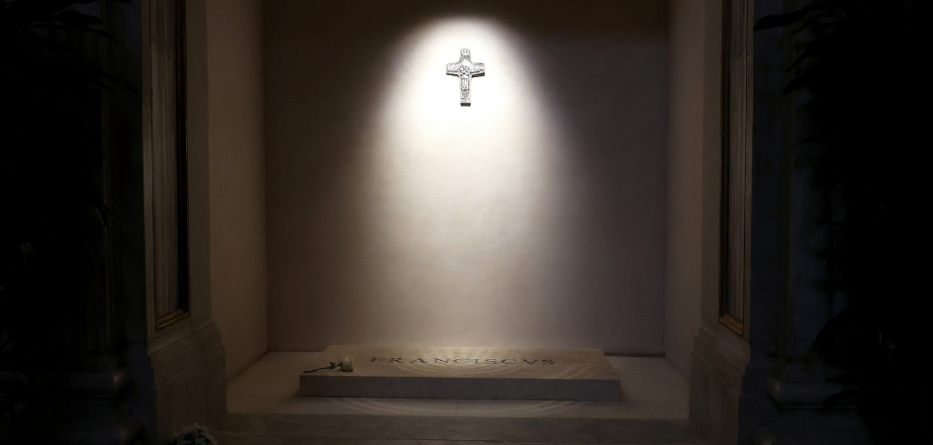
Since Pope Francis was buried in the basilica April 26, 2025, St. Mary Major has been transformed from an already prominent Roman church into one of the city’s major pilgrimage sites for admirers of the late pope, Catholic and not.
Outside the grand basilica a line of tourists snakes along the side of the church. Once inside, the throngs pause briefly to observe the basilica’s gilded ceiling, ancient mosaics and marble chapels before gravitating toward the pack of pilgrims huddled around the plain white niche where Francis’ tomb rests.
The crowds have become part of the basilica’s daily rhythm. Since Francis’ remains were placed there, “the numbers doubled,” Cardinal Rolandas Makrickas, archpriest of the basilica, told National Catholic Reporter. He estimated that the basilica now receives between 10,000 and 15,000 visitors each day.
To continue reading this article, click here.
With thanks to National Catholic Reporter and Justin McLellan, where this article originally appeared.