

What Pope Leo XIV was teaching us on Wednesday mornings — and why it matters now
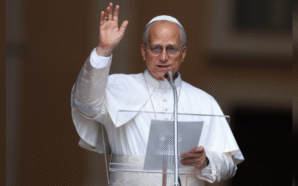
For four Wednesdays this spring and early summer — interrupted only by his journey to Spain — Pope Leo XIV stood before the pilgrims in Saint Peter’s Square and did something that, to the untrained ear, sounded almost unremarkable. He gave a series of catecheses on Sacrosanctum Concilium, the Second Vatican Council’s Constitution on the Sacred Liturgy: four measured reflections on the first document the Council Fathers promulgated in 1963, delivered in the unhurried tone of a teacher rather than the sharp one of a partisan. The series, I believe, has now closed. The Holy Father is at rest for the summer, and when the general audiences resume in August he will, I expect, take up another of the conciliar texts. It is worth pausing, before the Holy Father moves on, to say plainly what these four reflections accomplished — because I am convinced that for those with ears to hear, they were among the most consequential things Leo has yet said.
They were consequential precisely because they refused to sound like it. Consider the counterpoint. On the first day of July, in a meadow at Écône, four priests of the Society of Saint Pius X were consecrated bishops without a pontifical mandate, in deliberate reenactment of Archbishop Lefebvre’s act of thirty-eight years before. Rome responded as she was bound to respond: the Holy Father declared the schism, and the Dicastery for the Doctrine of the Faith issued the decree of excommunication against the six bishops involved which they incurred in the canonical language, laetae sententiae. In the days since, the Society has rejected that decree as unjust and invalid. The rupture that many of us had prayed would be averted is now a canonical fact.
Here is the detail that ought to give us pause. In the document by which the Society justified its consecrations, its authors cited Pope Leo’s own Wednesday catechesis of January 7, in which he called the Council the beacon that still guides the Church’s path. The very pulpit the Society points to as evidence of Rome’s intransigence is the pulpit from which, week after week this spring/summer Leo was patiently unfolding the Council’s liturgical vision — not as a cudgel, but as a gift. The two events belong to the same story. To read the catecheses well is to understand exactly what the men at Écône were walking away from.
Teaching the Council by teaching its first word
The most telling feature of the opening catechesis, on May 20, was its refusal to fight. Leo did not so much as allude to the liturgy wars that have set a small but vocal number of Catholics against one another for two generations. He did not adjudicate translation, or posture, or the vexed relationship of the Novus Ordo to the Vetus Ordo of the Roman Rite. He returned instead to the Constitution’s own initial insight, which is theological before it is rubrical. The Council Fathers, he reminded us, sought not merely to reform the rites but to lead the Church to contemplate the living bond that constitutes its deepest existence: the mystery of Christ. The liturgy is “the space, the time and the context in which the Church receives her very life from Christ,” the place where “the work of our redemption is accomplished” (SC 2). Christ is present in the proclaimed Word, in the ministers, in the assembly, and above all in the Eucharist (SC 7).
This was not evasion; it was strategy. By beginning with the mysterion, Leo quietly removed Sacrosanctum Concilium from the genre of liturgy-wars commentary and restored it to the genre in which it was written: catechesis on the mystery of Christ. He located the Council’s achievement where the great figures of the twentieth-century Liturgical Movement had located it — in the threefold ressourcement, biblical, patristic, and liturgical, that had recovered a truth alive in the early Church. This is the synthesis to which men like Guardini, Jungmann, and Bouyer gave their lives, and which the Council solemnly ratified. To hear an Augustinian pope reach, already in that first reflection, for Augustine’s teaching that the Church “becomes what she receives” was to understand that the whole series would be governed by communion, not controversy.
Sound tradition, and the way kept open
The second catechesis, on May 27, supplied the foundational principle, and it did so with a candor the traditionalist critique too often assumes Rome is incapable of. Citing Pius XII’s Mediator Dei, Leo described the Church as a living organism that “grows, matures, develops” while safeguarding the integrity of her doctrine. He then named the Council’s own programmatic formula: that sound tradition be retained, “and yet the way remain open to legitimate progress” (SC23). He distinguished, with the Constitution, between elements divinely instituted and therefore immutable and elements subject to change (SC 21). And he enlisted Benedict XVI’s luminous image. It is a mistake, Benedict had said, to set tradition and progress against each other. Tradition is a living thing, and it carries the principle of its own development within itself — as a river carries its source and flows toward the sea.
That image of the river is the master key to the entire series, and I will return to it. But notice first what Leo did with it. He insisted that legitimate progress “in no way compromises ecclesial communion; rather, it seeks to confirm and foster it.” That single sentence pre-empts the central claim of those who reject the reform — the claim that the Novus Ordo was itself a rupture of communion. And lest anyone hear the principle as licensing the liturgical narcissism of the do-it-yourself celebrant, Leo drew from the same Sacrosanctum Concilium its most bracing disciplinary word: that no one, “even if he be a priest,” may add, remove, or change anything in the liturgy on his own authority (SC 22). He urged priests to honor the texts and norms of the liturgy with humility and “sincere fidelity to ecclesial communion.”
I want to dwell on this, because it is the point most often missed. The principle cuts decisively in both directions. It disciplines the progressive improviser who treats the sanctuary as a stage for his own creativity, and it disciplines the traditionalist absolutist who would set the pre-reformed rite against the Church’s living authority. It is therefore disingenuous to hear Leo’s exhortation as aimed at only one flank. He is not scolding a party. He is describing the nature of the rite itself, which belongs to the Church and never to the minister — of whatever persuasion — who happens to be presiding. The minister must always remember that he is ‘servant’ and not ‘master’ of the liturgical tradition.
Rite, sign, and the participation of the whole person
On June 3, Leo turned to the grammar of worship: rite, sign, and symbol. The rites of the liturgy, he taught, are not “a mere external covering of the sacramental mystery, a collection of arbitrary ceremonies,” but the ecclesial mediation through which the divine gift actually reaches us. The Mysterium fidei is realized through rites and prayers (SC 48). Kneeling, the exchange of peace, the sprinkling with water that recalls our baptism — these are performative and transformative signs, not decorations. Reaching, by way of Francis’s Desiderio desideravi, for Guardini’s great insight, he named the first task of liturgical formation: that we become once again “capable of symbols.” The remedy for a thin liturgical life is not less reform but more mystagogy — beauty without arbitrariness, the whole person drawn in, spirit, soul, and body, in the logic of the Incarnation. In our frantic and productive age, he observed, the rite interrupts us and leads us back to what is essential.
Here the pivotal theme of the entire series comes fully into view: participatio actuosa, the full, conscious, and active participation of all the faithful that the Council willed as the aim of the reform (SC 14). This is the principle most caricatured on both sides, and Leo handled it with exactness. Against those who reduce active participation to mere external busyness, he insisted it is at once internal and external — a matter of mind and heart before it is a matter of hands and voice. We are not to remain, in the Constitution’s arresting phrase, “strangers or silent spectators” (SC 48). Rightly understood, active participation is not the enemy of reverence. It is the conciliar name for reverence that has become the whole assembly’s act.
We become what we receive
The final catechesis, on June 24, brought the series to its proper destination: the mystery of the Eucharist. And it brought it home, characteristically, through Augustine — not through the culmen et fons formula one might have predicted, but through the Sermon preached at Hippo to the newly baptized. Receiving the Body of Christ, Leo taught, the faithful receive their own mystery; they are bidden to “be what you see, and receive what you are.” The Eucharist is the act by which the Church becomes the Body whose Head is the risen Christ. We become what we receive.
From this Augustinian root Leo drew three threads, each of which speaks directly to our present sorrow. He insisted first on the unity of Word and Sacrament — that the Liturgy of the Word and the Liturgy of the Eucharist “form but one single act of worship” (SC 56), the Eucharist opening the Scriptures and the Scriptures illumining the Eucharist. He then did something quietly devastating to the rupture-narrative: he named the reform’s enriched Lectionary — the more abundant opening of the biblical treasures the Council had asked for (SC 51) — as itself drawn from the purest source of the living Tradition, uniting fidelity with openness to legitimate progress (SC 23). Here the abstract principle of the second catechesis is handed a concrete instance you can hold in your hands. To the charge that the reform was a rupture with Tradition, Leo answers not with an argument but with an artifact: open the Lectionary, and read from a richer table of God’s Word than any generation of Catholics before us was given.
The third thread is the one that ought to break our hearts in light of the recent schismatic events. Returning to Sacrosanctum Concilium, Leo recalled the Eucharist as “a sacrament of love, a sign of unity, a bond of charity” (SC 47), and pressed the point outward: incorporated into Christ, the faithful learn his manner of life, marked by the free gift of self, and this becomes a “powerful antidote to the forces of division” that wound the world, our communities, our families, and our hearts. The sacrament that makes the Church one is, by that very fact, the measure against which every rupture of communion must be judged.
And then, binding the whole series together, Leo reached once more for the river. The opening of the Constitution’s second chapter, he said, is woven with references to “the great river of Tradition” that flows from the Fathers down to us. It is the same figure Benedict had given him — the river that carries its source — now turned upon the Eucharist itself. This is the through-line of all four catecheses, and it is the answer to everything Écône represents: the reformed rite is not a severed channel. It is the living river of Tradition, still bearing its source, flowing toward its outlet.
What Leo was telling us
Read together, these four reflections give an unusually clear sightline into how this pope understands the liturgy, and therefore into how he is likely to manage the reconciliation that still, even now, awaits a resolution.
His mind is thoroughly conciliar. The reformed rite is the Church’s normative lex orandi — organically developed, ecclesially owned, ordered to the active participation of all the faithful, and consummated in the Eucharist that makes us one Body. That is the fixed point, and no one who listened to these catecheses can pretend to be surprised by it. Yet the very principles that establish the reformed rite as normative also furnish the grammar of charity toward those who remain attached to the pre-reformed rite. Organic continuity rather than rupture; interpretatio benigna rather than suspicion; communion as the criterion of every legitimate accommodation. A pope who teaches that legitimate progress “seeks to confirm and foster” ecclesial communion is laying the groundwork for an accommodation offered cum Petro et sub Petro— with Peter and under Peter — never against him.
Which is the tragedy of Écône, stated in its exact terms. The Society’s act does not sever a liturgical preference; the Church has shown herself endlessly patient with liturgical preference. It severs the one thread these catecheses make load-bearing from first to last: communion as the very condition of authentic liturgical life. You cannot claim the river of Tradition while stepping out of its channel. The door that Leo has kept open — and these reflections are, among other things, an act of holding it open — is a door that opens only inward, toward Peter. It has never opened the other way, and it cannot, because a Eucharist offered against the communion of the Church contradicts the very thing the Eucharist is.
I do not think it a coincidence of the calendar that these catecheses were delivered in the weeks surrounding the consecrations. They read, in retrospect, like a magisterial witness laid down in advance — a patient, unpolemical insistence, offered while there was still time, that the whole of Sacrosanctum Concilium was ordered not to novelty and not to the archaeology of older forms, but to the fuller communion of the gathered people in the one sacrifice of Christ. That witness was declined at Écône. It remains on offer to all who would receive it.
The river continues to flow, carrying its source within it. Leo closed the series by asking us to draw from that source with faith, and to let ourselves be changed by the mystery we celebrate. The invitation was never withdrawn. It was only declined.
Story published with permission from Monsignor Arthur Holquin, S.T.L. Retired rector, Mission Basilica San Juan Capistrano.