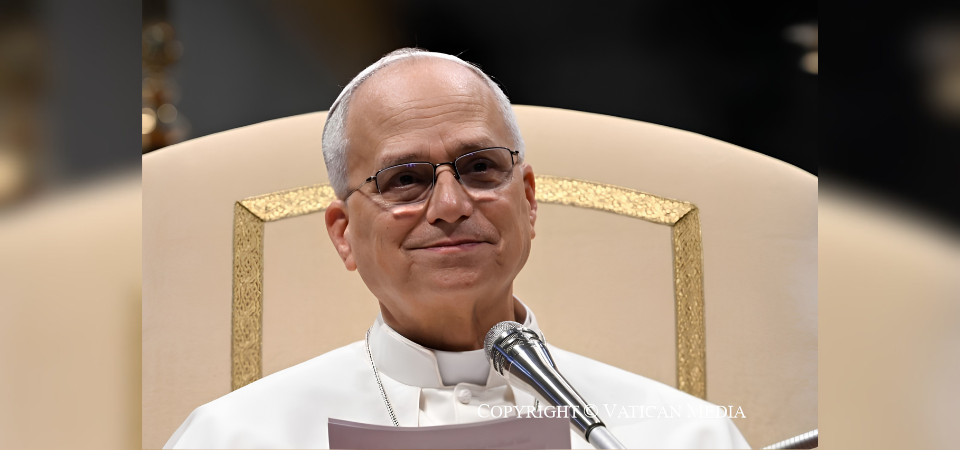


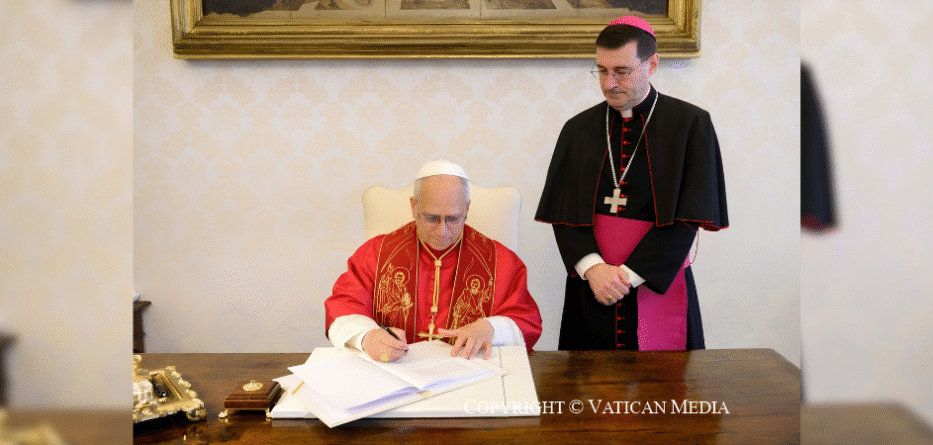
On May 25, ten days after Pope Leo XIV signed his first encyclical, Magnifica Humanitas, on safeguarding the human person in the age of artificial intelligence, he made it public, prompting the Church to become the first major institution to offer ethical guidance for the AI era and underscoring the primacy of the human person.
Just a day after signing the encyclical, Leo, through a Rescriptum ex Audientia, established an inter-dicastery Commission on Artificial Intelligence, bringing together seven Vatican institutions under rotating coordination.
Taken together, the two acts constitute the most significant institutional response to AI by a major religious body anywhere in the world—and perhaps the clearest signal yet that the Vatican intends to do more than issue clever warnings from the margins of the debate.
Artificial intelligence, after all, is no longer merely an object of ethical reflection. It is a reality that now permeates the life of the Church itself: communications, educational institutions, doctrinal processes, and diplomacy. To pretend otherwise would be a form of denial. As Leo XIV himself has observed, AI does not knock at the door: it is already inside the house.
It is no longer a simple set of tools but a mental, cultural, and spiritual environment—the air we breathe, the code that structures how we think and believe. Magnifica Humanitas is born of this awareness: you cannot wait for processes to be completed before pronouncing on them.
But this document is not simply an encyclical on artificial intelligence. It is a document on what it means to be human, written from inside a revolution that is rewriting the coordinates of experience: the way we work, communicate, inform ourselves, believe, even pray.
Magnifica Humanitas is a rereading of the entire tradition of Catholic social teaching — from Leo XIII to Francis, by way of the Second Vatican Council — demonstrating that the technological question is not a supplementary chapter in the Church’s reflection on the world but has become its center of gravity.
The Symbolic Weight of the Date and the Name
The date of the signing carries clear symbolic weight. May 15 marks the 135th anniversary of Rerum Novarum, Leo XIII’s great 1891 encyclical on the condition of workers at the height of industrialization.
The parallel is explicit and intentional. Just as the first Leo placed the dignity of labor before the upheavals of the factory age, so the new Leo places the dignity of the person before the upheavals of the algorithmic age.
It is a claim at once of continuity and of rupture. What Leo XIII did for wages, working hours, and the right of association, Leo XIV does for the dignity of the person in the era of the algorithm. Catholic social teaching has something urgent to say about machines that learn.
The pope himself explained his choice of the encyclical’s name in his first address to the cardinals, explicitly linking Catholic social teaching to the new industrial revolution and to artificial intelligence.
The Doctrinal Roots: From Antiqua et Nova to Magnifica Humanitas
Leo XIV does not start from scratch. In January 2025, the Dicastery for the Doctrine of the Faith and the Dicastery for Culture and Education jointly published Antiqua et Nova, a wide-ranging doctrinal note on the relationship between artificial and human intelligence, commissioned by Pope Francis himself.
Running to 117 paragraphs, the document drew a clear philosophical line between what machines do and what the human mind is. Antiqua et Nova insisted that, in its fullest sense, intelligence implies a moral and spiritual openness to truth: conscience, responsibility, and soul. No algorithm, however sophisticated, can replace human discernment.
The text also examined the concrete impact of AI on education, health care, labor, social relations, and war, and warned against lethal autonomous weapon systems. It invoked the principle of subsidiarity in AI governance and called for regulatory decisions to be distributed across multiple levels of society.
The substantive shift achieved by Magnifica Humanitas lies in its scope and magisterial authority. Antiqua et Nova was an instructional inter-dicastery document that analyzed AI and laid the ethical groundwork. Magnifica Humanitas makes a leap: from inter-dicastery document to papal encyclical, carrying the full magisterial weight of social teaching. It does not append artificial intelligence as a thematic addendum to Catholic social doctrine: it does something more radical.
It recognizes that the digital transformation poses challenges within the very categories of social teaching and demands their further development. If Magnifica Humanitas elevates the arguments of Antiqua et Nova to the level of the full papal magisterium, the 2025 doctrinal note will be read retrospectively as its intellectual foundation: the preparatory document that made the encyclical possible.
AI, the pope writes, must be understood not as an emergency to be managed but as a transformation that challenges the categories of social teaching from within and demands their further development (cfr. n. 17). The encyclical introduces a lucid structural critique into the Church’s reflection on AI, focusing on the concentration of power in the hands of private transnational actors who redefine the conditions of access to public life.
A trajectory built with method
The document fits within a trajectory the Holy See has patiently constructed in recent years. Yet the thread of reflection runs further back. The Church has never been a stranger to the question of technology.
As early as 1963, Inter Mirifica described communication technologies as wonderful means that touch the human spirit. And Paul VI, addressing the Jesuit-directed Automation Center at the Aloisianum in Gallarate in 1964, delivered extraordinary remarks on how organization and machine could come to the aid of the spiritual brain, and on how the effort to infuse in mechanical instruments the reflection of spiritual functions was elevated to a service that touches the sacred.
The fear in our own day is that, with artificial intelligence, the exact opposite may occur: that the reflection of mechanical instruments is being infused into the spiritual brain.
But Magnifica Humanitas marks a qualitative leap beyond its predecessors. John Paul II spoke of the media; Benedict XVI of the digital continent; and Francis of the technocratic paradigm and of AI at the G7.
Leo XIV integrates AI into the very structure of social teaching, using it as a lens to rethink all its principles—from the common good to social justice. From this day forward, speaking of algorithms is to speak of Catholic social doctrine.
The real wager is not whether artificial intelligence will ever become human, but whether human intelligence will remain human in the face of the temptation toward absolute performance.
Babel and Jerusalem: The two Biblical icons
The narrative coup of the encyclical appears in its opening pages, when Leo XIV places two biblical icons at the center of the text: the Tower of Babel and the rebuilding of Jerusalem’s walls in the Book of Nehemiah. The choice is between the logic of domination and the logic of shared responsibility.
Babel becomes the metaphor for the modern technocratic paradigm: the dream of a humanity homogenized under a single algorithmic language, a single direction, and a single obsession with pertinence, all claiming to replace mystery with prediction. When a civilization builds itself on the pretense of self-sufficiency and sacrifices the dignity of persons to efficiency, communication breaks down.
Against this architecture of domination, the pope sets the way of Nehemiah (cfr. n. 10): the Jew in exile who returns to a destroyed Jerusalem does not impose a plan from above; he surveys the ruins, summons the families, and entrusts each one with a stretch of wall. The city is reborn through shared responsibility. The choice is not between technology, yes, and technology, no, but between two logics of power: concentrating it or distributing it, homogenizing or composing.
From this biblical polarity, the pope coins an expression destined to endure: the syndrome of Babel (cfr. n. 10), the idolatry of profit that reduces everything — even the mystery of the person — to data and performance. It is a cultural diagnosis, not a sermon. Whether the metaphor holds throughout is open to question: Babel presupposes a unified project, whereas the digital revolution is fragmented, polycentric, and lacks a single architect. The text does not address this gap.
The biblical framework — Babel and Jerusalem — nevertheless shows that the temptation of domination and the possibility of shared reconstruction are anthropological constants, and the pope uses them as the interpretive key to the entire document.
The doctrinal novelties
The ambition of Magnifica Humanitas is to offer a framework of principles—dignity, the common good, the universal destination of goods, subsidiarity, solidarity, social justice—that is not a makeshift moral checklist but a grammar for reading the transformation underway. There are at least five significant doctrinal elements.
The first novelty is the assertion that artificial intelligence is not morally neutral: every technical artifact carries within it choices and priorities, and therefore responsibility. The question is not merely what technology does to the human being, but what it makes of the human being: how it alters our perception of reality, our relationships, even our beliefs. AI is not one tool among many: it is an environment that restructures consciousness. And the response cannot be merely ethical—it must be theological.
In classical doctrine, the principle of subsidiarity protects intermediate bodies from state encroachment. Leo XIV turns the picture upside down: in the digital context, the level that absorbs competencies and decision-making capacity is no longer the state but corporations and platforms, which define conditions of access, rules of visibility, forms of relationship, and even economic opportunities (cfr. n. 71).
Subsidiarity becomes a critical instrument against private technological power. The pope names, without circumlocution, the new monopolies of AI (cfr. n. 109) and denounces an epistemological, economic, and political asymmetry (cfr. n. 109) that the principles of social teaching have a duty to unmask. It is not enough to invoke the ethical alignment of machines if that morality is decided in the closed laboratories of a handful of multinationals: what is needed is a politics capable of governing innovation from the design phase onward.
Perhaps the most disruptive passage concerns the universal destination of goods, a principle that Catholic theology has known for centuries and that Leo XIV extends to the digital domain with striking naturalness.
Among the goods universally destined for all, he writes, we must now include new forms of property: patents, algorithms, digital platforms, technological infrastructure, data (cfr. n. 67). The pope applies to the economy of algorithms the same logic that Catholic tradition has always applied to the land: when these goods remain concentrated in a few hands, a new imbalance is created that feeds the gap between the included and the excluded (cfr. n. 67).
No pontifical document had ever stated so clearly that data are goods whose distribution is a matter of justice, not of the market. Here, the encyclical opens a territory it indicates rather than explores: what does the universal destination of a proprietary algorithm or a dataset trained with billions in private investment actually mean in practice? The principle is powerful, but its translation into governance remains broad. The pope signals this: he speaks of forms of sharing and access (cfr. n. 67) without specifying them, leaving the matter to further reflection.
The question of power runs throughout the entire encyclical. Leo XIV introduces a key term: disarm. To disarm AI means withdrawing it from the logic of armed competition, which today is no longer merely military but economic and cognitive (cfr. n. 110). On the military front, the refusal is categorical: the pope denounces weapon systems with operational autonomy for making war more practicable (cfr. n. 197) and less subject to human control.
The principle is that the lethal decision cannot be delegated to automated processes and must remain under effective human control. On the economic front, the document proposes moving beyond GDP as a metric of development and calls for measures capable of gauging the impact of decisions on the dignity of labor and on the reduction of inequalities.
The verb disarm, when applied to artificial intelligence, is a formidable rhetorical stroke because it shifts the discourse from ethics to geopolitics. One might ask, however, whether the document does not treat the technological world as too monolithic a bloc: Silicon Valley includes people working on AI safety whose motivations are not distant from the pope’s, and people pursuing profit without restraint. A finer distinction would have made disarmament a more operational proposal.
Among the most courageous pages of the encyclical are those that tear away the veil of immateriality surrounding the world of AI. Leo XIV devotes an entire section to the new slaveries (cfr. nn. 173–179) of the digital economy, and he does so with a precision startling in a pontifical document. Nothing in the world of AI is magical or incorporeal: every instant answer rests on a chain of mediations. Millions of data labelers and content moderators in the Global South—often young women paid pittances—train the models and sanitize the algorithms. Added to this invisible toil is the extraction of rare-earth minerals, with adolescents and children working in dangerous conditions in the mines.
The document defines this subordination as a form of contemporary slavery and identifies digital colonialism as the new form of extractivism: no longer natural resources alone, but health data, epidemiological profiles, and genetic maps. These are the new rare earths of power (cfr. n. 178). Here, the text reaches a summit of intellectual honesty: the pope acknowledges the Church’s long delay in condemning slavery over the centuries, admits that for a long time the Apostolic See tolerated or legitimized practices of subjugation, and asks forgiveness on behalf of the Church.
This is not a simple act of retrospective contrition but a warning: the memory of yesterday’s blindnesses must awaken vigilance against today’s structural injustices, so that one cannot celebrate advanced civilization (cfr. n. 174) while the benefits of the algorithm are built on a new data colonialism.
Incarnation against transhumanism
The strength of Magnifica Humanitas lies in its anthropological breadth. Leo XIV does not oppose the sacred to the machine: he places them in creative tension. The risk he identifies is that the technocratic paradigm renders an anti-human vision seem right and normal, one in which the fullness of life consists in having more, in reducing fragility, eliminating the unforeseen, and controlling everything (cfr. n. 112). The danger is not that machines will become human, but that humans will be reduced to machines.
The encyclical engages with transhumanism and posthumanism with intellectual respect—it acknowledges their desire for a fuller life—but defines them as an archipelago of conceptual islands connected by the same sea of presuppositions: the centrality of technique and the dream of transcending the limits of the human condition (cfr. n. 116).
Technological development reflects a desire for transcendence, and the question is: what kind of transcendence? Against this Promethean dream, the pope sets forth the mystery of the Incarnation: the Christian God does not upgrade the human being from the outside; He descends into human fragility and transforms it from within. The Word became flesh, not code.
In a passage of rare density, the encyclical affirms that there is an infinite distance (cfr. n. 127) between our nature and the life of God, and that only the Infinite who gives Himself can bridge this disproportion. Against the Promethean salvation of the accelerationists, the Church proposes a fulfillment that is not conquered but received. It is not a reassuring message: it is a subversive message against Silicon Valley’s implicit metaphysics. The magnified humanity is not the enhanced humanity, but the humanity inhabited by God.
Philosophical sources and intellectual texture
The encyclical draws on multiple philosophical sources and employs a language that explicitly addresses all men and women of good will—the Johannine formula of Pacem in Terris. The Augustinian line is strong: the two cities (cfr. n. 130) and the two loves (cfr. n. 130) structure the third chapter. There is Romano Guardini, with his warning about modern man, uneducated in the right use of power. There is Hannah Arendt, cited for her view that the dissolution of the distinction between fact and fiction is a precondition of totalitarianism. There is Plato, invoked by the pope to recall that the deepest things are learned only through time and effort, by rubbing concepts and experiences together like flint stones. There is Viktor Frankl. There is Tolkien.
The texture is Thomistic in structure — grace elevating nature — but the tone is narrative and biblical. When the text cites Arendt, Guardini, Plato, Frankl, Tolkien, it is building a shared language. The theological foundation is present and strong — the Incarnation as anthropological criterion — but the argumentative structure is accessible to anyone who takes seriously the question of what it means to be human.
Concrete proposals: Labor, education, weapons, minors
Rerum Novarum worked because Leo XIII was willing to speak about wages and working hours, and not merely about human dignity in the abstract. Magnifica Humanitas shows the same willingness to enter the concrete matter.
On labor, the encyclical warns that AI can deskill workers, subject them to automated surveillance, and relegate them to rigid, repetitive functions. It demands that every introduction of automation be accompanied by verifiable commitments to protecting employment and retraining. On education, it warns against the culture of immediacy that atrophies attention and proposes that we learn to fast from artificial intelligence (cfr. n. 140) to protect critical thinking and the inner freedom of the rising generations. It is a striking image—fasting as a spiritual discipline applied to technology—that translates the document’s theoretical discernment into daily practice.
On minors, the pope calls for legislation that sets age limits for access to digital devices and holds service providers accountable. On finance, he warns that returns on capital risk replacing labor income. On weapons, he reaffirms that the lethal decision cannot be delegated to automated processes.
Power, Geopolitics, and the New Americanism
The encyclical does not name the powerful of this world and of this moment, but the reference is transparent in several passages. When it denounces a culture of power that feeds on polarizations and violence (cfr. n. 185); when it speaks of a false realism (cfr. n. 205) that presents war as inevitable; when it criticizes the normalization of war (cfr. nn. 189–192) and rearmament as the answer to every crisis; when it dismantles the logic of me first (cfr. n. 202) and the construction of collective identity against an enemy—the reader has little difficulty recognizing the profile of a certain Realpolitik.
But there is an even more surgical passage: the denunciation of those who command powerful technical and economic resources and use them to persuade a significant number of people about what the truth is regarding the human being, the world, the meaning of existence, the family, even God (cfr. n. 133). The text calls this pure power devoid of truth (cfr. n. 133). It offers the most precise definition a pontifical document has ever given of the ideological machinery operating today in certain political circles.
The connection with Leo XIII is deep, not merely nominal. The first Leo did not stop at writing Rerum Novarum on the social question: in 1899, he intervened against Americanism with the apostolic letter Testem Benevolentiae, denouncing the tendency of certain American Catholics to adapt doctrine to the values of the dominant culture—pragmatism, individualism, and the primacy of action over contemplation. Leo XIV faces a new Americanism, far more powerful than that of 1899: an Americanism that does not content itself with adapting faith to culture but claims to build a civil religion in which God, country, and market merge into a single narrative. An Americanism that sacralizes power and success, divinizes efficiency, and regards limitation as a defect to be corrected—exactly what transhumanism promises on the technological plane.
Ecumenism of hate in the Algorithmic Age
The ecumenism of hate — the alliance between evangelical fundamentalism and Catholic integralism, which feeds on Manichaean simplification: friend and foe, us and them, absolute good and absolute evil — finds in artificial intelligence a perfect multiplier: algorithms that reward confrontation, platforms that amplify polarization, and deepfakes that dissolve the distinction between true and false.
The encyclical acknowledges this when it warns that war is not only fought but also culturally prepared through simplifying narratives, friend-enemy logic, disinformation, and fear (cfr. n. 192). And it describes the emergence of religious extremisms and identity fanaticisms that ally themselves with an irrational economism (cfr. n. 206). If the ecumenism of hate finds in AI a technical infrastructure for scaling globally, the risk is an unprecedented form of algorithmic fundamentalism — in which hatred no longer needs preachers because it is automated. The Church’s response cannot be merely doctrinal: it must be a counterculture of encounter, sustained by an ecology of communication and an educational alliance.
The risk that Magnifica Humanitas will be co-opted as a populist, human-first manifesto is real. However, the encyclical forestalls this with a precise theoretical move: the humanism it proposes is not a closed humanism. It is not the primacy of man-who-dominates, but the care of man-in-relationship—with God, with others, with creation. It is a situated anthropocentrism (cfr. n. 237), to use Pope Francis’s expression, which Leo XIV takes up in the conclusion. Against the human-first of nationalist populism, the encyclical sets the logic of the Magnificat: God casts down the mighty from their thrones and lifts up the lowly.
Institutional architecture: The New Commission
The inter-dicastery Commission on Artificial Intelligence, established after the signing of the encyclical, brings together seven Vatican institutions under an annually rotating coordination, beginning with the Dicastery for Promoting Integral Human Development, led by Cardinal Michael Czerny. The commission also includes the Dicastery for the Doctrine of the Faith, the Dicastery for Culture and Education, the Dicastery for Communication, the Pontifical Academy for Life, and the two Pontifical Academies of Sciences and of Social Sciences.
Bringing such diverse bodies to the same table acknowledges that no single competence is sufficient to grasp the full scope of the AI phenomenon. The commission is not a think tank: it is an organ of internal governance and institutional discernment. The encyclical itself asks the Church to verify, within its own structures, the principles it proposes to the world.
The institutional architecture may seem remote, but the commission’s design is worth pausing over because it reflects a genuinely new model of Vatican governance: one that owes much to Pope Francis’s Curia reform, Praedicate Evangelium, and his demand for collaboration among the various dicasteries. What stands out above all is the rotating leadership. Each year, a different institution will assume the coordinating role, designated by the Pope. It is not a pyramid. It more closely resembles a network. The organizational form mirrors the technology it is called upon to address.
Even more significant is the language of the mandate entrusted to the commission, which speaks of dialogue, communion, and participation: the vocabulary of synodality. The Vatican proposes to address the technological question using the same method it used for the ecclesiological question: a shared process of discernment. Whether this aspiration will survive the impact of concrete bureaucratic practice is, naturally, another matter. But the intention deserves careful consideration.
Public presentation: A signal
The public presentation of the encyclical on May 25 offered its own message. The panel of speakers was assembled with care. Cardinals Víctor Manuel Fernández and Michael Czerny represent, respectively, the doctrinal and the social poles of Catholic reflection.
Alongside them sit three figures who signal deliberate openings. Anna Rowlands, a political theologian at Durham, brings the British tradition of Catholic social thought and a strong commitment to migration issues. Leocadie Lushombo, a Congolese theologian at the Jesuit School of Theology in Santa Clara, California, introduces the voice of the Global South, a reminder that AI’s impact will fall hardest on those with the least power to shape its forms.
And then there is Christopher Olah, co-founder of Anthropic, an American artificial-intelligence company, who leads research on interpretability: the effort to make the internal decision-making processes of AI systems transparent and comprehensible. His presence in the Synod Hall is the most revealing detail of the entire event. The Vatican is not simply talking about technology with theologians. It is inviting to the table someone who actually builds these systems. More precisely, someone who works to make them legible.
The fact that an AI researcher—and not just any captain of industry—sits at the presentation of a papal encyclical is a clear signal: the Church is not speaking against Silicon Valley but with its most reflective protagonists. Anthropic is a company that has placed AI safety and interpretability at the center of its mission.
The encyclical itself issues a special appeal to those who develop artificial intelligence (cfr. n. 111), recognizing that technological innovation can, in a certain sense, be a human form of participation in the divine act of creation (cfr. n. 111). The fact that the closing remarks are entrusted to the Cardinal Secretary of State Pietro Parolin and to the Pope himself underscores the institutional weight of the occasion.
Unresolved tensions
It is precisely here that a tension surfaces: the Vatican denounces the concentration of technological power while seeking dialogue with those who hold that power. This is not a contradiction—engaging with the uncomfortable interlocutor is a tradition of papal diplomacy—but it remains a delicate balance that public reception will put to the test.
Reading the document reveals two principal risks. On the one hand, Catholics may read it as a compendium of answers rather than as what it is: an invitation to communal discernment. On the other hand, secular readers may dismiss it as confessional interference. Yet the document’s virtuous limitation, stated honestly in the text itself, is that the Church does not offer a definitive word (cfr. n. 23) on specific questions but rather provides criteria for discernment. This is the difference between those who claim to deliver prepackaged answers and those who accompany a process of communal judgment.
The real test will be, as always, implementation. Will the commission truly enter the materiality of algorithms, data, and models, or will it remain on the plane of principles? Will it know how to include voices from outside the Vatican: from industry, from civil society, from academia? The risk is that a commission on artificial intelligence will become another curial body destined to produce documents about other documents.
In this sense, the presence of a researcher like Olah in the Synod Hall is both an antidote and a promise. It signals that the Vatican understands you cannot speak seriously about AI without addressing how it actually works. Catholic social teaching has always been strongest when it moved from general principles to concrete realities.
Magnificat: A political program
The encyclical’s conclusion becomes a program for living, not merely for theoretical reflection: to remain faithful to the truth, to invest in education, to tend to relationships, and to love justice while keeping watch over the invisible supply chains that feed our devices.
All of this is entrusted to Mary’s Magnificat, which is transformed into a political key: the song of a young woman who sees the mighty cast down and the lowly raised up, not as a utopia but as a promise already at work. The true antidote to technological populism is not another primacy but the overturning of the hierarchies of power. It is no accident that the document devotes decisive pages to migrants, women, the invisible workers of the digital supply chain, and the children in the rare-earth mines.
Citing Tolkien — it is not for us to master all the tides of the world (cfr. n. 213), but to do what we can for the salvation of the years in which we live — the pope entrusts the formula of responsibility in the age of algorithms to a 20th-century Catholic novelist.
The fact that an encyclical on artificial intelligence closes with a first-century Marian hymn and a passage from The Lord of the Rings suggests that for Leo XIV, the answer to the technological challenge is not a better algorithm but a different quality of vision.
Magnifica Humanitas grounds its discourse on AI in the foundations of social teaching, not alongside them. Like every great document, it opens more roads than it closes, and some of its most audacious intuitions — the universal destination of data, the disarmament of AI, subsidiarity against platforms, the new digital slaveries, the technological fast — await the testing ground of history.
Leo XIV has chosen neither an apocalyptic nor an enthusiastic stance: he has chosen to think. In a world that lives on instant and polarized reactions, this may be the most radical form of presence and resistance.
With thanks to Global Catholic and Antonio Spadaro SJ, where this article originally appeared.