

Homily for the 3rd Sunday of Easter
4 May 2025
Readings: Acts 5:27-32,40-41; Psalm 30; Revelation 5:11-14; John 21:1-19
Listen at SoundCloud
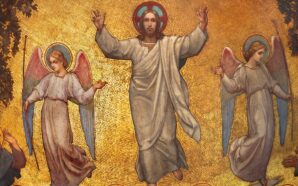
We can all identify with Peter in today’s gospel from John. Jesus has died. Peter leads a group who are not only disheartened; they’re so afraid that they have been locking themselves away. Peter decides it’s time to get on with life. Peter, the fisherman, declares that he is going fishing. At least he knew how to fish, and where to find the fish. Or at least he thought he did. He and his companions fished all night and caught nothing. How do you think they felt by morning? With the coming of the light, Jesus appears and tells Peter where to put down his nets. He obeys and brings in a huge haul of fish. Over breakfast, Peter and his companions share a Eucharistic meal before Jesus puts Peter to the test with the thrice repeated question: ‘Do you love me?’
During these nine days of mourning at the death of Pope Francis, the cardinals are gathering in Rome in preparation for the conclave. At the same time as the cardinals prepare to vote for the new pope, we Australian Catholics have been voting for our new government. The pundits tell us that both sides have run a dreadful campaign in the Australian election, but at least we are assured that our robust electoral system will produce a democratic result acceptable to all right-thinking citizens. Meanwhile in Rome, we’ve had one cardinal attempting to change his birth date so as to be eligible to vote; another convicted of financial fraud tried to maintain his eligibility; another cardinal over the voting age still turned up in Rome to participate in the funeral rites and the pre-conclave activities even though the pope had sanctioned him for child sexual abuse. None of us claims that the Holy Spirit will direct the outcome of the Australian election. But we Catholics sincerely hope and pray that the Holy Spirit will guide the cardinals in conclave as they cast their votes. From this distance, it seems that the Holy Spirit has a lot of work to do.
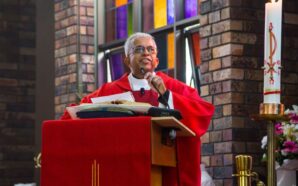
On Friday night, I attended the episcopal ordination of my friend Tony Percy in St Mary’s Cathedral, Sydney. I’d been forewarned that the liturgy would be one with the works – lots of bells, smells and heavenly music, estimated to run for 2½ hours, as it did. It was old style Roman liturgy at its finest. And yes, I entered the cathedral feeling a little like Peter, a little downhearted at some of the commentary now coming out of Rome in preparation for the conclave, aware that there would be little place for women in the liturgy we were about to celebrate. As the Australian bishops were in conference, they were all able to attend and concelebrate on the sanctuary. And there were hundreds of us priests. The bevy of hundreds of vested unmarried men in a range of liturgical dress impacted on me more than usual, given that I had recently given an interview being asked: ‘You describe (Pope Francis) as a reformer but surely he did little to shift the dial for women in the church?’ I answered: ‘Absolutely and it’s one of the things I’ve been critical of him for. He did set up two commissions of inquiry into women deacons and each time he fudged it – he basically did not release the complete findings of those inquiries and he did not further the agenda. And on that I think he did fail’.[1]
It was then put to me: ‘And yet, once again, we’re going to see 150 men, cardinals, in a room, deciding which man is going to lead a global congregation that is at least 60 per cent female. Is the church dealing itself out of the modern world or does it prefer the old world where women getting power just didn’t exist?’
I answered: ‘Ever more young people have that mindset, saying, why would you discriminate on the basis of gender in relation to any role? I think this is something which the church just hasn’t adapted to and desperately needs to. Pope Benedict allowed many married Anglican priests to come across to Rome, so I would hope the next pope would allow men to marry before their ordination.’
In St Mary’s Cathedral on Friday night, I could sense that the appetite for change on the sanctuary and in our priestly ranks was not great. What was jarring for me was consoling for many. I wondered whether Francis’s efforts to remodel the Church as a field hospital reaching out to all on the peripheries were simply a temporary aberration? When Tony Percy was asked by the archbishop: ‘Do you resolve to guard the deposit of faith, entire and incorrupt, as handed down by the Apostles and preserved in the Church everywhere at all times?’, I presumed that many of the clerics there gathered would insist that this somehow meant maintaining the counter-cultural status quo in the wake of changes in our secular society, including the denial of ordination to women.
The consolation came when Tony was asked a further two questions as the stipulated requirement for ordination as a bishop:
‘Do you resolve, for the sake of the Lord’s name, to be welcoming and merciful to the poor, to strangers, and to all who are in need?’
‘Do you resolve as a good shepherd to seek out the sheep who stray and gather them into the Lord’s fold?’
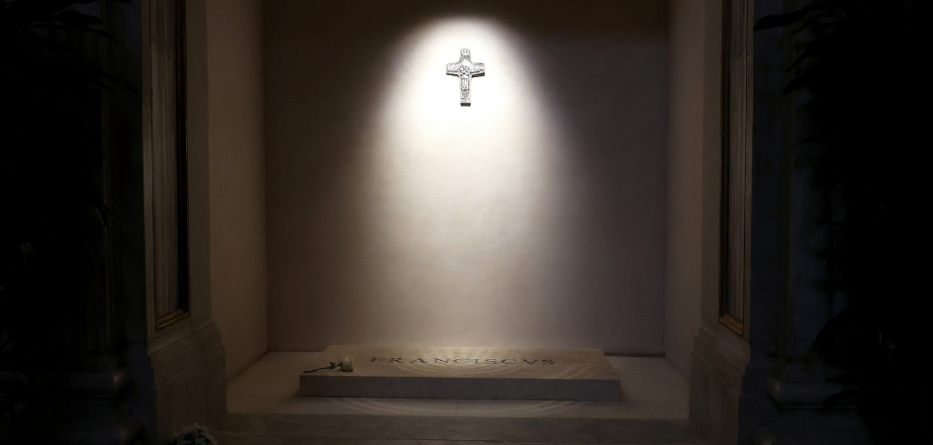
Francis showed us how to live with the enormous tension of these three key questions put to any bishop. Whoever his successor is, however the Holy Spirit plays a role in the papal election, this creative tension will continue to build. I thought back to the final stages of Francis’s funeral when his coffin arrived at the Basilica of St Mary Major. At the entrance of the Basilica were 40 people with white roses. There was no great fanfare. These 40 privileged mourners were not identified by name. But we knew that this group of men and women included migrants, the incarcerated, homeless people and transgender people. Bishop Benoni Ambarus, secretary of the Commission for Migrations of the Italian Episcopal Conference and delegate for charitable initiatives explained to the media: ‘The gesture of the white rose is a way to say “welcome home” because he will go to the house of the Father. It’s a rose to say thank you for what you have done for us… They will be children saying farewell to their father.’[2]
Inside the Basilica, four children placed the white roses at the foot of Francis’s favourite icon of Mary, Salus Populi Romani – the protectress of the Roman people. One of the children was an asylum seeker who had been on the plane with Francis returning from Lesbos where Francis together with the Ecumenical Patriarch and the Archbishop of Athens had stood in solidarity with those fleeing war and violence.
As we return to our daily lives of fishing, we await the action of the Spirit in Rome. Let’s be alert to the unexpected invitation from Jesus to put our nets in a different place, and to join him in a eucharistic meal before being commissioned to go where we would rather not go. I take comfort at this time by one observation offered by Fr Arturo Sosa SJ, superior general of the Jesuits. He said, ‘Francis’ life was founded on the rock that is Christ, not on the sand of his ideas or intuitions.’[3] May the rock of Christ be the guide star for the cardinals in conclave and for us as we discern the way forward for a Church which is both welcoming and merciful to the poor, to strangers, and to all who are in need, as well as being true to the deposit of faith, entire and incorrupt, as handed down by the Apostles and preserved in the Church everywhere at all times. As we await the outcome of yet another election, let’s continue to question our ideas and intuitions while seeking the rock that is Christ.
Fr Frank Brennan SJ is serving as part of a Jesuit team of priests working within a new configuration of the Toowong, St Lucia and Indooroopilly parishes in the Archdiocese of Brisbane. Frank Brennan SJ is Adjunct Professor of the Thomas More Law School at ACU and is a former CEO of Catholic Social Services Australia (CSSA). Fr Frank’s latest book is An Indigenous Voice to Parliament: Considering a Constitutional Bridge, Garratt Publishing, 2023 and his new book is ‘Lessons from Our Failure to Build a Constitutional Bridge in the 2023 Referendum’ (Connor Court, 2024).
___________________________________________________________________
[1] See https://www.smh.com.au/national/pope-francis-gave-his-life-for-all-but-he-failed-on-one-crucial-challenge-20250424-p5ltyb.html
[2] See https://religionnews.com/2025/04/25/migrant-homeless-and-trans-crowd-to-pay-respects-to-pope-francis-at-funeral/
[3] Arturo Sosa SJ, Homily , 24 April 2025.