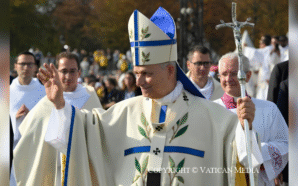


When Archbishop Ronald Hicks formally took possession of the New York Archdiocese Feb. 6, he stepped into an institution still defined by financial hardships that began long before his arrival.
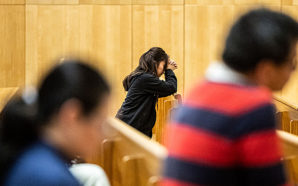
Decades after the eruption of the nation’s clergy sexual abuse scandal, the country’s most prominent Catholic archdiocese remains locked in an effort to compensate victims while sustaining a pastoral system strained by rising costs, shrinking trust and internal clergy polarization.
Over the past decade, the New York Archdiocese has sold assets, merged parishes, reduced budgets with layoffs, and restructured health care and retirement systems in order to absorb the financial shock of abuse litigation. In December, it announced a proposed $300 million compensation fund for survivors — one of the largest such efforts in the country.
But interviews with local priests and experts suggest that behind the public gestures toward accountability lies a quieter crisis that Hicks just inherited: uncertainty about long-term solvency, uneven communication with clergy, and increasing ideological polarization.
To continue reading this article, click here.
With thanks to the National Catholic Reporter (NCR) and Camillo Barone, where this article originally appeared.