

Pope Benedict XV began his papacy in 1914 during the first year of World War One; Pope Pius XII began his papacy in 1939 during the first year of World War Two. Not ideal timing.
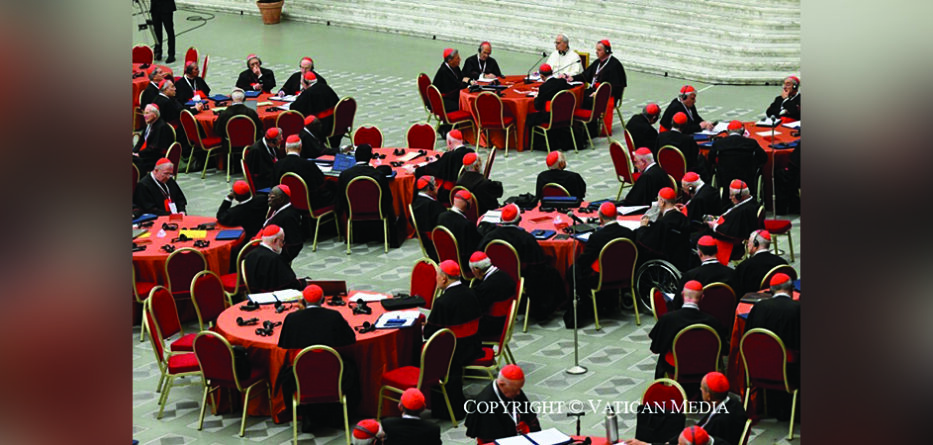
Pope Leo XIV ushered in his first signature initiative—the Extraordinary Consistory of Cardinals—during the same week as his fellow American, President Donald Trump, authorized the removal of a foreign head of state, threatened other sovereignties, mused aloud about his expansionist ambitions, and threatened to shatter global peace.
Not ideal timing.
Although I am sure the bellicose Secretary of War, Pete Hegseth, was not apprising Cardinal Pietro Parolin, Vatican Secretary of State, of his Commander-in-Chief’s plans for Caracas, the timing has proven to be propitious.
Calling the cardinals together for two days at the beginning of the new year, following several months during which he has worked diligently to bring to fruition the unfinished projects of his predecessor Pope Francis, the American pontiff was going to imprint a new style of governance with a bold undertaking. He could not have divined the next politically explosive move of a volatile Mr. Trump, and bringing his primary collaborators, the cardinals, to Rome for some reflective time was hardly comparable in daring to the early markers of the Francis papacy, as in flying to Lampedusa off the coast of Italy to stand in solidarity with migrants fleeing for their lives.
Although far less dramatic, Leo’s governance project has proven illustrative of the personal style of a cautious, deliberative, deeply collegial and warm pastor.
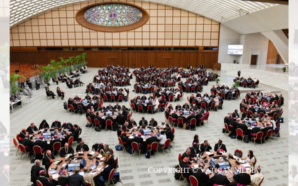
This extraordinary consistory—the Latin root consistere means standing still, stopping in place—was designed to make good on his promise after his election to utilize the College of Cardinals in productive and consistent ways. Too often in the past they were relegated to the margins, consulted only on papal whim, and many felt diminished as a consequence. They made their feelings clear during the pre-conclave discussions prior to the papal election. Leo heard them.
This undertaking is a marked departure in papal governance. Previous popes consulted the Vatican’s curial cardinals only, leaving the larger number of cardinals scattered across the globe on the periphery; Pope John Paul II essentially governed solo; and Pope Francis created his Council of Cardinals drawn from all the continents and made up of prelates publicly disposed to advance Francis’s vision of the church. Selective consultation.
Only Leo has broadened the criteria for inclusion and in doing so made the cardinals participants rather than loyal, if occasionally aggrieved, bystanders.
So against the backdrop of the consistorial gathering, and with bombs being disgorged from the mighty aircraft of the pope’s home country, Leo couldn’t help but be distracted and disturbed. But there is an antidote to the crazed behaviour of nations. In his opening address he told his fellow bishops that their coming together is “a highly significant and prophetic gesture, particularly in the context of the frenetic society in which we live…. It reminds us of the importance, in every respect of life, of stopping to pray, listen and reflect and in doing so, refocus our attention…lest we risk running blindly or ‘beating the air’ in vain, as the Apostle Paul warns.”
Leo confirmed his commitment to synodality—the enactment in church life of deep listening and respectful dialogue punctuated with prayer and silence—as a way of being a church that is more embracive, less clericalist, more the inverted pyramid than a monarchical structure with the pope at the apex. This was Francis’s ecclesial vision and Leo has pledged to implement it.
The extraordinary consistory is but one example of synodality-in-action. Leo has indicated that he intends to have one or two a year, and in doing so model for the larger church synodal practice as the new norm.
This is a tough call. Synodality has a reformist component to it that makes it more than an attitude, an exercise in ecclesiastical therapy. When you truly listen, allowing for the possibility of change, you enter into a dynamic that does not foreclose thought but invites fresh perspectives.
By showcasing a way of working that is mutually supportive rather than adversarial, Leo has shown a riven world that there are ways of exercising power that honour rather than deface our common humanity, that there are ways of leading that lift up rather than debase.
Outside the walls of the Vatican’s Synod Hall the world is still spinning, desperate for order and peace. Inside the Synod Hall Leo and his cardinals showed the wisdom of pausing.
Dr. Michael W. Higgins is a documentarian; Biographer; Columnist; Distinguished Professor Emeritus; President and Vice-Chancellor Emeritus, St. Jerome’s University; Basilian Distinguished Fellow of Contemporary Catholic Thought.
With thanks to Pontifex Minimus, where this article originally appeared.