

It’s easy to forget that the word doctor comes from a Latin expression for teacher. Mind you, my GP is always trying to teach me things, but sadly, I am a poor student. When we call somebody a ‘doctor of the Church,’ it doesn’t mean that they are going to send us off for a blood test or tell us for the umpteenth time to be careful about what we eat. It means that they have a special role in teaching us.
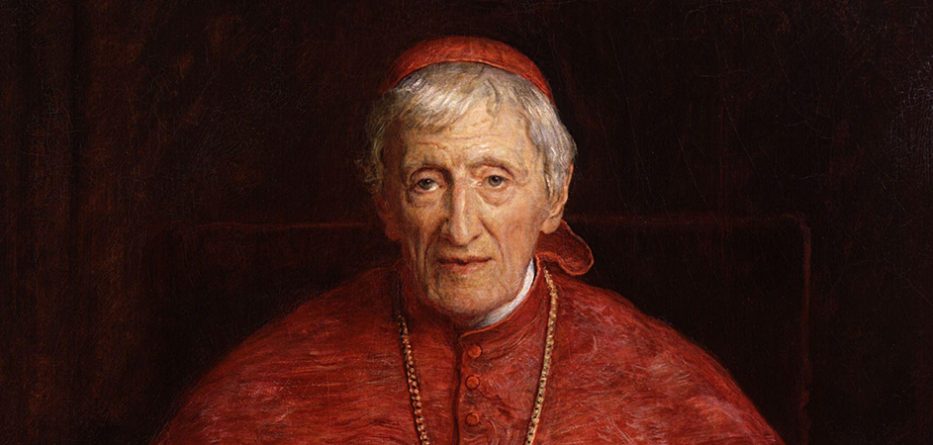
The latest doctor of the Church to achieve this rare distinction is St John Henry Newman (1801-1890). He joins select company that includes four very special women: St Teresa of Ávila, St Catherine of Siena, St Thérèse of Lisieux and St Hildegard of Bingen. Other great personalities include St Augustine and St Thomas Aquinas. It’s hard to imagine the Church without their influence.
Only six years after his canonisation, John Henry Newman has been included on this list. The decision may provide a clue about what is important to Pope Leo XIV and the direction he would like to chart for our journey.
Newman was himself a man on a never-ending journey. It was a long and often difficult quest. He began life as an Anglican and had embarked upon a most eminent career at Oxford University. Yet something else was stirring within him. It took time for him to acknowledge his hunger for the tradition and liturgy of Catholicism. As a young man, in 1833, he found himself feeling unwell and homesick on a visit in Italy. He wasn’t sure where the Lord was leading him. It was then that he wrote what remains, for me, one of the most beautiful prayers for the pilgrimage of hope:
Lead, Kindly Light, amidst th’ encircling gloom,
Lead Thou me on!
The night is dark, and I am far from home,
Lead Thou me on!
Keep Thou my feet; I do not ask to see
The distant scene; one step enough for me.
In 1845, Newman took a giant leap of faith and became a Catholic. In the middle of the 19th Century, this was hardly a smart career move. He lost many friends, not to mention social status. It was decades before he’d be welcome back at his beloved Oxford University. He wrote a novel about the journey called Loss and Gain (1848). His sense of loss was palpable. But what did he gain?
One part of the answer was the opportunity to explore and articulate a theology that became a seedbed for Vatican II. His idea of the development of doctrine was central to this. Newman was deeply suspicious of an overly authoritarian Church and was alarmed by the definition of papal infallibility by Pius IX at Vatican I in 1870. He said that Church teaching was not a building where, once the bricks were laid, it would stand unchanged forever. He preferred to compare it to a tree with deep roots which would keep growing throughout a long life. He believed that faith was a journey, not a destination. He famously repeated the adage, ‘‘to live is to change and to be perfect is to have changed often.” He said, “growth is the only evidence of life.’’
Newman’s belief in the importance of conscience is an extension of this. He thought and wrote a great deal about education, and it would be great if some of the boffins of today read The Idea of a University (1852) and put into practice its vision of freedom within tradition. Newman rejected the notion that education was about programming people as if they were robots. It was about the rich cultivation of a mind and heart where an informed conscience could lead to truly human decisions. In writing to the Duke of Norfolk in 1873, Newman said, ‘‘conscience is the voice of God’’.
Why would Pope Leo draw so much attention to Newman at the start of his pontificate? Newman had a mighty impact on Leo’s namesake, Leo XIII who succeeded Pius IX and almost immediately made Newman, then a priest, a cardinal. Leo XIII believed that it was wrong for the Church to stay behind walls and simply defend itself against the modern world. He wrote an encyclical called Rerum Novarum (1891) which was a major development in the teaching of the Church, allowing faith to spread its branches into the real lives of working people.
The words Rerum Novarum mean ‘about new stuff’ and the Church had not previously shown much interest in new stuff. It endorses Newman’s view of conscience. Our tradition of Catholic Social Teaching begins here and is fed at its roots by the understanding Newman expressed in his masterpiece, An Essay on the Development of Christian Doctrine (1878). Catholic Social Teaching believes that our faith is responsive, not defensive. Pope Leo expects us to encounter and engage the challenges of our time, not hide from them. This is a wonderful journey for us all.
Michael McGirr is the mission facilitator of Caritas Australia.
This article was originally published in the 2025 Season of Creation | Spring edition of the Catholic Outlook Magazine. You can read the digital version here or pick up a copy in your local parish.