

Throughout October 2024, Br Mark O’Connor FMS, Vicar for Communications for the Diocese of Parramatta and the Pope Francis Fellow at Newman College, University of Melbourne, will provide reports on the second session of the Synod on Synodality in Rome.
This is his fourth letter for Monday October 21st.
READY! SET! GO?
The Synod now enters its last six days concluding on Sunday October 27th.
Participants, overall, reliably testify to the value of their ongoing “Conversations in the Spirit” and the building up of trust and relationships. See especially the witness of Cardinal Cupich on this matter. Amidst such a diverse coming together of delegates, from so many cultures and local churches, there is indeed a profound sense of fraternity and unity.
This is no small achievement! Now the hope is that this methodology of encounter, dialogue, and discernment will be put into practice in all parts of our global church, especially at the local church level. See Cardinal Bo call for continuous synodality in Catholic dioceses worldwide.
The Universal Church is ready after years of deep consultation for action. Two years of intense synodal sessions of lay women and men, consecrated persons, and bishops all gathered around “Peter” have set and modelled how local churches are challenged to proceed forward as the pilgrim people of God.
Last week, rich discussions have certainly taken place about important issues of governance, the selection and role of bishops, and a whole host of other topics.
Especially helpful to understand the current dynamics of what’s happening is Geraldine Doogue’s podcast with Canadian theologian and lay woman Catherine Clifford.
Some hesitations and fears
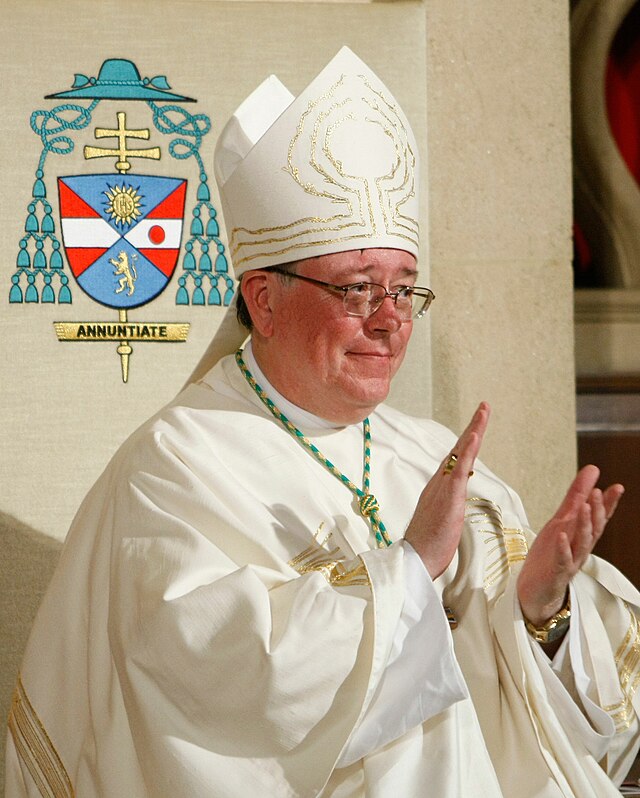
Cardinal Hollerich SJ. Image: Wikimedia Commons
But, in all honesty, the last week or so here in Rome have also been, for many, a rather anxious and at times, confusing experience.
There is a nagging persistent question surfacing about this arduous and demanding synodal process – will it actually “go” anywhere in the final analysis? The fear is that it might all end with a whimper and not a bang!
The reliably insightful Cardinal Hollerich SJ, the general relator of the Synod, gave precise voice to some of these anxieties in an important talk in the last few days.
“The experiences we’ve shared here must not remain within these walls,” he urged. Instead, the goal is to make the richness of the synodal experience accessible to all members of the Church. While not all the faithful can physically participate in the Synod, Cardinal Hollerich emphasised that the Church’s mission is to extend the fruits of this gathering to the entire People of God. Through renewed organisational and institutional structures, he said, the Synodal process can be brought to life in local churches, allowing all believers to engage in the dynamic journey of the synodal Church.
The Cardinal’s presentation concluded with a call to action, urging participants to propose concrete ways to ensure the lessons learned in this “place” can resonate throughout the global Church.
Austen Ivereigh commenting on this in his column in The Tablet (October 19) noted Hollerich’s call to avoid an excess of abstraction on the one hand or of pragmatism on the other; and the need to give space, both to inspiration and to concrete practices and proposals. For Ivereigh, ‘abstraction is by far the greater temptation’ as the second session of the Synod moves to a conclusion.
The Pope Francis haters are still alive and well here in Rome
Are these fears justified? I am not sure. But things are certainly not helped by the campaign still vigorously pursued by the anti-Pope Francis media – of EWTN, the National Catholic Register, the Pillar, and a few diocesan newspapers.
Their ongoing campaign to undermine, trivialise and even mock the hopes of Pope Francis, for the practice of synodality in the global church, is a scandal.
For example, one such ‘journalist’ claimed that any talk at the Synod of giving ‘authority’ to local episcopal conferences is really: “a call to see doctrine subverted by definitive interpretation, by which “hard teachings” need not be accepted in “cultural contexts” critical of them.”
That’s a tendentious interpretation, so typical of their ideological stance.
If the bishop members of the Synod on Synodality are astute, they’ll push back on it as much as they can.
Apparently, these hyper-critic’s real loyalty is to a new ‘magisterium’ made up entirely of selected living and dead Archbishops and Cardinals whom they prefer to Pope Francis.
If you read them closely, their basic assumption is that the only person the Holy Spirit is not working through is Pope Francis himself!
For a perceptive fact-checking and debunking of their malignant activity, I highly recommend Sebastian Gomes article.
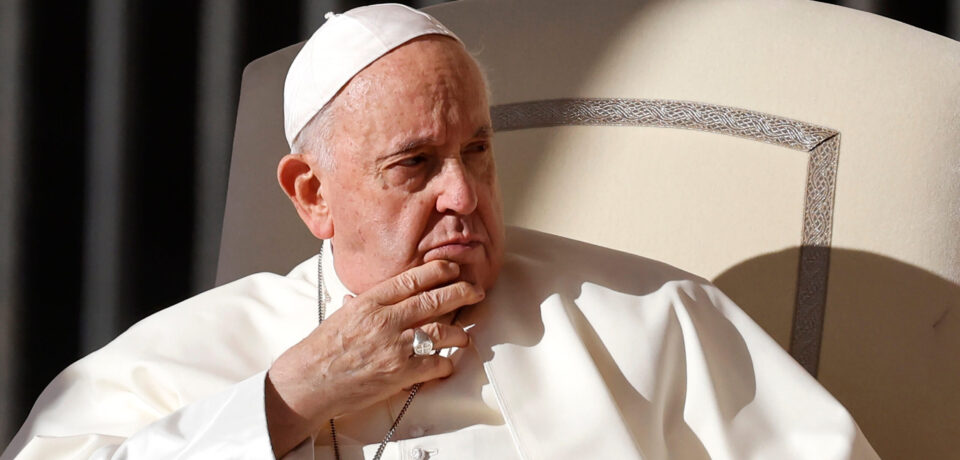
Pope Francis attends his weekly general audience in St. Peter’s Square at the Vatican, November 8, 2023. Riccardo De Luca/ Shutterstock
“Own Goals”
In addition, there have been some ‘own goals’ within the Synodal process itself, that certainly have not helped build confidence.
In particular, a few communications around the discussions about the vital role women in the church – especially the question of women deacons – have been a little dispiriting.
And just last Friday the proposed ‘dialogue’ between the special CDF study commission assigned to study the question of women deacons and Synod delegates, turned into a farce. Hopefully, however, it will be conducted more appropriately later this week. See Christopher White’s and Colleen Dulle’s analyses.
On this particular issue of women and the diaconate, I can only remind readers of the powerful testimony of a religious sister at the Amazonian synod of 2019. She is certainly not an ‘elite first world feminist’, pursuing a ‘niche’ secular issue and out of touch with the cruel realities of poor women and men.
The simple and direct words spoken by elderly Sister Alba Teresa Cediel Castillo, of the Missionary Sisters of Mary Immaculate and of St Catherine of Siena, who lives in Colombia among the Amazonian indigenous communities get to the core of this debate and conversation.
Sister Alba Teresa described the situation, and the difficulties experienced in villages in the Amazon, and the fact that sometimes there are couples who swear allegiance to each other in a marriage pact in the presence of the women religious when there is no priest. Then there are people at the end of their lives, or in difficult situations, who cannot make their confessions to a priest, because there isn’t one.
These people also turn to the women religious and confide in them the sins they have committed. They cannot perform the Sacrament of Reconciliation, but they can listen, and they can pray.
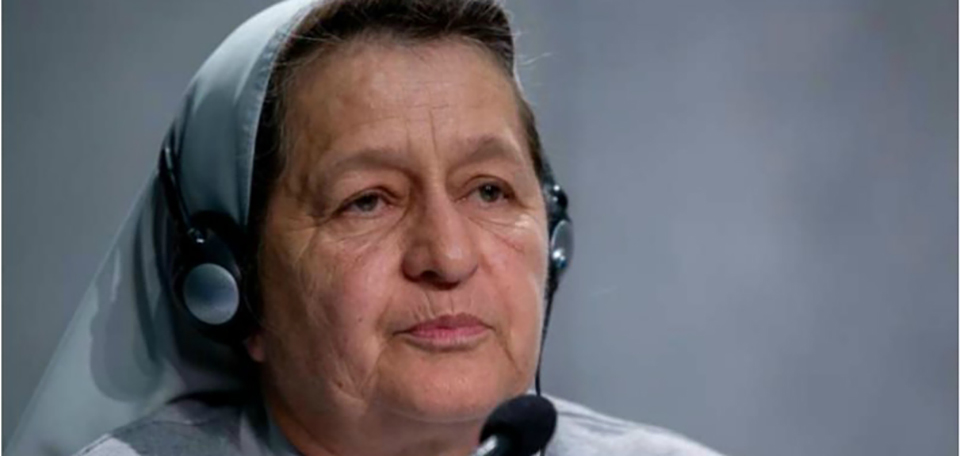
Sister Alba Teresa Cediel Castillo, MML. Image: Supplied.
“We are present everywhere and we do what a woman can do by virtue of her Baptism: we accompany the Indigenous people, and when priests cannot be present, we perform baptisms. If someone wants to get married, we are present and we witness to the love of the couple. We have often had to listen to confessions, but we have not given absolution. In the depth of our hearts, though, we have said that with the humility with which this man or woman approached us because of illness, or because they were close to death – we believe God the Father intervenes there.”
I am not a theologian nor a bishop, but all I can say is that this woman (and multitudes like her) are certainly acting as a deacon in persona Christi, by virtue of their baptismal vocation. No amount of abstract sacramental – especially ontological philosophy/theology – can credibly deny the reality of their Diakonia!
Conclusion: GO! – There are “new steps”
Over October, as I observed this Synod’s dynamics, I have often thought of that fine classic Australian film Strictly Ballroom.
In it, there was an epic struggle going on. On the one hand, there were those convinced that there is only one model of ‘ballroom dancing’ and hence their insistent and non-compromising mantra: “No new steps”. There are still some of these types here in Rome, but they are not the majority.
A young couple in the film, however, challenged this prevailing ideology and showed, in their actual dancing, that “new steps” are indeed possible.
Likewise, here in Rome, there is a similar struggle and ‘dance’ going on. This time a ‘dance’ of the Holy Spirit, going on in this journey of synodality…
And yes, the ‘dance’ will go well beyond this Synod on Synodality.
And sure, there will be (yet) another concluding synodal document.
I simply pray however, that as the Synod delegates conclude, they find a way to communicate hope to the wider people of God that:
There are new steps!
The journey must go on.
Let’s pray for them in this prophetic task.
In my final update, I’ll report whether they actually pushed the ‘GO’ button.