

I was optimistic going into November’s off-year elections. Despite the Trump-led Republican Party’s dominance in 2024 and despite media chatter about a “fundamental realignment of American politics” that followed, I expected things to turn around once voters got another chance to weigh in. My optimism was justified. Not only did Democrats win high-profile races in New York City, New Jersey, Virginia, and California, they also made significant local gains in Georgia, Pennsylvania, and Mississippi. Beyond all that, as G. Elliott Morris reports, “from 2024 to 2025 Republicans lost the most support—25 points, on average—among the very voters they theorized would remake the GOP into a vast, multi-racial, working-class coalition.”
Morris, a self-described “data-driven reporter,” shared my optimism in the lead up to the election. However, while his hopes rested on the polls, mine were, I confess, less empirically grounded. They arose instead from my study of the twentieth-century Jesuit Bernard Lonergan. But my study also chastens my optimism. Lonergan’s philosophy of history anticipates that, in situations like ours, things will get better before they get worse.
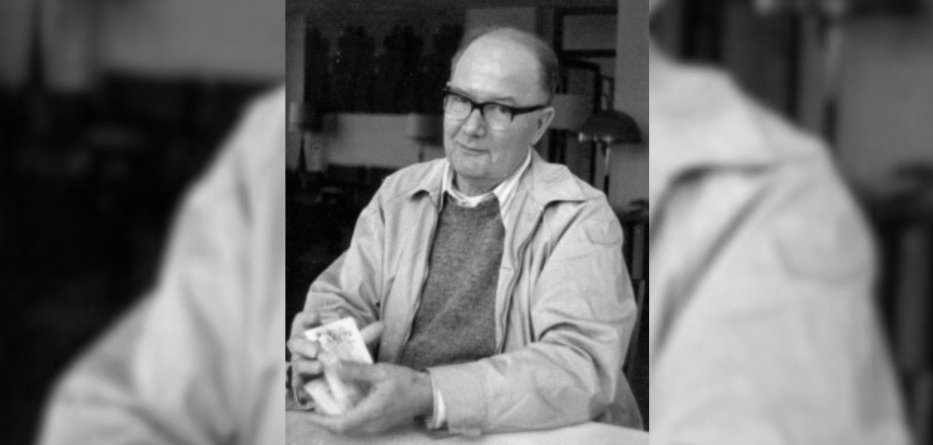
Lonergan’s early life left him fascinated with what made the difference between societies that stacked achievement on achievement and societies that squandered their opportunities, sliding toward collapse. Born in 1904 in Buckingham, Quebec, Lonergan entered the Upper Canada Province of the Society of Jesus at age eighteen. Four years later, the Jesuits sent Lonergan to university in England, where he studied philosophy, mathematics, and classics. In 1930, he returned home but was greeted by the Great Depression. As Lonergan put it, “the rich had become poor and the poor were out of work”—two hundred thousand people were unemployed in Canada alone. Politicians scrambled to address the economic cataclysm, but Lonergan, a keen mathematical mind, dismissed their policies as “blunders.”
Four years later, Lonergan’s Jesuit superiors sent him abroad again, this time to the Gregorian University in Rome for graduate studies in theology. He now lived a ten-minute walk from Palazzo Venezia, where Mussolini shouted to crowds through a microphone. On one occasion, Lonergan found himself across the street from a visiting Adolf Hitler. William Matthews records that Lonergan and his friends would, out of caution, “use code names when they talked about Hitler or Mussolini.” He spent the summers of 1934 and 1935 “learning German in the villa of the German College in Rome,” despite the acknowledged likelihood of his “offending the extraordinary susceptibilities of some of the local nationalists.”
In 1939, Lonergan started work on his doctoral thesis and took his final solemn vows as a Jesuit. Two weeks later, Hitler invaded Poland. As the war in Europe advanced, Lonergan’s dissertation defense was first rescheduled and then, with two days to go, cancelled so that he could be hustled onto an ocean liner back to Canada. He would have to wait another six years to receive his doctorate.
By the time the Allies vanquished the Nazis, Lonergan had resolved to write what would become his magnum opus, the nearly eight-hundred-page Insight: A Study of Human Understanding. A towering work of twentieth-century thought, it remains underappreciated: too Catholic for most philosophers and too philosophical for many theologians. An unapologetically intellectualist work, it develops a “critical realist” philosophy of knowledge. Lonergan aspired to bring the “modern ideal” of knowledge to a Catholic intellectual world clinging defensively, and less and less credibly, to the logical ideal at work in St. Thomas Aquinas and his Renaissance commentators. At one point, Lonergan speculated that, had he not written Insight in English, it might not have made it past the Vatican censors. Humani generis, after all, had been promulgated only a few years earlier. Insight’s nihil obstat and imprimatur may have come only thanks to the censors’ incomprehension.
The book’s early chapters analyze the kind of intelligence at work in modern natural science, but it then turns to practical understanding. For Lonergan, the pairing of intelligence with human emotion is the binary star system around which day-to-day life revolves. Practical insights seed technologies to fulfill our desires and allay our fears more effectively. They leverage fellow-feeling to build economies of labor and exchange. Intelligence guides and adjusts cooperative enterprise to take advantage of opportunities and sidestep dangers. Lonergan called this practical specialization of human intelligence “common sense.” It is the engine that accelerates social progress and holds a civilization at speed. But when common sense decays—when parts of the community retreat into worlds made of disparate experiences, judgments, and commitments—quality of life diminishes. Things get worse.
In such cases, the community’s common sense is often subject to senseless restriction, what Lonergan called “bias.” Lonergan classified several species of bias. There is, for example, “individual bias,” in which members of the community only ask questions, accept ideas, or pursue actions that pertain to their individual advantage. Consequently, the odds shrink that solutions helpful to the whole group will emerge. The problem, for Lonergan, is not primarily that individual bias is selfish or unfair, but that—like all bias—it is stupid. It arbitrarily and preemptively closes off the scope of questioning and understanding, and so, by extension, action. I can tell something needs to be done, but I don’t know what would be possible, worthwhile, or effective—and I can’t be bothered to find out.
Of course, devotion to family, tribe, or nation can open individuals to questions and solutions that their individual bias foreclosed, but that dilation can also lead to “group bias.” The very fellow-feeling calling people out of egoism can leave a community resistant to ideas that threaten those common bonds. If we give voice to new questions, accept new ideas, contemplate new courses of action, will we still be us? Or will these innovations sever the ties sustaining us? A group may be perfectly capable of asking and answering important questions, but, like the individual plagued by bias, its members are stupidly unwilling. Bias hobbles the virtuous cycle in which new ideas improve the community’s circumstances and set the conditions for further achievements. Again, things get worse.
Lonergan rarely said so explicitly—it would have been a political nonstarter—but he often hinted that he had the antimodernism of the Catholic Church in mind as an instance of such inwardly turned obtuseness. After Vatican II, he named it “the sin of backwardness”—an ecclesial instance of St. Augustine’s incurvatus in se.
It might seem as if a society in the grip of individual and group biases will be subject to swift, ineluctable decline. But individual and group bias are so stupid, Lonergan argued, that the resulting decline triggers its own reversal. Oversights induce crises, old solutions stop working, new problems go unaddressed, and people start to notice. The community’s circumstances deteriorate faster than people can lower their standards. Attention turns to getting things back on track.
In the near term, things get better. Still, because bias persists, the community is bound to sink back into decline eventually. Lonergan called these oscillations of progress and decline the “shorter cycle.” It’s why I was optimistic in November, and it sustains my hopes for the midterms this year. In the near term, I think we’re on the upswing of a shorter cycle.
Lonergan’s account of bias helps frame the malignant chaos of the Trump era. In 2017, Benjamin Wittes coined the phrase “malevolence tempered by incompetence” to describe the initial “travel ban” on majority-Muslim countries. It is an apt description of the Trump administration in general, but I also find it potentially misleading. It suggests the possibility of competent malevolence: some evil genius more effectively causing more mischief through greater cunning. But I think that’s a comic-book myth. The short-sightedness behind the incompetence is the very same obtuseness behind the malevolence. Trump’s own individual narcissism and the Republican Party’s collective flight into alternate informational and moral realities not only prevent the United States from accumulating new national achievements, they are also the principal corrosive of existing ones. Lonergan’s thought indicates that, while not all stupidity is evil, all evil is stupid—and the more evil, the more stupid in direct proportion.
In 2025, a new level of senseless political destructiveness arrived so quickly and palpably that the electorate could not but take notice. Absent further efforts at Big Lie–style subterfuge or a January 6–style seizure of power (neither, unfortunately, beyond imagining), I expect MAGA to take further drubbings at the polls. The relative realism of Democratic leadership will, God willing, displace the fever dream of Trumpist conspiracy thinking. The ordinary vanity of some conventional politician will displace Trump’s flamboyant narcissism. Degraded government departments will begin to rebuild and restaff. Some reforms will be proposed and some enacted, restricting, in some measure, the authoritarian ambitions of a future Trump. Things will get better; I have every confidence.
And then, in time, they will get worse. Lonergan’s thought leaves me equally confident of that. In addition to the shorter cycle of progress and decline, Lonergan diagnosed a quieter, more persistent “longer cycle” and a correspondingly insidious form of bias at its root. This cycle operates slowly behind the epicycles of palpable crisis and prompt recovery. In fact, Lonergan thought the shorter cycles set psychological conditions that make the longer cycle nearly inevitable. As much as the intensity of the shorter cycle’s crises sharpen practical intelligence, it also invites—even seems to justify—a subtler form of stupidity that Lonergan called “the general bias of common sense.”
Whereas individual bias restricts thinking to what pertains to “me,” and group bias restricts it to what pertains to “us,” Lonergan’s “general bias” restricts attention and concern to the immediate—to, in a word, what is practical. This bias finds expression in the smug ancient anecdote about how Thales fell into a well because he was contemplating the stars, but the milkmaid avoided it by minding her buckets. General bias not only fails to imagine why someone would pursue knowledge for its own sake but often resents the effort as a “waste” of time, energy, and resources. Thus, by privileging the practical, it ends up excluding the theoretical, the scientific, and even the spiritual. Sciences plod ahead slowly. Spirituality harvests its first fruits where, as the Sufi mystic Ibn Arabi put it, we are “alone with the Alone.” Common sense, in the end, lacks patience for either. It wants measurable results and it wants them on its desk ASAP.
The shorter cycle exacerbates the tendency of common sense to privilege short-term results. The very intensity of its crises—their urgency and inescapable consequences—rationalize restricting ourselves to practical questions. “The emergency is here, now,” we’re told. Who can spare the time, energy, or resources to think about unrelated matters? In a crisis, when things seem ready to collapse, who can risk standing on principle or taking the moral high ground? When outer circumstances are so pressing, who can be so selfish as to cultivate their inner life?
Crises thus heighten practical attention and hone common sense at the same time as they prompt a more diffuse kind of stupidity. Practical circumstances come to wholly dictate what questions to ask, ideas to accept, and actions to undertake. The stupidity of general bias thus stifles the unbridled intelligence that would demand more adequate understanding and more principled action—even if, from the perspective of the crisis, those goals might seem dangerously impractical.
Lonergan traced several manifestations of the longer cycle, each less tangible but more destructive than the last. The first is social. Because crises must be addressed immediately with ad-hoc solutions, there is no time or incentive to step back and think about the whole and to manage longer-term challenges. Technological, economic, and political structures begin to clash. The social order becomes incoherent, an amalgam of makeshift provisions serving fragmentary purposes. Achievements, such as they are, are piecemeal and defensive—Band-Aids that can’t set the stage for further achievements. “Progress is replaced by sluggishness and then by stagnation,” Lonergan wrote. Eventually, the discrete, immediate crises of the shorter cycle give way to a diffuse, generalized crisis for which society no longer has the materials to generate even ad-hoc solutions.
The second way the longer cycle unfolds is cultural. Unless it can justify itself as propaganda, advertising, or marketable “content,” art first loses its audience and then its artists. Likewise, unless it can mobilize voters, consumers, or militants, “religion becomes an inward affair of the heart.” As for philosophy, unless it can serve the calculative powers of economic advisers, legal advocates, or political strategists, it “glitters like a gem with endless facets and no practical purpose.”
Such cultural pursuits do not disappear all at once, Lonergan argued, “for common sense always finds a profoundly satisfying escape from the grim realities of daily living by turning to [purveyors] of culture, to representatives of religion, to spokesmen for philosophy.” But eventually general bias leaves people “warped by the situation in which they live.” They come to “regard as starry-eyed idealism and silly unpracticality any proposal that would lay the axe to the root” of social fragmentation and absurdity. No one has any solutions to the systemic social crisis because, before it arrived, those trying to generate them were relegated to the ivory tower or, worse, the gulag.
The third way the longer cycle unfolds is spiritual. Society loses the will to provide material support to those devoting themselves to the life of the mind, to moral reflection, or to prayer. Thus, fewer and fewer are willing to tolerate the deprivations those pursuits will demand. Consequently, fewer and fewer develop the broadness of mind or purity of heart they make possible. The spiritual soil in which new achievements might take root is depleted.
Meanwhile, the social situation’s growing absurdity and the culture’s mounting derision militate against the idea that intelligence, morality, or religion really have any purchase on reality at all. People lose the courage to act on their convictions, and eventually they give up on the very sense-making from which such convictions emerged. It’s better not to ask, not to pay attention. If some glimmer of hope in intellectual ideals persists, no one imagines they can become operative without the backing of force. Force itself becomes seen as the only possible vehicle of progress. “Reality,” Lonergan wrote, becomes no more than
the economic development, the military equipment, and the political dominance of the all-inclusive state. Its ends justify all means. Its means include not merely every technique of indoctrination and propaganda, every tactic of economic and diplomatic pressure, every device for breaking down the moral conscience and exploiting the secret affects of civilized man, but also the terrorism of a political police, of prisons and torture, of concentration camps, of transported or extirpated minorities, and of total war.
When, in a nuclear age, every heart has turned to stone, the only thing left to do is wait for the world’s ashen fate. “A civilization in decline,” Lonergan said, “digs its own grave with relentless consistency.”
At this point, you might have the impression Lonergan thinks the arc of history is long and it bends towards Nazis and nuclear weapons. But if that were so, the “longer cycle” would not be a cycle at all. Lonergan did think that, left to itself, the human world would self-immolate. But he was, of course, a Catholic priest; the world, he believed, has not been left to itself. Much as Lonergan’s philosophy of history has taught me how to pair my near-term optimism about American politics with a longer-term pessimism about our society and culture, so too has his theology tutored my Christian hope.
In 1973, looking back on the origins of Insight, Lonergan recalled that his “theoretical analysis of history” was modeled on Newton’s theory of planetary orbits and its “threefold approximation.”
It had a first approximation in the first law of motion: bodies move in a straight line with constant velocity unless some force intervenes. There was a second approximation when the addition of the law of gravity between the sun and the planet yielded an elliptical orbit for the planet. A third approximation was reached when the influence of the gravity of the planets on one another is taken into account to reveal the perturbed ellipses in which the planets actually move.
So far, I have only presented Lonergan’s first two “approximations”: progress and decline. But, like Newton’s, Lonergan’s complete model has three terms. The history of human communities is never just progress, nor just decline, nor an oscillation between all-consuming conflagrations and rebuilding from the ashes. Any analysis of history is incomplete that does not also take a third approximation into account: redemption. For Lonergan, the drama of human history is—even right now, even in the United States—in the process of being redeemed by God through grace.
Lonergan’s doctoral dissertation, written as war swallowed Europe, was on St. Thomas Aquinas’s theology of grace. In it, Lonergan explored St. Thomas’s distinction between gratia sanans and gratia elevans: healing grace and elevating grace. Healing grace repairs the damage done by sin to minds and wills, to hearts and souls. Elevating grace, however, lifts us up into another order of reality altogether. It makes us fit to participate in divine life. Of course, God does not really offer two separate species of grace (or however many subdivisions scholastic minds could conceive). Healing grace and elevating grace name aspects of a single, concrete process of redemption.
Lonergan wrote about God’s redemption and grace in Insight as well and in recognizably Thomistic terms. But in an earlier chapter on ethics, he analyzed our moral drama in more psychological terms, using the concept of “willingness.” Willingness is an “effective freedom” that normally requires practice to be achieved, very much like a habit. What I must be talked into the first or second time, by the tenth or eleventh time, I may do without deliberation. My “willingness” to act is established, and I no longer need coercion, whether from outside or within, to do the right thing. The difficulty in ethics, as Lonergan saw it, is the absence of willingness. Without it, we begin to rationalize our failures to do what we know we should.
Blessedly, not all “willingness” has to come through our own effort. The effective freedom to do what we ought is not our burden alone. It can be a gift of God’s grace. Suddenly, we may find ourselves willing to do what before would have seemed unimaginable. In a later book, Lonergan transposed St. Thomas’s metaphysical language for grace into a psychological idiom to capture the first-person experience of divine love. He cited Romans 5:5 as his scriptural warrant: “The love of God poured into our hearts by the gift of the Holy Spirit.”
Lonergan suggested that reflecting on our relationships with one another can be a way to understand the link between love and willingness in the theology of grace and redemption. This link is captured in the way we sometimes express love to our significant others: “For you? Anything.” Similarly, for love of their children, parents find their willingness transformed: willing to wake up in the middle of the night, willing to handle unmentionable messes, willing to work and give and nurture beyond what was conceivable before. The gift of God’s unlimited love can, by extension, manifest in an experience of unrestricted willingness—that is, in perfected freedom.
Such radical spiritual liberation stands in sharp contrast, of course, to the short-sighted consciousness of the longer cycle. Unrestricted being-in-love is, on one level, a healing grace. It restores our willingness to ask, think, and decide about what bias had refused. But on another, it is elevating. We are empowered to endure the hardships that such thinking invites. Grace renders us willing to endure deprivation and derision, to love enemies, to pray for persecutors. The participation in divine life for which elevating grace makes us fit turns out to be the imitation of Christ.
As Lonergan was correcting the galleys for Insight in the mid-1950s, he was also working on a textbook in Christology for the Gregorian University, where he was then a professor. Written in Latin, De Verbo Incarnato (The Incarnate Word) proceeds in a now-defunct style, setting out theses and expositing them, unfurling corollaries and scholia. Most of the theses regard the hypostatic union—that in Christ there are two natures, divine and human, united in one person. The final theses, however, turn to Christ’s redemptive work. The very last thesis reads as follows:
This is why the Son of God became man, suffered, died, and was raised again: because divine wisdom has ordained and divine goodness has willed, not to do away with the evils of the human race through power, but to convert those same evils into a supreme good according to the just and mysterious law of the cross.
Lonergan’s thesis confronts the reader with a weighty implication: to chase after power or to bow, under threat of reprisals, to the will of the powerful—as so many American elites have under Trump—is to relinquish a role in God’s solution to the problem of evil.
Redemption comes not through power but through a loving willingness to endure victimization by the powerful for the sake of the Kingdom of God. This, as it says in the Gospel, is a hard teaching. Certainly, it can be and has been abused. American history is riddled with examples. But Americans have also lived according to Lonergan’s “law of the cross” with authenticity, now and again redeeming this nation from its cruel stupidities. Peter Maurin and Dorothy Day, the Berrigan brothers, and Dr. King and those who marched with him all did. One of Lonergan’s students, womanist theologian M. Shawn Copeland, reminds us that enslaved Americans did as well: “As individuals and as a group, the enslaved people did not allow brutality to turn them away from an appointment with Jesus.… To follow Jesus of Nazareth is to follow a way that requires us to take up the cross.” Today, my hope in God’s redemptive work swells when I see Christians and other Americans taking up a cross in front of ICE detention facilities. Where else, we should wonder, might God’s grace have us willing to follow Jesus?
Things will get better. And things will get worse. As the cycles of modern history turn around us, Lonergan’s thought, for all its models and theorems, fundamentally offers a spirituality. It asks us to ask ourselves, “What am I willing to see? What am I willing to believe? What am I willing to do?” And when confronted with the tragic deficiency of our willingness, Lonergan asks us further to ask, “Where does my help come from?” With the psalmist, we may remember, “My help comes from the Lord.”
Reproduced with permission by Commonweal.