


In the Christian tradition, peace is never merely the absence of conflict or the achievement of social consensus. In the Gospel of John, peace is a gift that flows from relationship with Christ and participation in God’s truth. Jesus’ promise — “Peace I leave with you; my peace I give to you. I do not give to you as the world gives” (John 14:27) — locates peace not as a form of external stability but as a transformed way of being with God and with one another. This vision of peace speaks powerfully into the contemporary Australian context, where social cohesion is increasingly tested by cultural fragmentation, historical wounds, and deepening public polarisation.
John’s Gospel consistently binds peace to truth. Jesus declares before Pilate: “For this I was born, and for this I came into the world, to testify to the truth” (John 18:37). Peace, therefore, cannot be sustained by denial or avoidance. It requires honesty, about who we are, about the structures that shape our society, and about the fears that divide us. In Australia, this includes grappling with the ongoing legacy of colonisation, the experience of First Nations peoples, and the challenges of living together in a multicultural and multi-faith society. From a pastoral perspective, peacemaking begins not with easy answers but with attentive listening and moral courage.
The risen Christ’s greeting, “Peace be with you” (John 20:19, 21, 26), is spoken into a space of fear as the disciples isolate themselves from the outside world. They are locked away, anxious and uncertain, yet it is precisely there that Christ breathes the Spirit and commissions them for mission. This detail , so often missed, is pastorally significant. Peace is not postponed until fear has vanished; it is given in the midst of fear. Many Australians today inhabit similar locked rooms, shaped by mistrust of institutions, anxiety about economic security, and suspicion of difference. The Johannine Christ enters these spaces not with condemnation but with reconciliation, grounding peace in forgiveness and renewed relationship.
This understanding of peace resonates with the social teaching of Pope Leo XIII, who argued that authentic peace depends upon justice, moral order, and respect for human dignity.1 In Rerum Novarum and related teachings, Leo XIII insisted that social harmony cannot endure where people are reduced to economic units or excluded from participation in the common good. His vision challenges pastoral ministry to see peace not as sentimentality but as a social and ethical task. Written in the 19th century this document is still relevant today.

Christ in Glory by Ivanka Demchuk.
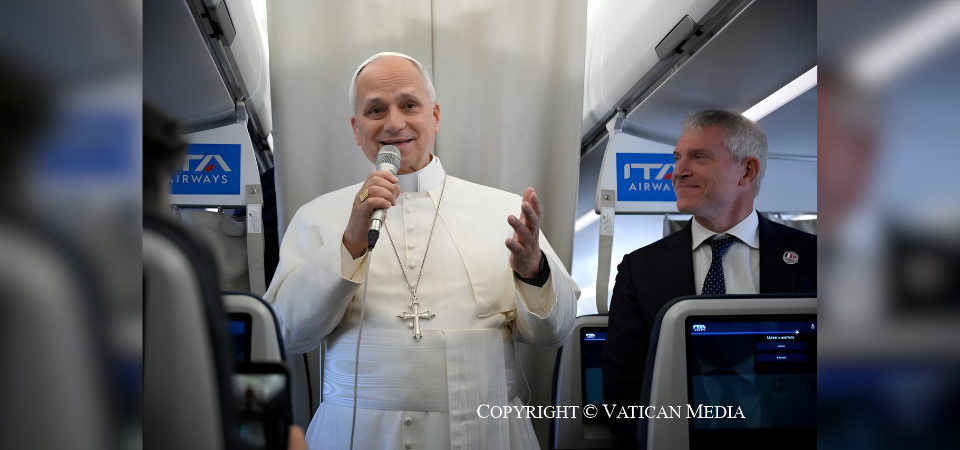
Indeed, more recently, Pope Leo XIV has taken up this tradition while addressing the contemporary fragility of social cohesion.2 In his early teaching on peace, Leo XIV has emphasised that peace is sustained not by uniformity but by shared commitment to the dignity of every person. He has warned against cultures of contempt and misinformation, arguing that peace collapses where truth is manipulated and fear is exploited. Echoing John’s Gospel, Leo XIV has stressed that peace must be rooted in justice and truth that liberates rather than truth wielded as a weapon.
This emphasis is especially pertinent in Australia, where public discourse is often shaped by rapid media cycles and adversarial debate. A pastoral response informed by Leo XIV’s teaching resists the temptation to retreat into ideological camps. Instead, it calls the Church to model a different way of being present: fostering dialogue, encouraging ethical reflection, and holding together conviction and compassion. Such a stance does not erase difference but seeks to humanise it.
In pastoral practice, this means creating communities where people can speak honestly without fear, where disagreement does not lead to exclusion, and where the vulnerable are protected. It also means recognising that peace requires formation, the formation of conscience, formation in listening, and formation in hope. As Pope Leo XIV has observed, peace grows where people are taught how to live responsibly with one another.
John’s Gospel offers a final word of reassurance: “Do not let your hearts be troubled, and do not let them be afraid” (John 14:27b). This is not a call to naïve optimism, but an invitation to trust that God’s reconciling work continues even amid uncertainty. In Australia, the Church’s vocation is to witness to a peace that tells the truth, seeks justice, and builds belonging. Drawing on the Johannine vision and the complementary insights of Popes Leo XIII and Leo XIV, pastoral ministry can help shape communities where peace is lived patiently, relationally, and hope-filledsigns of God’s abiding presence in a fractured world.
Dr Debra Snoddy is a Lecturer in Biblical Studies at the Catholic Institute of Sydney.
This article was originally published in the 2026 Lent & Easter | Autumn edition of the Catholic Outlook Magazine. You can read the digital version here or pick up a copy in your local parish.