

Homily for the 15th Sunday in Ordinary Time
Isaiah 55:10-11; Psalm 65; Romans 8:18-23; Matthew 13:1-9
Listen at soundcloud.com
Matthew Chapter 13 contains 7 parables telling us what the kingdom of heaven is like. The first parable in the series is the parable of the sower in today’s gospel. The picture painted in the parable is very simple. A farmer goes out to sow seed in the field. Some falls on the path; some falls on rocky ground; and some falls among thorns. For various natural reasons, none of this seed bears any fruit. By contrast, ‘some seed fell on rich soil, and produced fruit, a hundred or sixty or thirtyfold.’ Jesus tells us to listen.
What are we to make of this simple, stark contrast between seed that bears no fruit and seed that yields an abundance? C. H. Dodd was one of the great scripture scholars last century. He described a parable as ‘a metaphor or simile drawn from nature or common life, arresting the hearer by its vividness or strangeness, and leaving the mind in sufficient doubt of its precise application to tease it into active thought’.[1]
So there is no precise meaning of this parable. The parable is a simple story which invites us to imagine, speculate, and question – depending on our own situation as listener and reader. We are told: ‘Whoever has ears ought to hear’.
Matthew was writing for his largely Jewish community of Christian converts about 60 years after the death of Jesus. Scripture scholar Daniel Harrington tells us: ‘The Matthean community views itself as part of Israel, indeed the “best” part. It must explain to itself and to anyone else who may be interested why some Jews accept the gospel and some do not.’[2]
Those belonging to the best part of Israel saw themselves both as the abundant fruit from Jesus and the producers of abundant fruit for Jesus, whereas those who rejected the teaching of Jesus were seen as bearing no fruit. Harrington warns us that we must ‘recognize the dangers of “sectarian” thinking’ and that that ‘the “insider”- “outsider” conflict here is a quarrel largely among Jews’, and not against Jews.
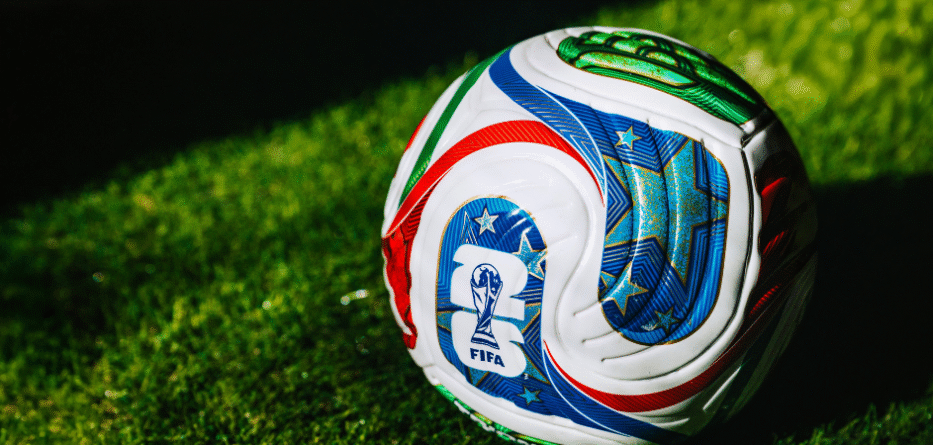
When contemplating how this parable teased me into active thought this past week, my mind turned to soccer and the expectation that sport was one of the few remaining activities governed by an international rules based order. I thought: surely, sport well played under the international order yields abundant fruit; and sport poorly played yields no fruit.
Many of us have taken to watching SBS this past couple of weeks, seeing some great football played. When there is so much war and division in our world with no respect for a rules based order, we have delighted to see the community of nations meeting on the football field, people celebrating their nation’s achievements, with the skill, training, and resilience of players being rewarded. And we thought the rules governing on-field behaviour at this high level were clear and fairly administered. With faithful application of the rules based order, the best teams would bear abundant fruit, being rewarded for their excellence.
If you’re like me, you probably cheered more for Belgium than for the United States once the US president intervened, objecting to the US striker Folarin Balogun being suspended for the critical US-Belgium game, having been issued with a red card for a foul. Mr Trump admitted: ‘I did (call Infantino), I asked for a review, because I didn’t think it was a foul. If they wouldn’t allow the top player, maybe the best, maybe among the best players on the (U.S.) team, to play, I think it would’ve had a big stain (on the World Cup). And I related just that feeling — I didn’t tell him what to do, I can’t tell him what to do.’
FIFA did what Trump wanted. When Belgium went on to defeat the US 4-1 after Balogun’s suspension was suspended, I rejoiced. I had been reading Pope Leo’s encyclical Magnifica Humanitas in which he states:
When questions about what is true lose their appeal, and a pragmatism takes hold that is content with what appears useful or effective, then democratic life is weakened. After all, democracy does not consist of rules and procedures alone, but above all of a solid concordance with the facts and a genuine commitment to the good of individuals and society as a whole. Indifference to the truth leads, slowly but surely, to a descent into totalitarianism. As the philosopher Hannah Arendt wrote, the ideal subjects of such regimes are not so much those who are ideologically convinced, but rather “people for whom the distinction between fact and fiction (i.e., the reality of experience) and the distinction between true and false (i.e., the standards of thought) no longer exist.”[3]
Mind you, Leo knows more than his prayers. He knows how the real world works. He writes: ‘Authentic realism does not give up on changing the world; indeed, it starts by clearly identifying interests, fears, constraints and power dynamics, precisely in order to determine what can be achieved, and the measures needed to achieve it. It does not reduce politics to morality’.[4] We Christians live in the real political world but we long for the moral kingdom to come. We also believe that signs of that kingdom can break in here and now. We believe that we can help to build the conditions in our world mirroring aspects of the kingdom to come, a kingdom built on truth, justice and charity. We can bear fruit, here and now. We can be like the sower throwing seed on rich soil, producing ‘fruit, a hundred or sixty or thirtyfold.’ And we can be like the seed thrown on rich soil.
Those who do not believe in a rules based order, those who think they can arbitrarily override a rules based order for their own purposes, and those who do not believe in truth are like those who throw seed on the path, on rocky ground or among thorns. Ultimately they do not bear fruit. Often they think they can bear fruit. They would have thought that if the US had won the game. The overwhelming Belgium victory is a parable about the conditions needed for justice and peace to flourish in our world.
Of course, there’s more to life than sport. With the Socceroos out of contention, we are free to cheer and hope that the best team will win. Having been teased into active thought, we take away the simple lesson of the parable – the lesson and the vision expressed in today’s first reading from Isaiah:
Thus says the Lord:
Just as from the heavens
the rain and snow come down
and do not return there
till they have watered the earth,
making it fertile and fruitful,
giving seed to the one who sows
and bread to the one who eats,
so shall my word be
that goes forth from my mouth;
my word shall not return to me void,
but shall do my will,
achieving the end for which I sent it.
Fr Frank Brennan SJ AO, Adjunct Professor of Thomas More Law School at ACU and Adjunct Research Professor at the Australian Centre for Christianity and Culture, is a former Rector of Newman College, University of Melbourne, and CEO of Catholic Social Services Australia (CSSA). His latest books include Pope Francis: the Disruptive Pilgrims Guide (ATF Theology, 2025), and Gerard Brennan’s Articles and Speeches: Maintaining the Law’s Skeleton of Principle (2 volumes) (Connor Court, 2025).
[1] C H Dodd, The Parables of the Kingdom, (New York: Scribner’s, 1961), 5.
[2] Daniel J. Harrington, The Gospel of Matthew, Sacra Pagina Series (Collegeville, MN: Liturgical Press, 2007), 198.
[3]Pope Leo XIV, Encyclical Magnifica Humanitas #34
[4] Ibid, #218.