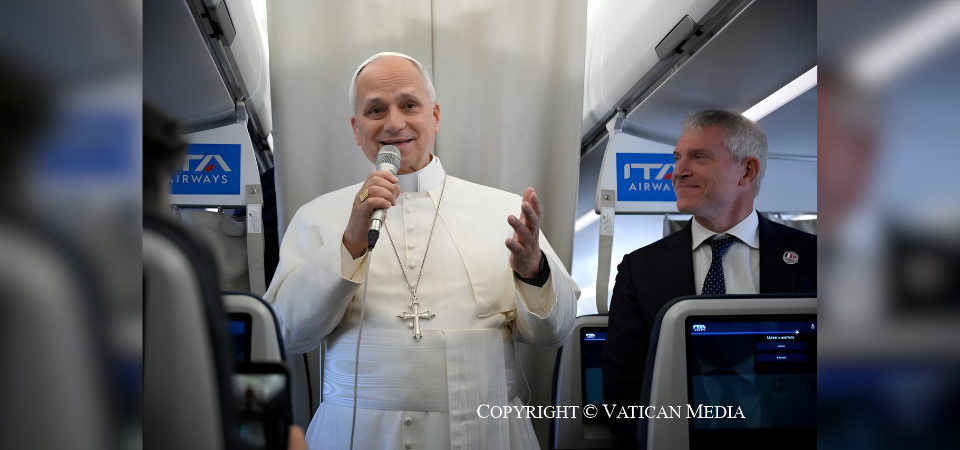



In this reflection, I will look at Pope Leo’s encyclical Magnifica Humanitas from the perspective of the professional healthcare ministry of the Church and how Artificial Intelligence (AI) is to be used in the relationships between the healthcare worker and the patient.
In a nutshell, the professional healthcare ministry of the Church continues the healthcare ministry of Jesus, who had compassion for the sick and the dying in responding to their needs in healing ways. Healthcare in this sense is a vocation to love Jesus in the sick and the dying, from the moment of conception to the moment of natural death. It is not just a job to which technical skills and expertise are applied. For Catholic healthcare professionals, we are to use our skills and professional expertise as a means of care that is ethical, professional and compassionate.
From this perspective, AI is to be used as a tool of care, a means of accompanying the other on their journey. AI is not an end in itself and can never be used in ways that are unethical or that lack respect for the humanity of the other. This means that we need to approach healthcare with the wisdom and humility born of prayer and formation as missionary disciples called to care for the sick and the dying.
Pope Leo reminds us in his encyclical of our vocation to walk together (synodally) with the world of AI in this regard.
‘Not a solution’ on its own
Wisdom and humility are to be at the heart of the therapeutic relationship with the sick and the dying in our midst. Pope Leo goes on to say, “AI Technology has the power to heal, connect, educate and protect … in the abstract, technology in and of itself is not a solution to humanity’s problems, just as it is not inherently evil. In practice, however, technology is never neutral, because it takes on the characteristics of those who devise, finance, regulate and use it.”(MF#9)
For the professional, the nature of the therapeutic, healing relationship with the sick and the dying informs our care in ethical and compassionate ways. AI can then be a tool to assist the therapeutic relationship to bear fruit for the patient, but it cannot be allowed to take over the care of patients.
I am on a research committee that is currently evaluating a proposal to determine if AI can be used to assist doctors in picking up deterioration in a patient’s condition early so that a medical emergency can be prevented from happening, or if the emergency is already happening, to be able to intervene as early as possible. So, the end result would be a good thing – it would be good for patient outcomes.

It is important that the AI tool does not replace the professional expertise of the doctor. Image: Shutterstock
However, it is important that the AI tool does not replace the clinical judgment and professional expertise of the doctor. Like any tool, ignoring the clinical wisdom and professional judgment of the doctor has the potential to do harm. So, it was reassuring to find in the research proposal that the AI tool would not replace the clinical judgment of the doctor in this regard.
Safeguards needed
Another issue with the use of AI in healthcare is the risk to patient privacy and confidentiality by having AI use patient data to develop the algorithms used in the model. Here, there needs to be safeguards in place, acknowledging the privacy and confidentiality of the sources of data used in developing the AI model. Transparency in how the data would be used, and accountability for cases of a breach of confidentiality would need to be in place before the AI model is implemented.
A further issue is that of the risk of undermining the centrality of trust in the therapeutic relationship between the professional and the patient. The therapeutic relationship is fundamentally a human relationship of care with both professional and pastoral aspects.
For trust to develop between the professional and the patient, the professional needs to firstly be competent in the technical aspects of patient care.
Secondly, the professional needs relationship and empathic skills in responding to the patient’s situation so as to foster the development of trust that emerges with continuity of care.
Finally, the professional needs to be consistent in caring for the patient, such that the patient comes to trust in the integrity of the professional. AI cannot replace or undermine the therapeutic relationship with the patient without turning the relationship into nothing more than a transactional relationship.
A matter of trust
So, the systems supporting the professional in caring for patients need to be focused on the centrality of therapeutic relationships, rather than purely commercial or transactional considerations in using AI models.

The therapeutic relationship between the healthcare professional and patient needs to be one of trust. Image: Shutterstock
In many instances, patients attend the professional seeking advice and management of their health issues. They often have used AI for information and advice. Hence, the professional needs to have the skills, wisdom and humility in guiding the patient appropriately, especially if the advice given by the AI model is misleading, or incorrect.
In these instances, the patient needs to trust the judgment of the professional just as the professional needs to avoid dismissing the concerns of the patient. The professional needs to remain focused on the therapeutic relationship with the patient, so that the patient can freely have a conversation regarding where the AI advice is correct, where the advice is misleading and where the advice is wrong.
This conversation takes time, and the professional needs to develop the relational skills in order to combine wisdom and humility with professional judgment and clinical wisdom in enabling the patient to grow in understanding through the consultation process. In this way, the professional walks along with the patient, synodally.
Deacon Dr Michael Tan is a former GP and is Deacon assisting at St John the Evangelist Parish, Riverstone.
The healthcare ministry of the Diocese aligns with the Diocesan Pastoral Plan priority of Formation and the objective of A Church Walking Together. Visit Synodality to learn more.