

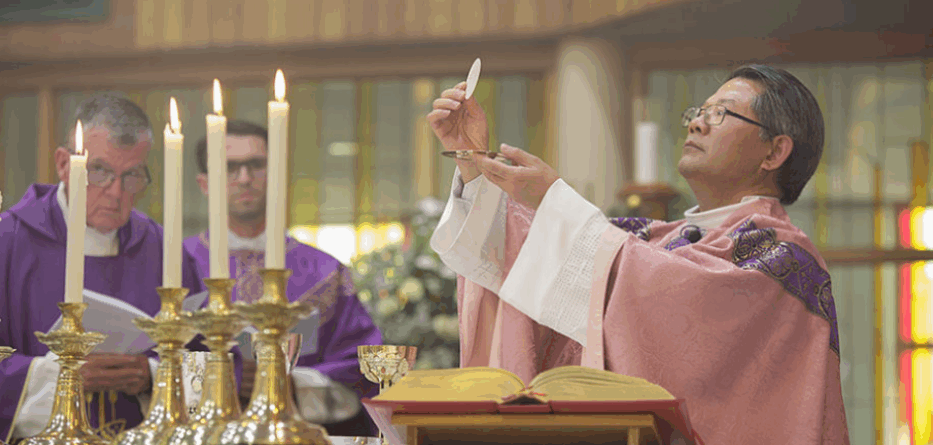
Most Reverend Vincent Long Van Nguyen OFM Conv DD STL, Bishop of Parramatta
The third Sunday in Advent, Year A
Readings: Isaiah 35:1-6; James 5:7-10; Matthew 11:2-11
Making Christ’ messianic agenda our own
Dear sisters and brothers,
A couple of weeks ago, I officiated the farewell Mass marking 50 years of my Order’s presence and ministry in one of the most vibrant parishes in Melbourne. It was the place where I first came to Australia, then subsequently got ordained and pastored for 7 years. My parents lived in the same parish for the last phase of their lives. Understandably, there was a significant attachment to the place on my part.
The Mass was celebrated with a mixture of sadness and gratitude, for both the friars and the people. It brought home to me the sense of vulnerable trust that all Christians are called to live and we, religious in particular, are to embody. It is not the church building, nor temporal thing, not even the familiar people to whom we attach ourselves absolutely. It is the security of insecurity that is what we are called to embrace. It is the discipleship of vulnerability, powerlessness and non-attachment that religious are challenged to model for others.
The present state of affairs for most religious orders is something of an enigma and a mystery. The institutional prestige, visibility, wealth and power that we once enjoyed are quickly giving way to diminishment, scarcity and inevitable demise.
Like the people of God in the exile, we are being led to a place of trial, uncertainty and loss.
Like them, we can try to relive the glorious past with nostalgia and risk losing our prophetic witness or we can go forward with courage and faith trusting that God will bring about new life out of our barrenness.
Scriptures this Sunday provide us with a valuable lesson of finding hope in despair, discovering strength in vulnerability and discerning God’s way in the unexpected. We are called to follow the example of the faithful remnants or the anawim in the face of displacement, alienation and loss.
In the first reading, the prophet Isaiah speaks to his people during one of the darkest times of their collective history. He reframes their hopelessness with a vision of rebirth. He reassures them that the Anointed of God would heal the broken-hearted, comfort the sorrowful and free the captives. But far from making Israel great again as in the days of their warrior-kings, Isaiah speaks of building a new society rooted in justice, compassion for the weak and care for the vulnerable.
The messianic age will be fulfilled with the eyes of the blind opened, the ears of the deaf unsealed, the lame walk and the ransomed return. This attention to the socially expendable was no small detail. It was the litmus test of Israel’s fidelity to God’s command. Just as God had cared for them when they were slaves and foreigners in Egypt, they ought to create a kinder and gentler society. Their present predicament was not to be blamed on anyone else but themselves. Isaiah opens the eyes of the exiles to see that the purpose of the captivity was to refashion them into a true people of the Covenant. Empowering the powerless rather than scapegoating the unworthy is the hallmark of the Covenant community.
The Gospel also speaks of the ministry of Jesus to the vulnerable. To begin with, we are told that John the Baptist sent his disciples to Jesus and asked him if he was the Messiah. John had told people the axe was lying at the root, ready to chop down the unworthy trees. He had promised the chaff would burn with unquenchable fire. But Jesus didn’t seem to be doing much slashing and burning. Instead, he was performing the messianic deeds that Isaiah foretold and Jesus himself reiterated at his first public appearance. By referencing his ministry to the downtrodden, Jesus reassures John that he indeed is the Messiah and that the messianic mission is accomplished not by power and dominance but by giving of ourselves to the least.
Like the Jewish people in exile we are unable to see what lies beyond the crippling crisis. We might be like John who had doubts about the coming of the Messiah even though he had risked everything for it.
What the Word of God tells us today is summarised in St James’ words “Do not lose heart”.
Instead we must persevere in humble and faithful discipleship, following Christ who proved his Messiahship by selfless service to God’s little ones.
We might also have our moments of doubt and despair as a result of tragedies, failures and disappointments of a more personal nature. We are called to be formed and transformed through them. Much of the transforming power of our faith is lost when we have grown too comfortable with it. We must hear again and again the call to be faithful, to expand our vision, to stretch our horizons, to challenge our old habits and to go the way that God wants for us.
Dear brothers and sisters,
The diminishment of many religious congregations like the Franciscans may be a cautionary tale for the rest of the Church. At the end of the day, it is not numbers, resources, power and influence but our discipleship of faithfulness to the self-emptying way of Christ that matters. Indeed, the church might become smaller, poorer and humbler but hopefully more of a light and a sacrament of God’s love to the world. May Advent hope nurture our vision and spur us into action, knowing that our discipleship cannot be other than making Christ’ messianic agenda our own.