

The Blue Mountains on a Sunday afternoon. While many would already consider this a picturesque setting to spend a weekend, parishioners of St Thomas Aquinas parish in Springwood have taken a further step – a reading group of the works of St Thomas Aquinas.
Directing the discussion is the national head of the School of Philosophy and Theology at the University of Notre Dame Australia, Dr Angus Brook. His group meets for two hours every Sunday afternoon.
“I felt the need to give back to the church, and to contribute to the life of the parish as a community,” he said.
“I am not particularly good at a great many things, but I do love reading and thinking, and I very much appreciate the thought and writing of St Thomas Aquinas, so when I discussed the idea with first Fr Chris del Rosario and now Fr Jack Elkazzi, both were supportive.”
For Brook, the reading group presented an opportunity to allow parishioners to not just deepen their understanding of the Catholic faith, but to also develop a connection with the patron of their church.
“I have also run reading groups in parallel to my teaching at university for over 15 years now… the idea of a reading group that tackles some of Thomas Aquinas’ writings was a good way of responding to some of the expressed desire amongst parishioners to deepen their understanding of their faith,” he said.
“Reading Thomas’ homilies on the Apostles Creed, on prayer, on the moral life, on the sacraments – these have certainly led to some wonderful conversations, and I think a deeper sense of engagement with various aspects of the Christian life.”
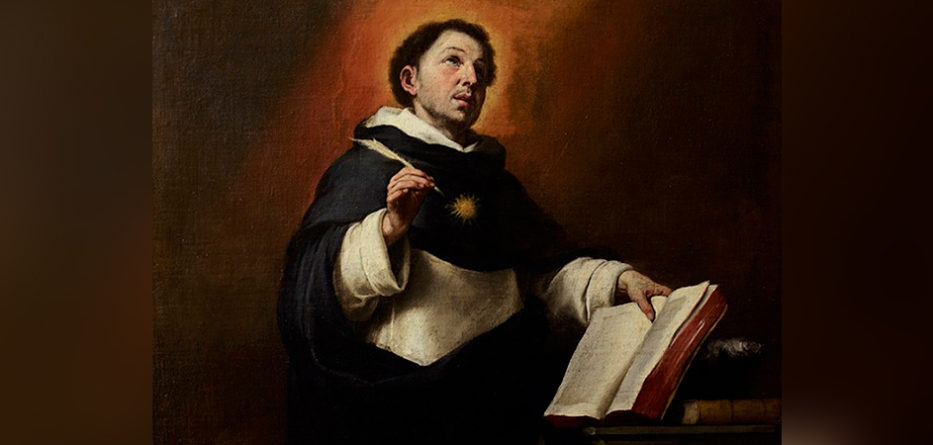
Although St Thomas Aquinas died in 1274, he is not just another theologian. Pope Leo XIII described him as the “Angelic Doctor” and the documents of Vatican II earnestly commend his writings as a guide in philosophy and theology.
“Humans are thinking-animals and so our life of faith needs to be embedded in and integrated with our capacity to think,” Brook said.
“What I have discovered through reading Thomas’ writings is an example of a deep commitment to the integration of faith and reason, so that one’s faith is guided by proper reasoning and one’s reason is perfected by faith.
“In this sense, I think reading Thomas Aquinas’ writings and then grappling with them, relating them to our life experiences and talking through it as a group definitely expands upon one’s practice of faith.”
The group began towards the end of 2025, running for several weeks before breaking over Advent and Christmas. While Brook didn’t intend to run the group during the current Lenten season, he believes the timing has allowed the parishioners to further their devotion to the Lenten season.
“When I started the reading group, I was trying to avoid running it during Lent and Advent and run it during ordinary time. This is largely because I think there are other groups and programs for Lent and Advent that are much more relevant and important than what I host,” he said.
“My view, for what it is worth, is that communal engagement with the liturgical seasons, and indeed with the liturgy of the hours, is crucial to deepening one’s life of faith.”
While the reading group has allowed parishioners to appreciate their patron in a new and enlightening fashion, Brook also believes St Thomas Aquinas is an anchor for a Christian desiring to discern the virtuous life – one of truth, good and beauty.
“I think that St Thomas’ commitment to virtue is something that we need deeply in our contemporary times; it is too easy to fall into extreme ways of thinking in our human world of social media and to merely react in extreme ways to the world we find ourselves in,” he said.
“I find Thomas Aquinas inspiring because he constantly reminds his reader that we were created for happiness and that this is our primary task in life: to act and live well in accord with our nature in the hope of finding our ultimate happiness in God.”
With thanks to Catholic Weekly and Alex Woolnough, where this article originally appeared.