

The Cloister Hall at St Patrick’s Cathedral in Parramatta was a meeting place recently for people whose prayers, customs and stories may differ, but whose longing for peace is shared.
The Multifaith Gathering for Peace, held on 27 October with the theme of Unarmed and Disarming Peace, brought together members of Buddhist, Christian, Jewish, Muslim and Sikh communities, alongside Indigenous voices, music, reflection and conversation.
The evening marked 40 years since religious leaders gathered in Assisi, in Italy, at the invitation of Pope John Paul II, for the World Day of Prayer for Peace. That landmark meeting did not ask participants to blur their beliefs or search for a single religious consensus. Instead, it demonstrated that people can remain faithful to their own traditions while standing together for the good of humanity.
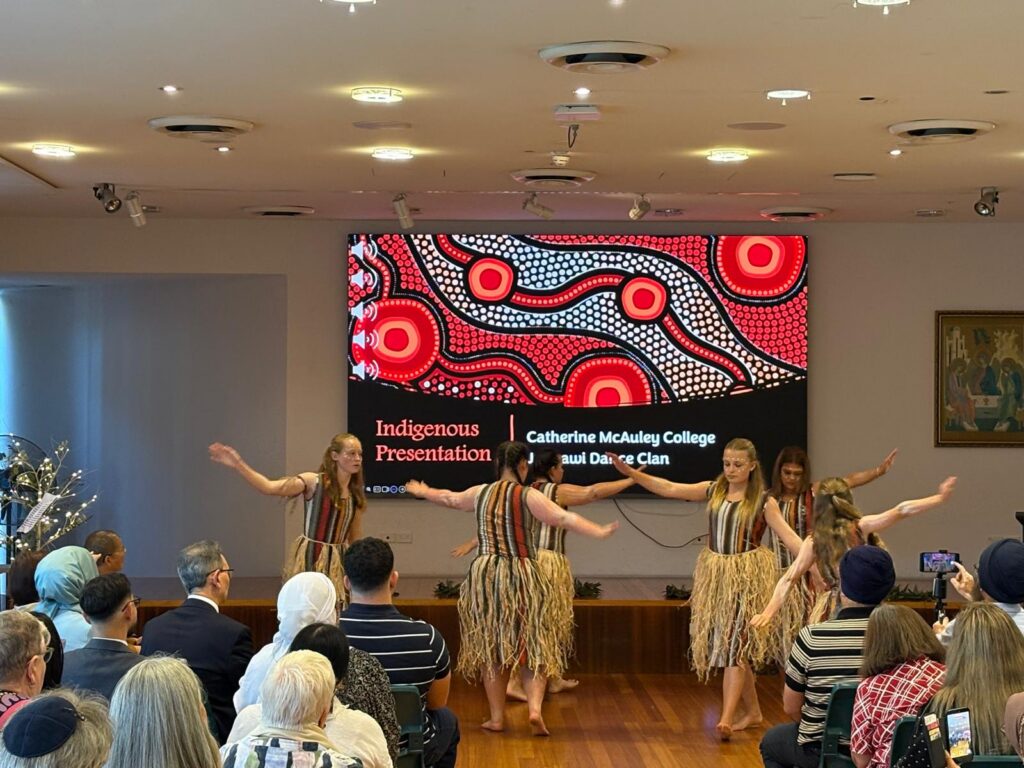
Jannawi Dance Clan from Catherine McAuley College. Image: Supplied
More than a conversation
Interfaith dialogue is not a debate to be won. At its best it is the patient work of meeting across differences: listening closely, speaking honestly and allowing another person’s experience to challenge some assumptions. The gathering at the Cloister Hall built this principle into this celebration. After each faith presentation, participants were invited to begin a conversation with someone from another tradition or someone they did not know.
These brief encounters were followed by silent reflection. This rhythm was incredibly successful. Presentation, conversation and reflection created space not only to hear information about another faith, but to encounter a person of another faith. In an age when difference is often reduced to a slogan or stereotype, a face-to-face exchange can be a simple act of peacebuilding.
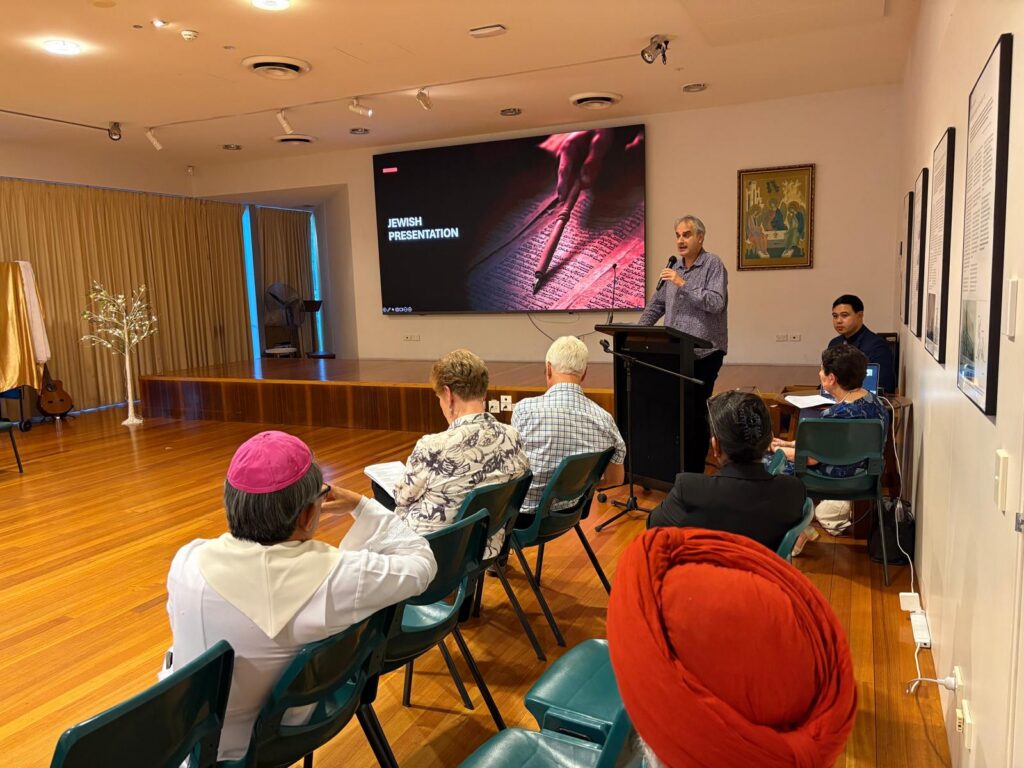
The Jewish presentation by Rabbi George. Image: Supplied
Many traditions, a shared hope
The program opened with an Acknowledgement of Country, by Diane Van Aken, and a presentation by the Jannawi Dance Clan from Catherine McAuley College. From there, the evening moved through distinctive expressions of faith. A Buddhist presentation and video, a Christian performance of the Peace Prayer of St Francis, a Jewish psalm chanted by a Rabbi, Sikh contributions and Islamic devotional music each offered a window into a living tradition.
Music gave the gathering another language. Cousin Zakaria Partoredjo, of the Three Rivers Ensemble, performed the Arabic devotional song Talama Ashku Gharami and a Freedom Song whose verses refer to prophets honoured across the Abrahamic faiths. Such moments do not erase difference; they reveal resonances that may otherwise go unheard.
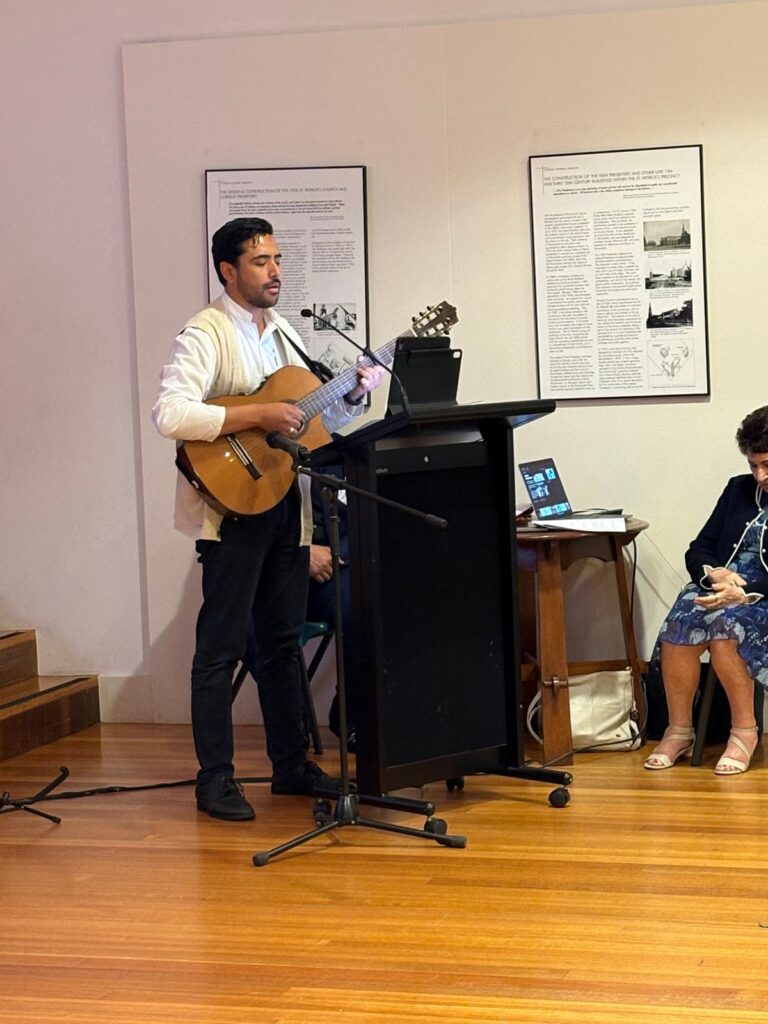
The Muslim presentation by Zakaria Partoredjo. Image: Supplied
Two Trees of Light and Hope stood at the heart of the celebration. On arrival, each person received a paper dove. Before the evening ended, participants wrote a prayer, question, reflection or source of hope on their dove and placed it on one of the trees. This simple act turned private thought into a visible, collective promise.
Peace begins at close range
The value of interfaith dialogue is sometimes described in grand terms – social cohesion, conflict prevention and peace building. Yet it begins in ordinary human gestures: asking a respectful question, listening without preparing a rebuttal and recognising that conviction and curiosity can coexist.
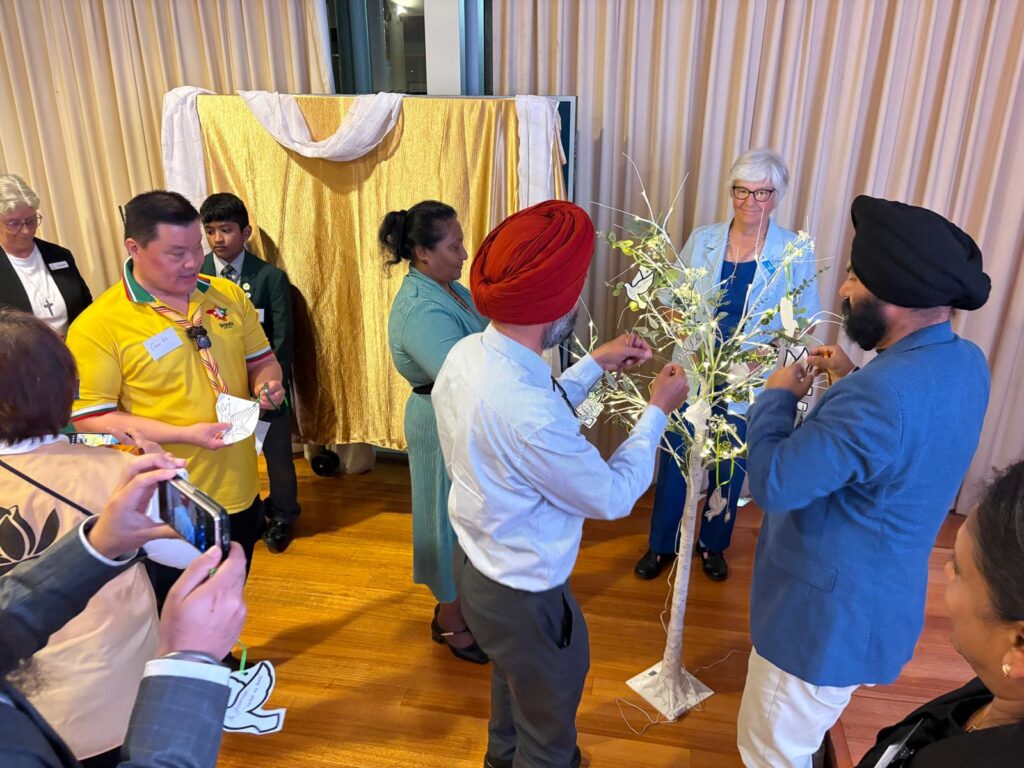
Participants putting their doves on the Tree of Light and Hope. Image: Supplied
This gathering made that work tangible. It offered no illusion that one evening could resolve the world’s conflicts. Its hope is both humbler and more practical: that strangers may leave as neighbours, that unfamiliar traditions may become less distant, and that the courage to meet across difference may travel beyond this occasion.
“Nothing can dim the light that shines from within”
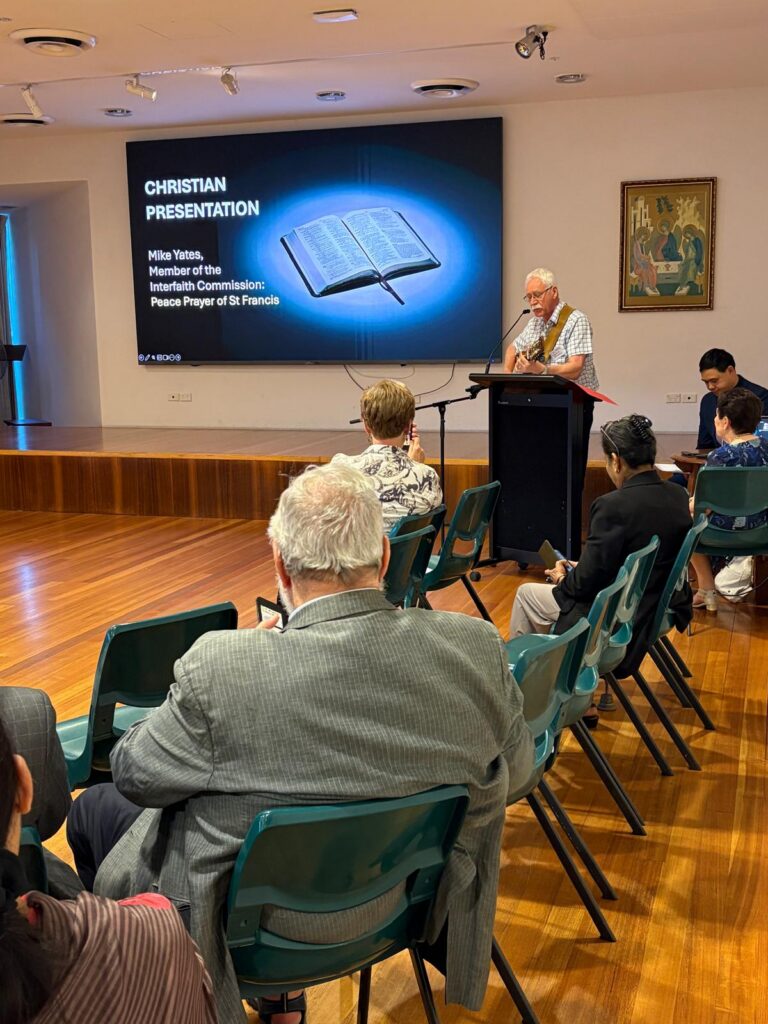
Christian presentation by Mike Yates. Image: Supplied
Forty years after Assisi, the invitation remains urgent. Peace is not only negotiated in institutions or declared from public platforms. It is also practised whenever people choose encounter over suspicion, understanding over caricature and a shared future over fear.
The event is an example of the Diocesan Pastoral Plan priorities of Listening, Dialogue & Discernment, and Community. Visit Synodality to find out more.
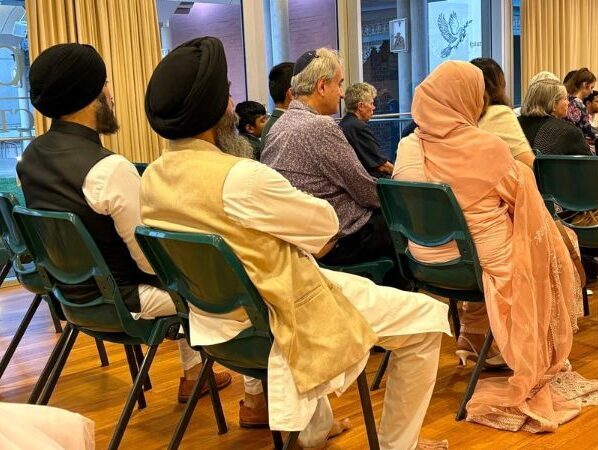
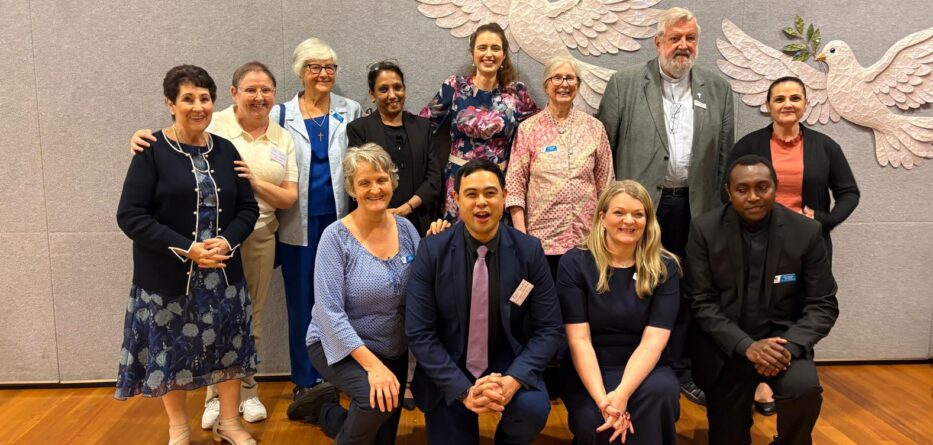
Representatives of different faiths were present at the gathering for peace. Image: Supplied