


This Advent, we pause to reflect on its meaning and significance, with weekly insights from members of the Diocesan Council for Consecrated Life.
“A shoot shall come out from the stump of Jesse, and a branch shall grow out of his roots.” (Isaiah 11:1)
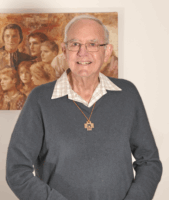
Br Lawrie McCane FMS. Image: Supplied
Our native Australian bush has a remarkable facility to regenerate after natural events such as bushfire or severe storms. The imperative for new life, for survival, for hope, overcomes the desolation left after natural disasters.
In today’s first reading, the writer of Isaiah speaks of a similar rebirth after a massive disaster. The fullest meaning of the reading becomes clearer in the context of the preceding verses in Isaiah 10: The lofty trees will be felled, the Lord will cut down the forest with an axe!
The Assyrians will be defeated and the faithful remnant of Israel will be saved. Most significantly, a new shoot will arise, the promised messiah, who will bring in a new era of peace and justice, where harmony thrives even in the natural world. Isaiah’s vision of the new world is one of right relationships among all living beings, a theme echoed in the second reading where Paul encourages radical unity between all peoples, circumcised and Gentiles.
The theme of creation and the natural world continues in today’s gospel, where we meet John the Baptist, who lived in the wilderness, ate bush tucker, lived very simply and baptised his followers. His preaching spoke of the need to produce good fruit and to turn away from destructive habits. John threatened dire punishments on those who don’t hear his message of repentance, even the religious leaders of the day – the “brood of vipers”.
Like Isaiah, though, John offers a promise of new life, “the one who is coming after me”, who brings the Spirit and fire.
The coming of the Messiah, through the action of the Spirit, brings forth a new world. As Elizabeth Johnson writes, “a flourishing humanity on a thriving planet, rich in species in an evolving universe, all together filled with the glory of God: such is the vision that must guide us at this critical time of the earth’s distress.” This is also the vision which will guide us in our Advent reflections and our preparation for the Christmas season.
As the Christmas season approaches, these readings urge us towards ecological conversion. For many, these days leading to Christmas can be filled with consumerism, preparing for extravagant gifts and gatherings, concern about financial pressures or family tension. The invitation contained in today’s readings is to make Christmas a truly joyful time, without surrendering to excessive materialism and consumerism.
In these early summer days, we see life emerging in the Australian bush and in our gardens. Jacarandas are still flowering and our lawns need mowing more frequently. May this rebirth in the natural world inspire us to care more actively for planet Earth, our common home.
And may this Advent season also be a time of new growth in our spiritual lives, as we prepare for the coming of the Christ child at Christmas.
Br Lawrie McCane has been a Marist Brother for 58 years. He currently teaches at Marist Learning Zone in Mount Druitt, as well as assisting with other works in the Mount Druitt area, including Holy Family Parish, Mt Druitt and the Baabayn Aboriginal Corporation. He is a member of the Diocesan Council for Consecrated Life.
This reflection underpins our commitment to Formation under the Diocesan Pastoral Plan. Visit Synodality to learn more.