

Dear Friends,
The heatwave in Rome these days in late June, make life a little trying. It’s hot, humid and there are no breezes. In the late afternoon there are often some storms, but they provide little relief from the relentless heat.
Perhaps this oppressive Roman weather is an apt metaphor for our global situation today. Everywhere around us we see a world that is dominated by violence, war, polarisation and a lack of empathy. Politicians rarely inspire and more often seem either self-seeking or lack the courage to confront the obvious evil of amoral political leaders such as Vladimir Putin, Donald Trump and Xi Jinping.
Sometimes I wonder whether this was very much the same atmosphere of despair in which W. H. Auden wrote his famous poem “September 1, 1939” – written shortly after the German invasion of Poland, which would mark the start of World War II.
It’s worth re-reading its last stanza:
Defenceless under the night
Our world in stupor lies;
Yet, dotted everywhere,
Ironic points of light
Flash out wherever the Just
Exchange their messages:
May I, composed like them
Of Eros and of dust,
Beleaguered by the same
Negation and despair,
Show an affirming flame.
Pope Leo and Global leadership
One year in the life of a pontificate, that could very well be a long one, is far too short a time to make a definitive analysis.
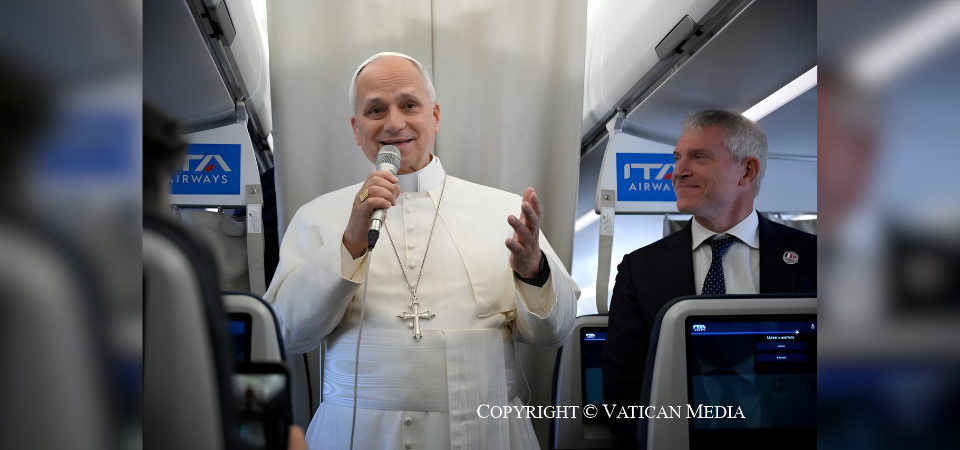
However, one thing is certain; Pope Leo XIV has emerged very remarkably (especially in the last six months) as the outstanding moral and spiritual leader of our times. He is a point of light…showing an affirming flame amidst all the negation and despair.
This is the way I analysed his Petrine ministry on the first anniversary of Leo’s election to the papacy:
That ‘affirming flame’ was demonstrated on his long and remarkable apostolic April visit to Africa, which was brilliantly and comprehensively outlined by Nuno da Silva Gonçalves, SJ.
And just several days ago, Leo concluded an extraordinary trip to a Spain that is very polarised. For excellent commentary on the significance of this visit read more on Commonweal and Global Catholic by Massimo Faggioli.
And now we have an Extraordinary Consistory of Cardinals where Leo’s vision for the Church in the decades ahead will be even further revealed.
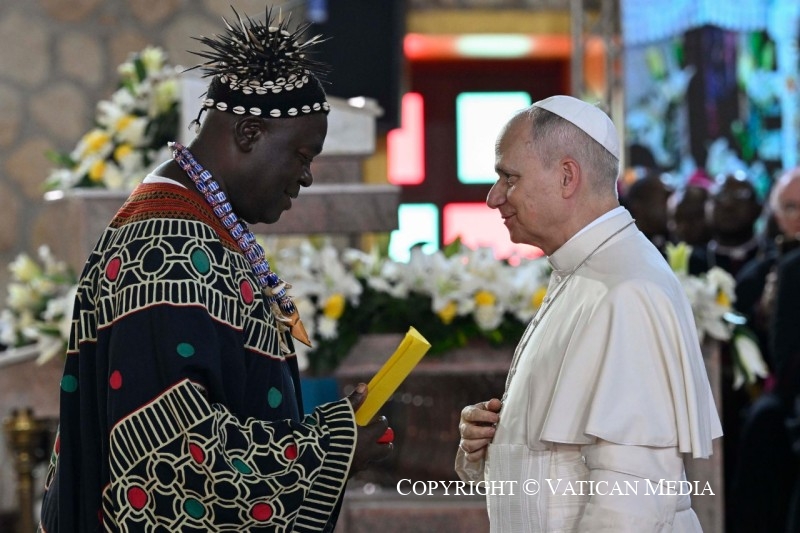
Pope Leo XIV during the Meeting for Peace with the Community of Bamenda at St Joseph’s Cathedral, Cameroon on 16 April 2026. Image: Vatican Media
The church is what we do next
Toward the end of the movie Conclave, members of the College of Cardinals regroup following a series of bomb explosions that have rocked the Vatican. After a seasoned cardinal demands militant action against Muslims, a younger Cardinal speaks:
No, my brothers, the thing you’re fighting is here, inside each and every one of us, if we give in to hate now, if we speak of “sides” instead of speaking for every man and woman. This is my first time here amongst you, and I suppose it will be my last. Forgive me, but in these last few days, we have shown ourselves to be small, petty men. We have seemed concerned only with ourselves, with Rome, with these elections, with power. But these things are not the Church. The Church is not tradition, The Church is not the past. The Church is what we do next.
No doubt ‘what we do next’ is a key subtext of this important meeting which takes place June 26 to June 29. This is an interesting view on the significance of this event.
We already do know however some of the parameters of the discussions to take place.
The Extraordinary Consistory of Cardinals will focus on the global geopolitical situation, the Pope’s new encyclical Magnifica Humanitas, and the implementation of the Synod on Synodality.
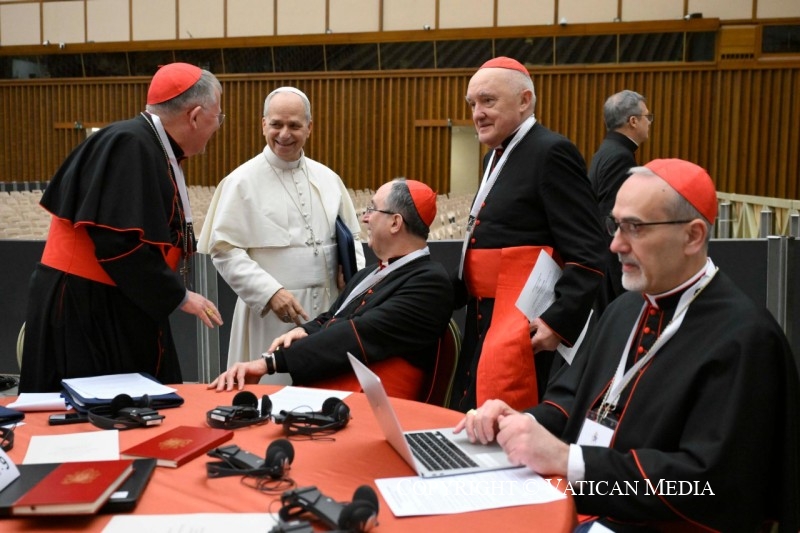
Pope Leo XIV with Cardinals at conclusion of the Extraordinary Consistory in the Synod Hall in January 2026. Image: Vatican Media
There are four sessions structured as a “space of mutual listening” with the following specific focus areas:
- International conflict and peace: Cardinals from war-torn regions will share local, pastoral realities. The sessions will address how the global Church can help preserve peace and confront the cultural frameworks that justify war. (Note: Though initial agendas included a targeted theological debate on overhauling “just war” doctrine, updated schedules shifted the focus toward a broader look at global tensions). The Iran and Ukraine wars certainly do raise once more interesting questions: See especially, Michael Sean Winters lively discussion.
- The Encyclical Magnifica Humanitas: The College will dive into the themes of Pope Leo XIV’s May 2025/2026 encyclical. Discussions will emphasise interpreting modern societal shifts, technology, and artificial intelligence through the lens of the Gospel and human development. Here is a wonderful study of reactions to Pope Leo’s first encyclical.
- Synodality and church mission: Leaders will receive updates on implementing the Synod on Synodality. Following themes raised during the previous January 2026 consistory, they will discuss shifting Church governance from institutional maintenance to active, missionary evangelisation.
- Open Papal Dialogue: A dedicated segment will feature a fluid, confidential exchange directly between the Cardinals and the Pope, where individual interventions are strictly limited to three minutes each to maximise the number of speakers.
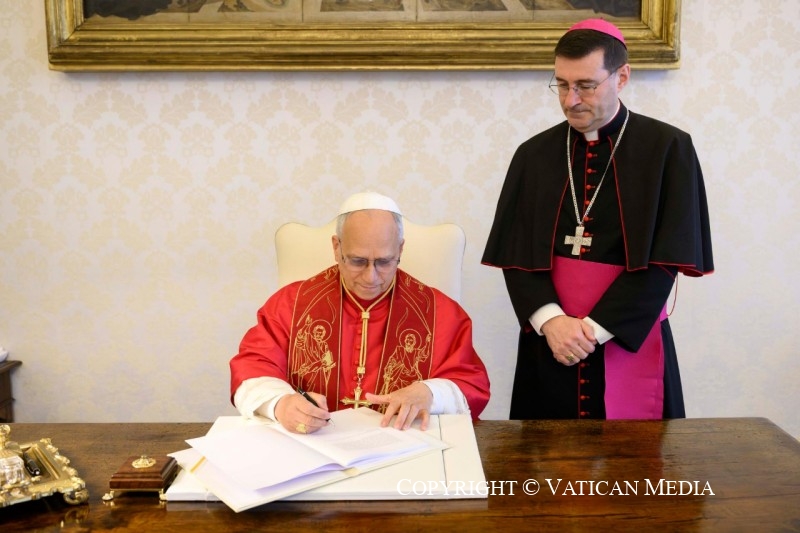
Pope Leo XIV signs his first encyclical ‘Magnifica Humanitas’. Image: Vatican Media
The closed-door working sessions will be held in the Paul VI Hall and the Synod Hall. The gathering will officially conclude on June 29, the Feast of Saints Peter and Paul, with a solemn Mass in Saint Peter’s Basilica where the Pope will impose the Pallia on newly appointed metropolitan archbishops.
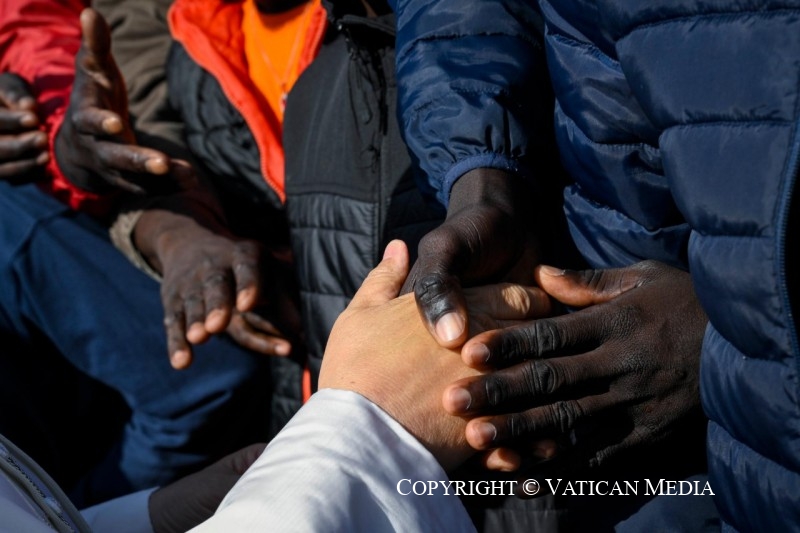
Pope Leo XIV embraced during his Meeting with Migrants at Las Raíces Center, Spain on 12 June 2026. Image: Vatican Media
It is striking how Pope Leo’s public persona is making such an impact even in the secular world. The name Leo is a classic name of Latin and Greek origin that simply means “lion”. It represents power, courage, and nobility.
Leo does seem indeed a very apt name for our Pope.
What stands out especially for me is Leo’s quiet, calm but courageous leadership style. He is implementing Pope Francis’s vision but in his own way. A style that is also willing to stand up to bullies like Trump and likewise not be afraid to charitably confront certain groups within the Church when they stray.
In my next and second ‘sounding’ from Rome, I will explore the dynamics and outcomes of the Extraordinary Consistory as it actually unfolded and whether that challenging truth: The church is what we do next… was adequately addressed.
Br Mark O’Connor FMS is the Vicar for Communications in the Diocese of Parramatta and the Pope Francis Fellow, Newman College, University of Melbourne.