

I wrote a few months ago how Pope Leo XIV “Needs No Divisions.” His election augured a pretty clear opportunity to move past the culture wars and give an alternative to the brutishness of the Trump era. But those who do need divisions have told us they won’t go without a fight.
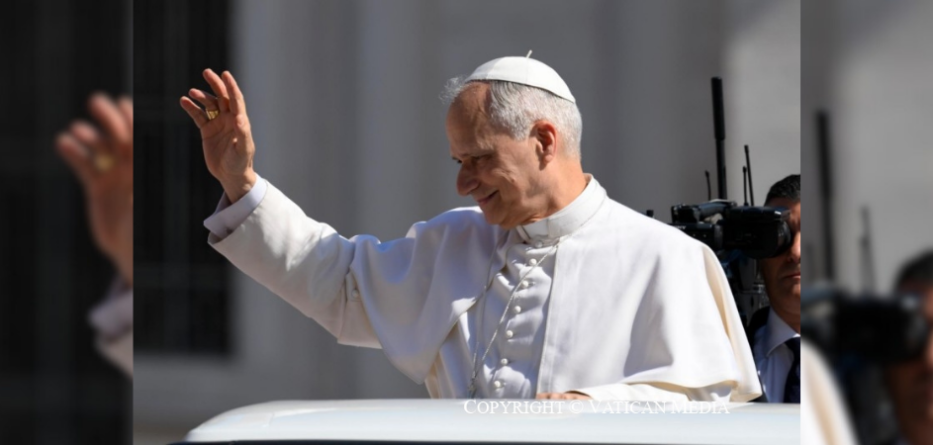
The signs came first on September 8 when it was reported that Leo had given consent for Cardinal Raymond Burke to celebrate the traditional Latin Mass in St. Peter’s. No change was made to Traditiones Custodes or any other norm of the Church. Still, the opportunistic response was quick. Joseph Shaw of the Latin Mass Society of England and Wales and President of the International Una Voce Federation enthused that, “It has been brutal but now I am confident that things like the crazy ban on advertising Latin masses in parish newsletters will be abolished or not enforced.” Massimo Faggioli observed that, “it will be much more complicated now to make the case for not celebrating the Latin mass in dioceses” because people like Shaw got a signal they could press forward. As I wrote on September 10—”Inch given, mile taken.” No conciliating gesture can be conciliating if we are not in dialogue with a party seeking conciliation.
It has not been difficult to see that advocates for the Latin Mass and other so-called “Traditionalist” concerns have been cautiously testing the boundaries since Pope Leo’s election. To his credit, Leo has been avoiding provocations and he has made conciliating gestures like his concession to Cardinal Burke. Even some of his wardrobe choices have seemed calculated to soothe anxious “Traditionalists.”
But now the boundary-testing and the probing for weakness has become the crisis that has been coming all along. If Mike Lewis has reported this story accurately about elements within the U.S. Conference of Catholic Bishops seeking to censure Cardinal Blase Cupich publicly because he would have honored Sen. Dick Durbin’s career in service of immigrants, action needs to be taken. Whatever action it turns out to be can only be disastrous for unity. Not taking action will be more disastrous.
Consider just a few passages of what Lewis has reported—
in the entire history of the conference, despite numerous scandals and crimes involving bishops, USCCB leadership has never publicly issued a public condemnation against one of their own
—and—
the Pro-Life Activities committee — led by its chairman, Bishop Daniel E. Thomas of Toledo — convened an emergency meeting specifically in reaction to Cardinal Cupich’s decision….Archbishop Paul Coakley of Oklahoma City played a role in advancing the effort against Cardinal Cupich as well, but thus far he has avoided attaching his name publicly to a statement against Cardinal Cupich….Archbishop Timothy Broglio, the current conference president, supported the initiative and simultaneously maintained communication with Cardinal Cupich.
—and—
donor-aligned networks associated with the Napa Institute played a background role in encouraging the push to make an example of Cardinal Cupich….Archbishop Coakley serves as the organization’s Ecclesiastical Advisor, and Bishop Paprocki, Archbishop Cordileone, and Archbishop Broglio are on its Ecclesiastical Advisory Board.
This is deeply disturbing stuff.
The appearance of all of this, if it is accurate, suggests that the Napa Institute, its network and donors, have been able to deploy individual bishops and nearly the U.S. Conference in the service of its own agenda. That is not how the Roman Catholic Church is meant to operate. It is a practical problem, a moral problem, and an ecclesiological problem.
I have been writing for some time about the malign influence that all this money in the Church represents. The trouble is not so much the desire for the Latin Mass or a more confrontational public witness that these wealthy and influential Catholics want (though, so far as those things are not perfectly in accord with Church teaching, they’re not great). Rather, the real problem is that all this activity has divided the Church and it has helped the Church divide the world. This stuff represents a business model built on clicks and attention for money, the segmentation of audiences into narrow slices that can be activated and monetized. That is no way to evangelize the culture. It doesn’t seem very much like a church at all, really. And, it has become difficult in these days of the second Trump Administration for me to believe any of this really has much to do with Catholicism at all. My stronger suspicion is that this all aims to deploy Catholic voters in service of wealthy interests who have more than benefited from the last nine months of public policy lurches.
Mike Lewis sums it up this way—
Regardless of what conference leadership decides to do, this episode has brought to light a serious rupture in the US Church. Collegiality and fraternity have given way to hostility and open conflict. On one side of the division are the most influential of the US bishops, the so-called “conservatives,” supported by well-financed and politically motivated benefactors and Catholic media outlets. On the other side are the minority of bishops who are aligned with the synodal vision of the Church envisioned by Popes Francis and Leo. That certain bishops would consider censuring a cardinal over an award while remaining silent on decades of scandal speaks volumes about where the true crisis of credibility lies.
That is a serious problem Pope Leo needs to confront, probably sooner than later. The hope for unity and dialogue can only be fruitless when we hope for unity and dialogue with people engaged in a contest to win something. Mismatched premises won’t yield good results because the party that doesn’t want dialogue or unity except on their terms—whose goal is not koinonia but victory—always will take a mile when given an inch. Conciliation is their opportunity for exploitation.
Pope Francis came to this conclusion slowly and reluctantly, I think. But he came to it. Pope Leo may not have the luxury of so much time in these days.
What truly is worrying is that all of this is the same crisis. Censuring Cardinal Cupich for honoring a prominent Democrat because he advocated for immigrants in fact serves the Trump Administration. It does their work for them. When the animating energy to do that work for the Trump Administration is coming from billionaires, it probably is not wrong to wonder if any of this is really about abortion or the Church. Something darker is happening. And, the Church is being made complicit in it. The crisis in the Church and the authoritarian crisis, for these reasons, do not seem unrelated.
When Leo was elected, I hoped that it was “a signal…that the church is taking a side in what’s happening around the globe.” I never thought Pope Leo would confront Donald Trump or any other authoritarian directly. I hoped Pope Leo would be a leader on the global stage for the cause of human freedom. That still is my hope.
But the signs are telling us that “the call is coming from inside the house” now. And the best way to help the cause of freedom around the world might just be to curtail the influence of billionaires and their willing helpers in the Catholic Church in the United States.
Reproduced with permission by The Crisis Is Now, and Steven P. Millies with thanks.