

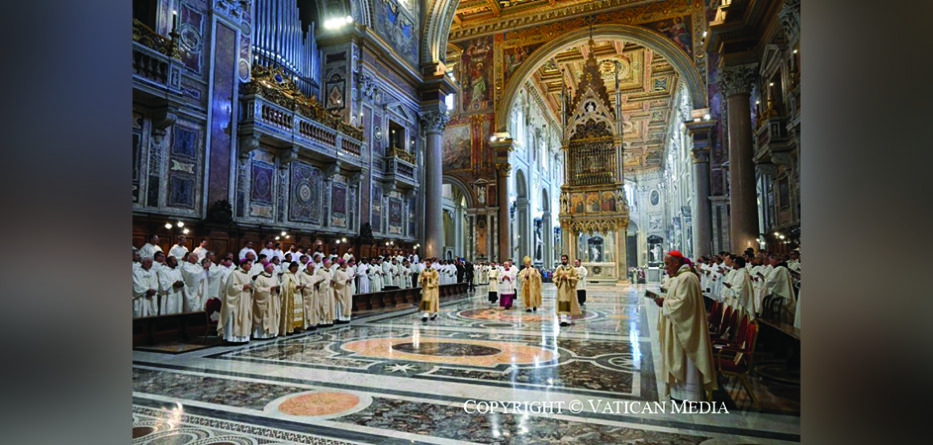
Rome’s cathedral at the Lateran has forever been considered the most important church in all of Christianity. But the popes of the last several centuries have allowed St. Peter’s Basilica at the Vatican to overtake it in prominence in an attempt to maximize the power of the papacy. Dare Leo XIV reverse this trend?
Most tourists visiting Rome—including Catholic pilgrims—generally believe that St. Peter’s Basilica is the most important church in the world and has always been the pope’s residence and cathedral. Nothing could be further from the truth.
The Cathedral of Rome is actually the church commonly known (unfortunately) as the Papal Archbasilica of St. John Lateran. It is located across the Tiber River, on the other side of Rome. The large square in front of the church is best known to today’s Romans as the site of large (mostly left-wing) political rallies and concerts, most notably the one on May 1!
Emperor Constantine built the original structure in the fourth century during the papacy of St. Sylvester I (315-345). Its original name, which is still kept today, was the Church of the Most Holy Savior. Christians from both the East and West considered it the most important church in the world. Many still do.
However, the Vandals sacked Holy Savior about a hundred years after it was constructed, and it later suffered additional damage from an earthquake and major fires over the following centuries. Most of the existing building dates from the seventeenth century and, like much of the Eternal City, is decorated in the baroque style.
“Mater et Caput”
Carved into its magnificent façade, just beneath the bold statue of a triumphant Christ embracing the Cross, is a Latin inscription (Cristo Salvatori) that suggests its official name.
Subsequent popes added Saints John the Baptist and Evangelist as special patrons, which is why it is more commonly known as St. John Lateran. At the base of each of the two massive columns that flank the main entrance is another inscription —Sacros. Lateran. Eccles./Omnium Urbis et Orbis Ecclesiarum Mater et Caput. This informs visitors that the Lateran Basilica is the “mother and head” of all the churches in the city and the world.
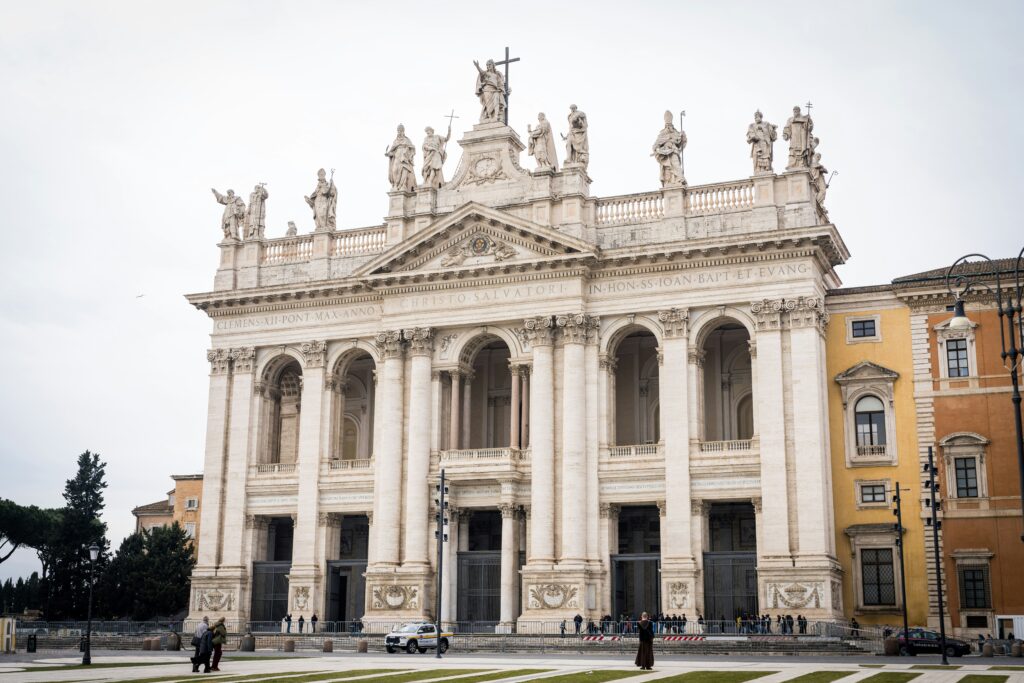
A view of the Basilica of St John Lateran in Rome. Image: Nick Castelli/Unsplash
This was the Bishop of Rome’s cathedral and the administrative headquarters of his diocese for almost a thousand years. However, that changed in 1309 when Pope Clement V and his curia moved to France, starting the nearly 70-year Avignon Papacy, or the “Babylonian captivity”.
Hardly a model today
When the papacy returned to Rome, the cathedral and papal residence at the Lateran were in ruins. That’s when the Vatican and St. Peter’s Basilica became increasingly more prominent, and the popes began to slowly neglect what, to this day, is still the Bishop of Rome’s cathedral.
And yet, Pope Francis wrote the following last February in a letter to a liturgical conference here in town: “Every diocese looks to the bishop and the cathedral as celebratory models to be imitated.” Hopefully, other dioceses are not imitating the popes and the way they currently utilize (or, rather, do not utilize) their own cathedral.
For example, the pope almost never holds major liturgical celebrations of the diocese there, such as diaconal, presbyteral and episcopal ordinations. The last time one of them presided at an ordination there was in 2015 when Pope Francis consecrated his Vicar General bishop. Prior to that, it was in 1962, when John XXIII held episcopal ordinations at the Lateran.
Just as neglectful is the fact that the Chrism Mass doesn’t take place there, but in St. Peter’s. The excuse is that the Vatican basilica can accommodate more people because priests who are not of the diocese but are studying or working in Rome are invited to the celebration. They do not need to be.
Changes should be made
What could Pope Leo do to revive the importance of his cathedral? Here are a couple of suggestions:.
On Nov. 8, the universal Church celebrates the Feast of the Dedication of the Lateran Basilica, and Leo will rightfully go to his cathedral to preside over the Eucharistic liturgy. But why not rename this feast to the Dedication of the Cathedral of Rome? This would emphasize its true nature and purpose, making clear that it is not just another papal basilica, even if it is first in rank.
Consider that after a man is elected pope, the inauguration of his universal mission as Successor of Peter takes place days later at the Vatican, even before he takes possession of his cathedral. It should be the other way around.
Another suggestion: the Bishop of Rome should hold the Chrism Mass and other major ceremonies of the diocese, such as ordinations, the Easter Vigil and the First Sunday of Advent (the beginning of the liturgical year) in his cathedral.
Much else can be said, and much more should be done, to revive the prominence of Christianity’s most important church. Restorations and refurbishments should be seriously considered.
And when it is time, the current pope may choose to join his most recent papal namesake, Leo XIII, and several of the other popes who are buried in Rome’s cathedral.
With thanks to the Union of Catholic Asian (UCA) News and Robert Mickens, where this article originally appeared.