

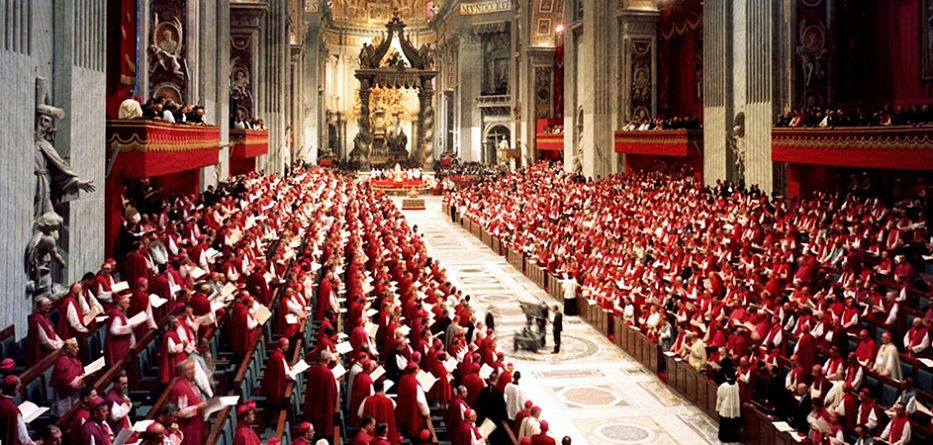
Monday, Dec. 8, marked the 60th anniversary of the close of the Second Vatican Council. It is an axiom among church historians that it takes a century for a council to be received, so we are almost two-thirds of the way. That is another way of saying, Vatican II may have ended 60 years ago but it is still a work in progress.
NCR published an OSV story marking the anniversary, written by Alexander Brüggemann, which focused on seven highlights or key themes that emerged from the council. That approach isn’t wrong, but it is also inadequate.
Brüggemann is right to highlight the four major constitutions that issued from Vatican II: Lumen Gentium, on the nature of the church; Sacrosanctum Concilium, on the sacred liturgy; Dei Verbum, on divine revelation, and Gaudium et Spes, on the church in the modern world. If the past 60 years have taught us anything, however, it is that these four major documents work together.
Vatican II was an enormous achievement. Like Trent, it was a reforming council that changed many of the ways we Catholics go about being Catholic, not by inventing new ideas but by returning to the sources of revelation in Scripture and the church’s own tradition, and by attending to Christ here and now for, as Sacrosanctum Concilium states, “Christ is always present in His Church” (Paragraph 7). Vatican II is still an ongoing project as we all dig deeper into its treasures, hold ourselves accountable for any misreadings we once foisted upon the texts, and let its teachings seep into every nook and cranny of our faith. As we Catholics chart our way forward, Vatican II is the map.
To continue reading this article, click here.
With thanks to National Catholic Reporter (NCR) and Michael Sean Winters, where this article originally appeared.