

A society does not lose its soul only when it turns violent. It loses its soul when violence becomes entertaining.
That is why the phrase “the gamification of war” lands with such force. Axios used it to describe how the current war around Iran is being framed through video-game aesthetics, meme culture, action-film editing, and a public tone of swagger, thrill, and amusement.
War is still described as grave and necessary. Yet it is increasingly packaged as a spectacle to enjoy, a stream to follow, and an event to consume.
There is a bitter irony here. We are told that war is tragic, yet it is edited like sport. We are told that civilian suffering is unfortunate, yet public messaging often gives more emotional weight to the drama of power than to the pain of the wounded. We are told that the dead matter.
But the visual grammar says otherwise: speed, impact, cleverness, dominance, replay. The result is chilling. Bombing is made to look exciting. Destruction is made to look crisp and cinematic. War borrows the language of fun without ever admitting what that language does to us.
But the visual grammar says otherwise: speed, impact, cleverness, dominance, replay. The result is chilling. Bombing is made to look exciting. Destruction is made to look crisp and cinematic. War borrows the language of fun without ever admitting what that language does to us.
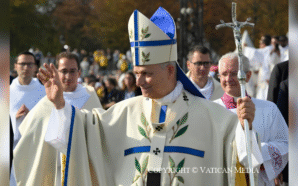
Cardinal Blase Cupich saw the danger clearly. In his March 8 call to conscience, he warned against treating war as a “spectator sport or strategy game,” and insisted that a “hit” is not a score but a human catastrophe.
His point was not rhetorical. It was theological and moral. Once the imagination is trained to accept violence as excitement, the conscience ceases to recoil as it should. One can begin to admire force while forgetting the flesh.
This is the deeper issue. Entertainment is never innocent. It shapes attention. It teaches us what to linger on, what to ignore, what to celebrate, and what to scroll past. In ordinary life, that may seem trivial. In war, it becomes deadly.
If public culture receives missiles, smoke, and ruined buildings through the same emotional circuitry that it uses to receive sports highlights and movie clips, then pity begins to weaken. Suffering is no longer encountered. It is processed. The victim becomes background. The spectacle becomes central.
The facts on the ground make this moral distortion even more obscene. Reuters reports that the war has brought “atrocious violence,” in Pope Leo’s words, with thousands of noncombatants killed across the region.
The conflict has also brought suffering to Lebanon, where more than 800,000 people have been displaced and many families are sheltering under tarps, in cars, or in unfinished buildings as rain and overcrowding deepen their misery. This is what lies beneath the screen: not thrills, not aesthetics, not bravado, but exhausted bodies, frightened families, and a widening geography of grief.
And still, the world finds ways to make it feel like a game. Axios reports that more than 1 billion dollars has already been wagered on the war and on regime-change scenarios in prediction markets. That detail says more about us than we may want to admit. It is no longer enough to watch war. We now speculate on it.
We treat escalation as a market signal. We turn uncertainty, destruction, and political collapse into objects of betting. Violence is not only aestheticized. It is monetized. The old Roman crowd wanted bread and circuses. Our digital civilization wants livestreams, clips, and odds.
There is another irony, and for Christians it should sting. Lent calls for prayer, sobriety, repentance, and the recovery of the heart. Instead, modern culture keeps offering intoxication through spectacle. The Christian stands before the Cross and is asked to behold suffering with reverence, silence, and love.
The entertainment culture stands before war and asks for clicks, reactions, and emotional stimulation. One fosters compassion. The other trains detachment. One says, “Stay here.” The other says, “Watch this.” The contrast is brutal and exposes how easily a nominally religious society can be catechized by the screen more deeply than by the Gospel.
Pope Leo’s response has been the exact opposite of spectacle: he has called for an immediate ceasefire, insisted that violence cannot bring justice or peace, and urged a return to dialogue.
The economic fallout only sharpens the irony. Reuters reports that nearly a fifth of global oil flows normally pass through the Strait of Hormuz, that Brent crude has climbed above US$104 a barrel, and that the International Energy Agency is planning a record release of reserves in response to the disruption.
So even as war is dressed up as media excitement, it is also making ordinary life more precarious: fuel costs rise, supply chains tighten, markets strain, and poorer populations far from the battlefield pay the price. The glamorous image of force obscures the vulgar reality that wars are ultimately paid for by the vulnerable.
This is where the article must end, because this is where the moral question begins. What kind of people are we becoming if we can receive war in the emotional register of fun? What has happened to public language when amusement wanders so close to bombardment?
And what happens to democracy, to religion, to human feeling itself when the line between tragedy and entertainment begins to collapse?
A healthy society should find war unbearable, even when it believes force is necessary. It should speak of war with restraint, represent it with seriousness, and keep the civilian dead at the center of its moral vision.
It should resist cleverness in the face of carnage. It should distrust any politics that requires spectacle to sustain consent. Above all, it should remember that when war begins to look like fun, something human has already died before the bomb falls.
With thanks to Global Catholic and Kuruvilla Pandikattu SJ, where this article originally appeared.