

Every day across the Diocese of Parramatta, counsellors with Catholic Care Western Sydney and the Blue Mountains walk beside people carrying the weight of grief and loss, helping them find hope, strength and healing through life’s most difficult moments.
For Harrison Porter, that means meeting people where they are: a young man paralysed by the loss of his father, a mother mourning a fractured relationship, or a child feeling guilty for the pain her illness causes her parents.
Much of Harrison’s role, he said, is simply “sitting with someone’s pain.”
This is the life-changing support Catholic Care’s counsellors provide to people in our community, made possible through your kind and compassionate help.
By donating to the Bishop’s Christmas Appeal 2025, you will help support counsellors like Harrison to continue their ministry of healing with wisdom, compassion, and a heart for Christian service.
Grief beyond loss
A grief and loss counsellor, Harrison joined Catholic Care two years ago, walking alongside people carrying many forms of grief.
A typical day involves travelling between Catholic Care’s offices in Springwood, Parramatta, Blacktown or Emerton, seeing up to four clients.
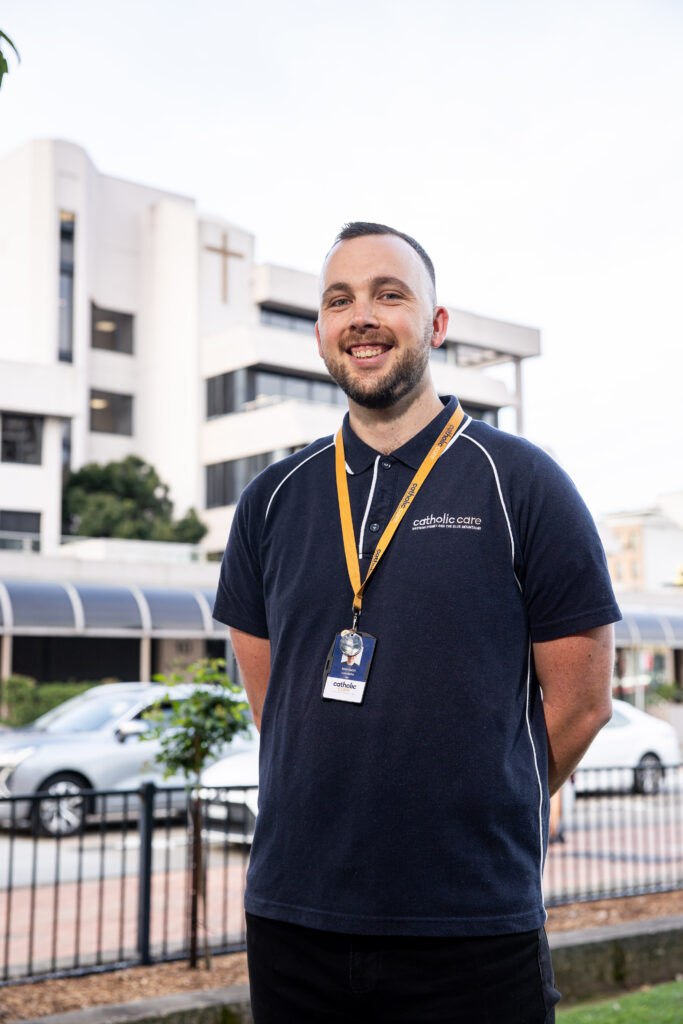
Catholic Care counsellor Harrison Porter. Image: Alphonsus Fok/Diocese of Parramatta
Each encounter, he says, is a reminder that healing rarely follows a straight line, but it can begin by having someone to carry the burden with them.
He recalled a young man in his mid-twenties, referred to him by his mother after the sudden death of his father in a motor vehicle accident in rural northern NSW.
“He was just totally frozen with grief, caught between mourning his father and having enough in the tank to look after his younger siblings.”
Over eight sessions, their work moved from gentle conversation to structured grief exercises, including creating a memento box filled with memories of his dad, which he later buried near the crash site.
The young man later reflected that without counselling, he might have quit his job and become “incredibly moody and overwhelmed,” leaving his family without support. “That’s not someone he wanted to be,” Harrison remembered him saying.
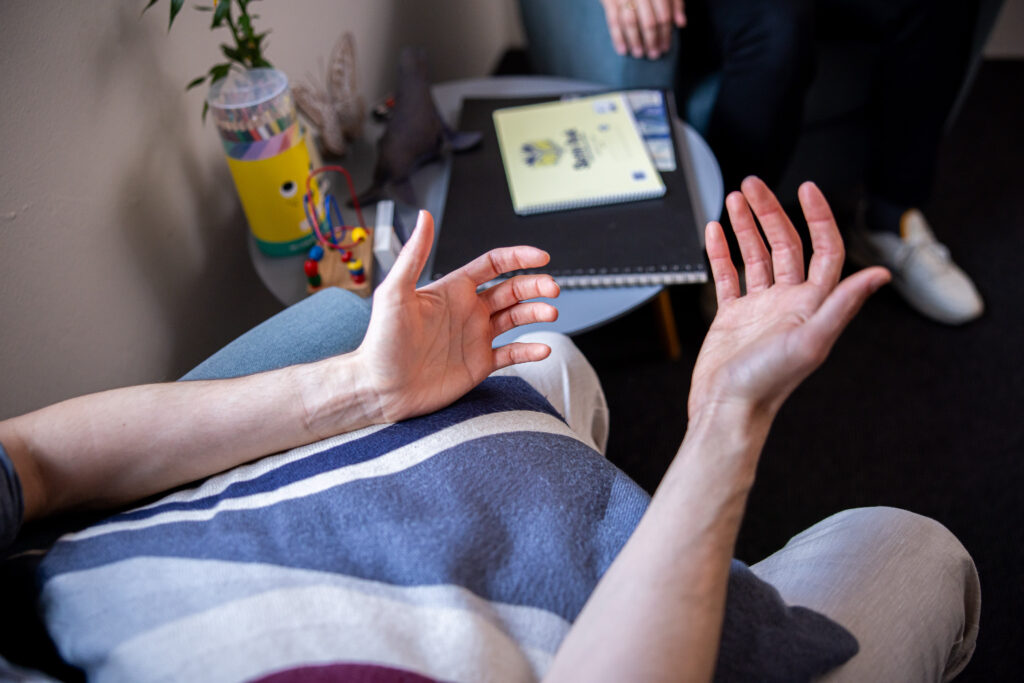
A client speaks during a counselling session. Image: Alphonsus Fok/Diocese of Parramatta
Another client, a young mother, sought counselling for “anticipatory grief” before her mother passed away.
Although their relationship had been strained, she recognised her mother’s death would leave “a huge hole” in hers and her daughter’s lives.
Her grief was complicated, marked by sadness, guilt and even anger at her mother for dying sooner than expected.
Over six months, Harrison helped her understand there is no single “right” way to grieve.
“A lot of people aren’t really sure if they’re grieving correctly. So just normalising whatever they’re going through is half the battle.”
He also spoke of a terminally ill young girl: “She felt an incredible amount of guilt that she was making her mum and dad upset.”
Harrison helped her understand that she had done nothing wrong and encouraged communication within the family.
More than mourning
Grief today, Harrison said, often stretches far beyond bereavement.
“It’s not just people passing away, but it’s the grief and loss that a career is no longer going to eventuate, or a life that people thought they were going to lead — whether it was home ownership, or something else.”
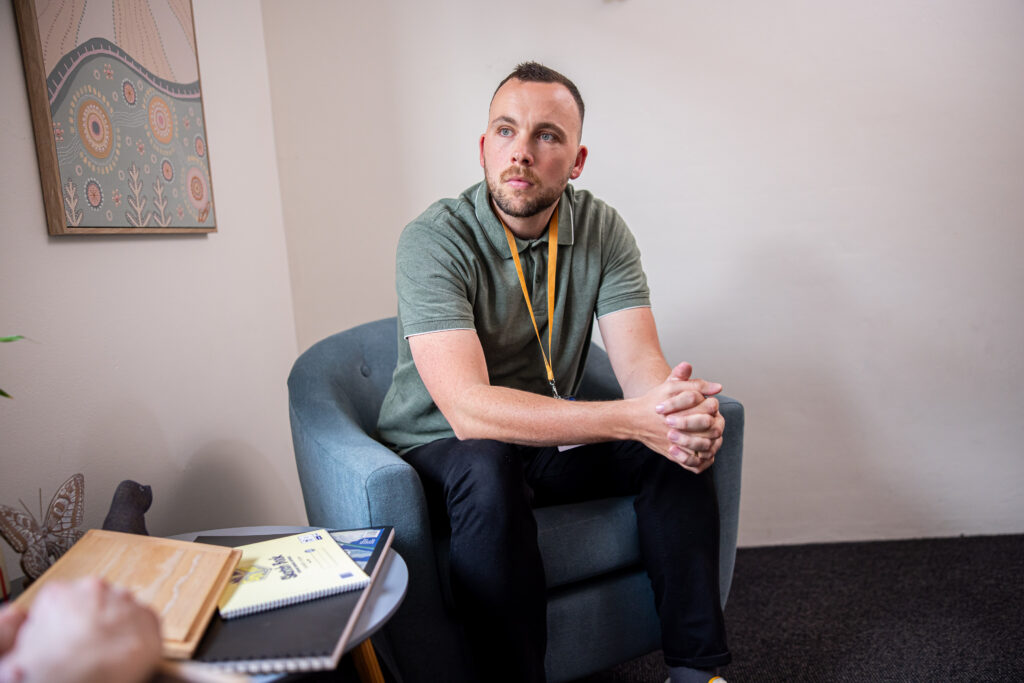
Catholic Care counsellor Harrison Porter. Image: Alphonsus Fok/Diocese of Parramatta
As the cost of living continues to bite, many of his clients are under immense stress, struggling to put food on the table or find steady work. Most come from low-income backgrounds and are turning to services for food relief, Energy Accounts Payment Assistance (EAPA) vouchers, and other practical support to get through the week.
When asked how hope can be found in his line of work — especially during this Jubilee Year, when Pope Francis calls the Church to be “Pilgrims of Hope” — Harrison said:
“People often feel they’re the only ones going through something. But once they realise it’s part of being human, they see they’re not alone or broken. This is just where I am right now.”
For Harrison, that realisation is where hope begins to take root.
The path to forgiveness
Forgiveness is a recurring theme in his work, though how it’s framed depends on the person. “If someone’s religious, I might use the word ‘forgiveness’. If not, I might say ‘acceptance’.”
Much of that work comes back to values. “We ask, ‘Who’s the person you want to be? What qualities does that person have? Does forgiving or not forgiving bring you closer to the person you want to be?’”
“Nine times out of 10, people will realise that their life would be better and they would feel better if they forgave.”
A Gift That Brings Hope
Your gift to the Bishop’s Christmas Appeal 2025 can help Catholic Care’s counsellors bring comfort, hope, and peace to more grieving hearts in our community.
Together, we can be Pilgrims of Hope for those who need it most, reminding every person they are not alone and that love, even in sorrow, endures.
To donate, visit: parracatholic.org/appeal