

On 1 October 2025, the international community of the Schoenstatt Sisters of Mary opened their jubilee year for its 100th anniversary. This great milestone will be publicly celebrated at Mount Schoenstatt in Mulgoa on 13 September 2026. This centenary year will be one of remembrance and gratitude for the past 100 years, and of trust in God for the future which is expressed in the jubilee motto: Mary, Light of our Hope.
A Call Answered
Amid the upheaval of World War I, a new ecclesial movement emerged in October 1914 through a covenant of love with Mary in Schoenstatt, Germany. Its founder, Father Joseph Kentenich, soon recognised that the rapidly growing Schoenstatt Movement required a dedicated core community – one that could serve it wholly and sustain its life from within.
On 1 October 1926, Father Kentenich founded the Schoenstatt Sisters of Mary to fulfill this mission. The foundation was bold and unconventional: a community of women consecrated to God, committed to poverty, chastity, and obedience—not through formal vows, but through a freely chosen and enduring dedication.
This flexible way of life allowed sisters to live either in community or independently, depending on their apostolic tasks. Deep faith, personal freedom, and responsibility were central values. Through a conscious orientation toward their ideal and the total consecration of their lives to God, their commitment to the community was strengthened and sustained.
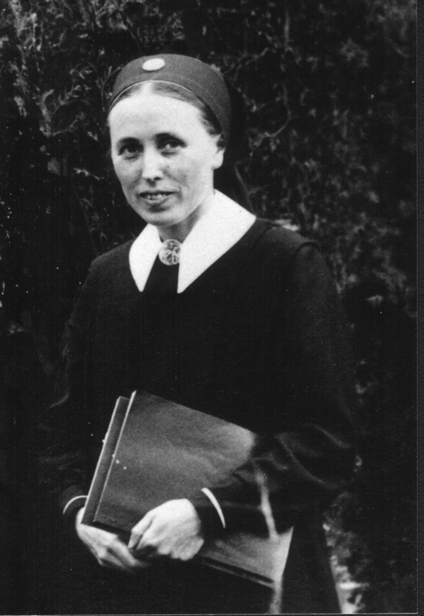
Venerable Sr M. Emilie Engel – one of the first sisters to make herself available to Fr Joseph Kentenich in 1926 for the founding of the Schoenstatt Sisters of Mary. Image: supplied
At the time, canon law had no provision for such a form of consecrated life. Yet Father Kentenich was convinced that God was guiding this foundation. Led by the Holy Spirit, he envisioned a future in which individuals and communities would open the world to God “from within.”
For nearly two decades, the community existed without canonical recognition. That changed in 1947, when Pope Pius XII issued Provida Mater Ecclesia, establishing the legal framework for secular institutes. The Schoenstatt Sisters of Mary became the first German Secular Institute.
Even before this recognition, the sisters had begun their missionary outreach. In 1933, following the rise of National Socialism, they were sent to South Africa at the request of the Pallottine Fathers. In the years that followed, they expanded to South America and, in 1951, to Australia. These new beginnings demanded courage and sacrifice—but they bore fruit: the community, and through it the Schoenstatt Movement, became a global presence.
Charism
As the storms of a new era gathered in 1914, Father Kentenich discerned a profound need: for people who trust in God and offer themselves entirely to Him; people whose lives and personalities speak of faith, courage, and creativity; people like Mary.
The charism of the Schoenstatt Sisters directly answers to this need: to be Mary in the world, serving as a Marian presence in modern life. Through the covenant of love with the Blessed Mother – Schoenstatt’s specific Marian consecration – the sisters aim to bring Christ to the world through a life of total dedication, everyday sanctity, and trust in Divine Providence.
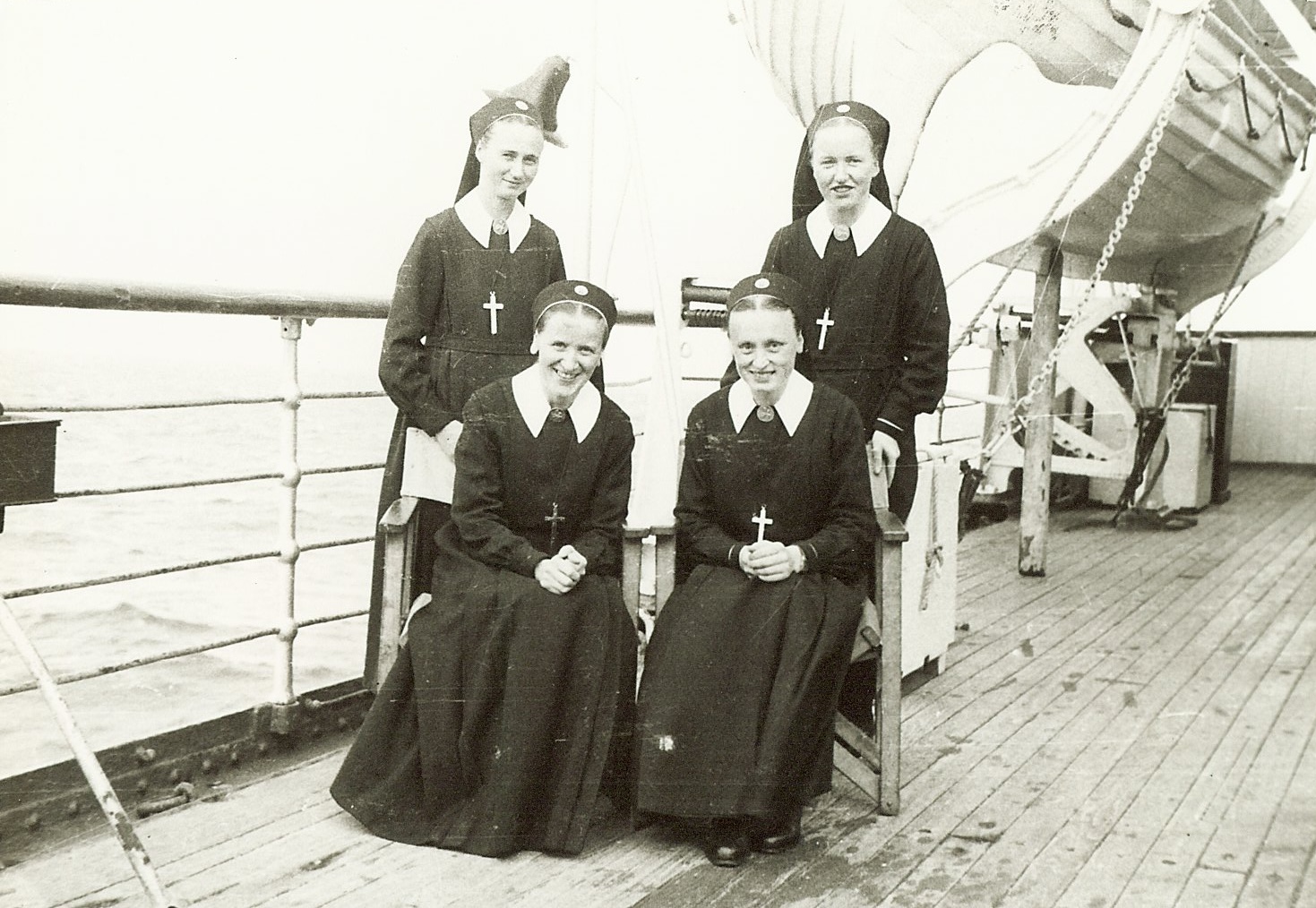
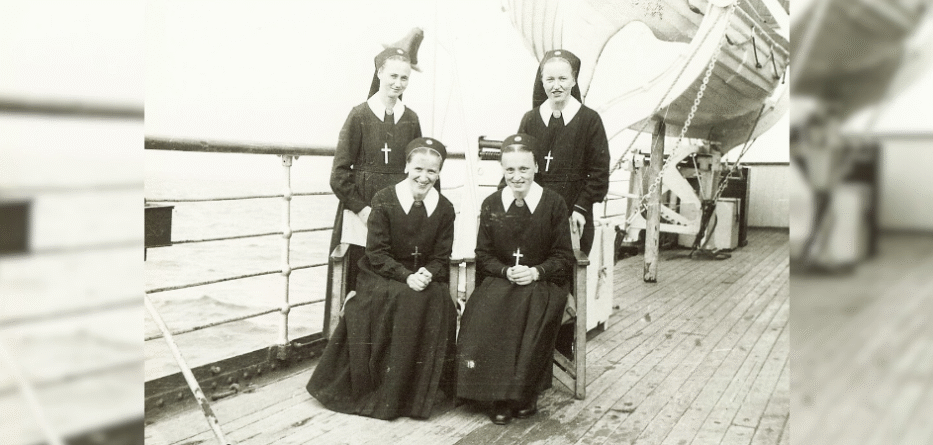
The first Schoenstatt Sisters of Mary being sent on mission to Australia in 1951. Image: suppliedBeing Mary for the World
The Sisters of Mary seek to make Christ present in their lives and work, following the example of Mary, Mother of God. Their presence spans cultures and spheres of life. Some live alone in the world, others within community settings. Some serve individually in diverse professions, while others work together in the community’s institutions -schools, hospitals, and social services.
The community is especially active in Schoenstatt centres such as that found in Mulgoa, which have become vital parts of many local churches. Many sisters serve within the Schoenstatt Movement itself, ministering to youth, women, and families, and supporting the Pilgrim Mother Apostolate, which brings Christ to society’s margins.
Their shared identity gives unity to this diversity: to embody Mary, the Mother of God as Marian Personalities in contemporary society—not only as individuals, but also through the collective witness of their apostolic mission. The community currently has around 1,500 sisters from 42 nations. Here in Australia the Schoenstatt Sisters celebrate also 75 years since their first arrival in Western Australia.
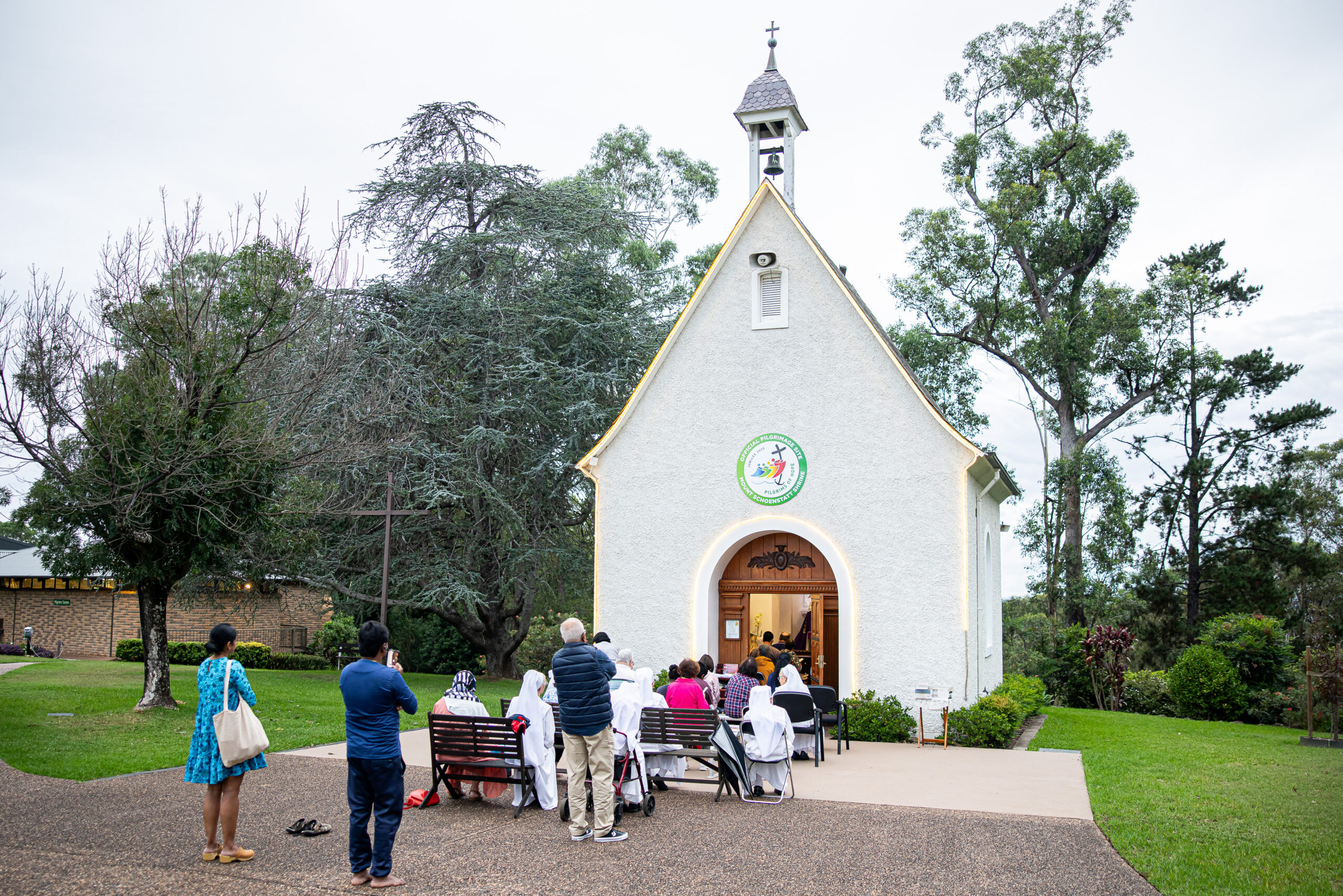
Mount Schoenstatt Spirituality Centre in Mulgoa. Image: Alphonsus Fok/ Diocese of Parramatta
Jubilee Indulgence
On the occasion of the 100th anniversary of the Schoenstatt Sisters of Mary, the Apostolic Penitentiary has granted a plenary indulgence for the entire jubilee year (1 October 2025 – 4 November 2026) for the Original Shrine in Schoenstatt (the founding Shrine) as well as for all churches, chapels, and Schoenstatt shrines under the guardianship of the community throughout the world. A plenary indulgence is a remission before God of the temporal punishment due to sins. This includes anyone visiting the Schoenstatt Shrine and House Chapels in Mulgoa with this intention and fulfilling the requirements of a plenary indulgence.
For any enquiries or bookings for a pilgrimage group, please contact Sr M. Olivia to assist you in planning your visit: call 0473 201 525 or email sister.m.olivia@gmail.com. The Schoenstatt Shrine can be found at 230 Fairlight Road, Mulgoa and is open daily from 7:00am – 8:30pm, including public holidays.
The work and mission of the Sisters of Schoenstatt reflect the Diocesan Pastoral Plan’s priorities of Prayer, Mission and Community. Visit Synodality to learn more.