

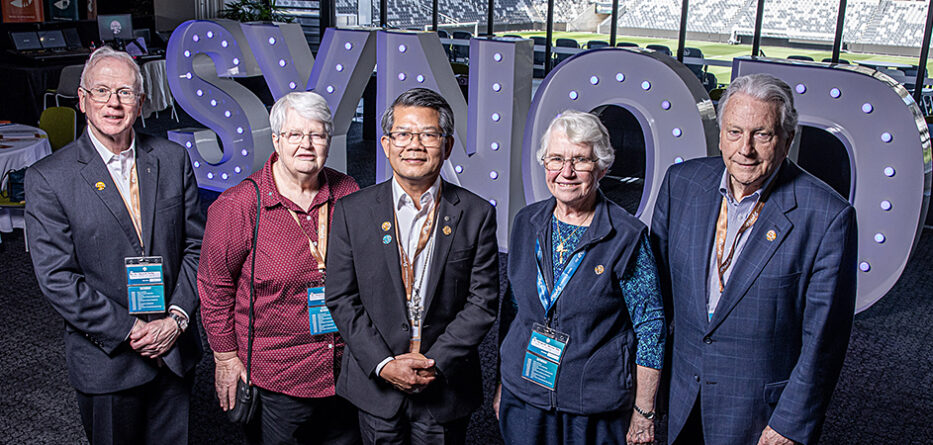
I make my comments on the Synod assembly of October 13 to 15 at St Patrick’s Cathedral and at Commbank Stadium, Parramatta, as an invited perita, an expert in Biblical Studies. As I am not a member of the Diocese of Parramatta, my involvement began only at the culminating assembly, having not participated in the preparatory stages within the parishes of the diocese.
My experience was overwhelmingly positive. I was seated with other invited expert theological and canonical experts and with some of the organisers and facilitators of the event, as well as Bishop Long. While we did not comment on the Synod floor nor vote on any resolutions, we did join in the spiritual conversations and listen to all the comments made to the assembly, sharing the process with all the participants. It was a refreshing experience, engaging with others on the issues presented to the Synod, where each of us shared wisdom and concern for the Church, both globally and in the Diocese of Parramatta, from their particular expertise, and with great respect for differing viewpoints.
The speaking and listening process – 90 seconds of speech, followed by 30 seconds of silence, repeated a few times – proved surprisingly effective in fostering attentive listening and considered responses. This helpful discipline, which the assembly embraced with ease, could perhaps have been more rigorously applied during the one-minute interventions made to the entire assembly. Enforcing this time limit early on would have encouraged more focused and concise contributions.
The atmosphere that prevailed throughout the Synod was positive, making each session something to look forward to. This was made possible by many things, such as the gentle, personal presence of Bishop Long who engaged with his people at every break, speaking only once to the entire assembly, allowing it to work through its own dynamism. The professional technical support managed by a team of well-equipped, capable people made movement from one phase of the process to another feel seamless.
Elements like mini-video clips, upbeat but appropriate music, and the very rapid supply of voting results contributed to maintaining interest and energy. Even the prominent SYNOD sign at the entrance to the assembly hall announced that there was a committed and intentional process going forward in the place.
A Synod marches on its stomach. We were fed both spiritually and physically by liturgy in the Cathedral, prayer in the Assembly Hall, and great food all through the weekend. In both areas, there was quality, variety of offerings and gracious service. The financial and organisational generosity it takes to train liturgical ministers, from readers to choristers and acolytes and to hire a quality catering team bore fruit in the ready engagement of the Synod participants in the liturgies and their obvious enjoyment of the food offered.
The Welcome to Country performed outside CommBank Stadium, however, could have been more accessible to all attendees. Being at the periphery of the gathered crowd, I found it challenging to see or hear the indigenous man performing the welcome.
The Synod’s success was a testament to exceptional organisation, seamlessly executed in a way that its intricacies were almost imperceptible to participants. High praise is due to the Coordinating Team, led by Sr Ailsa Mackinnon rsm and a diligent young woman, Qwayne Guevara, who skilfully managed the event from its inception through various development stages to the Synod and onward to the implementation phase. The smooth running of the Synod was made possible by the collaborative efforts of numerous teams, each dedicated to specific tasks, underpinned by the leadership’s quality and the extensive hours, indeed weeks, of meticulous planning and communication that culminated in such a successful day.
Finally, it was good to see issues raised at the Synod that allowed people to name out loud many sensitive issues, such as the inclusion of LGBTIQA+ persons, the place of women in the Church, and the way we relate with indigenous people, especially in the liturgy. Only when we can talk out loud but respectfully about these realities that are present in all human communities, can we be the Church that the Holy Spirit of God is calling us to be in these times.
Dr Michele Connolly RSJ is currently an Associate Professor of Biblical Studies within the Catholic Institute of Sydney.
The Diocesan Synod Report summarising the Synod and its outcomes was released to the people of God in the Diocese of Parramatta on Friday 1 December. To read and download the document, and for future updates, visit the Synod website: https://parracatholic.org/synod