

Homily for the 3rd Sunday of Easter 2026
Readings: Acts 2:14, 22-33; Psalm 16; 1 Peter 1:17-21; Luke 24:13-35
Listen at: soundcloud
Jesus had died. The disciples were bereft. They had all sorts of plans and hopes for Jesus. He was going to transform their lives and their world.
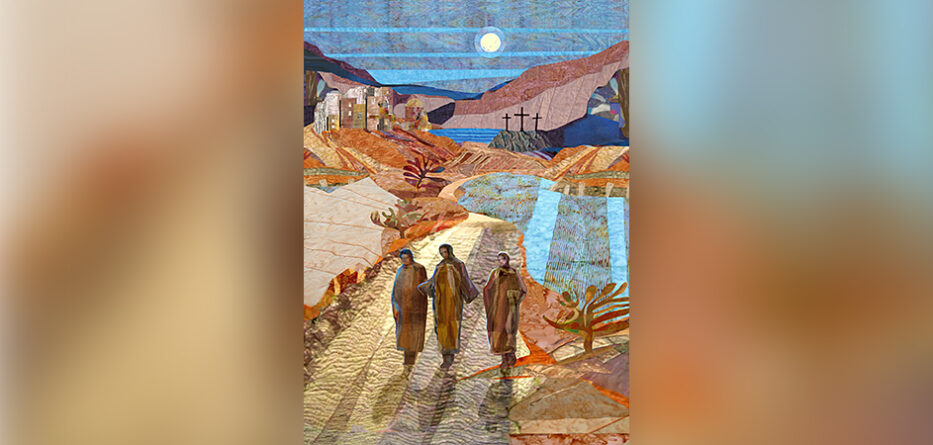
In today’s gospel, two of the disciples are walking to Emmaus. It was a good seven miles from Jerusalem. They had plenty of time to talk. It must have been quite an animated conversation. We are told that they were debating. And they were debating about things that mattered most to them.
The risen Jesus joins them on the road but they don’t recognise him. Making his way into the conversation, Jesus asks what they have been discussing. The disciples regard this stranger as being either odd or stupid, or both. They ask: ‘Are you the only visitor to Jerusalem who does not know of the things that have taken place there in these days?’ They tell Jesus about his own crucifixion and death and express the one deep hope they shared: ‘But we were hoping that he would be the one to redeem Israel’.
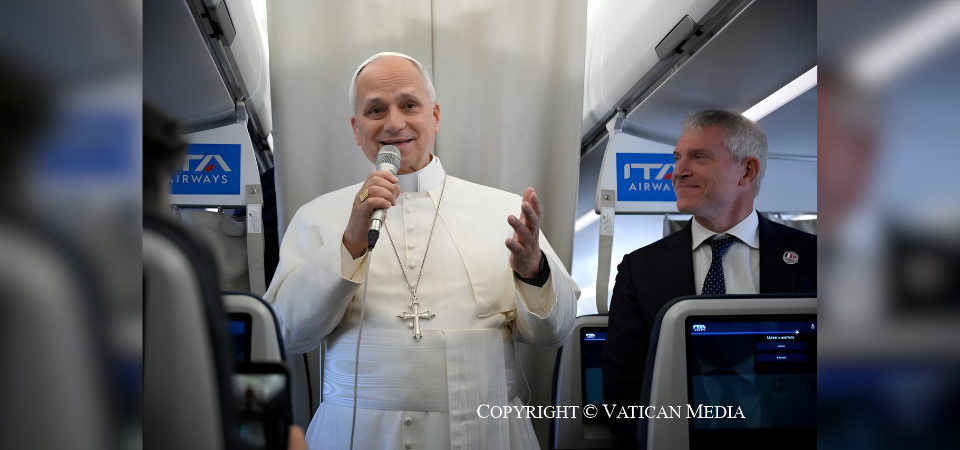
This past week there has been a lot of talk and tweets on the airwaves about what Jesus did and did not teach, about what he came to do and what he did not come to do. Much of the focus has been on Pope Leo who has been travelling in Africa – in faraway places like Algeria, Cameroon, Angola and Equatorial Guinea. Leo, being an American, has been presumed to be focused primarily on the war tactics of the US Administration. As pope, he beholds war and conflict in many places. Wherever he goes, he speaks of peace. On Thursday, Leo was in Bamenda in north-west Cameroon where there has been a decade-long conflict between the Francophone government and the English speaking separatists. Pope Leo praised the local Christian and Muslim leaders who have worked together ‘to establish a Movement for Peace, through which they seek to mediate between the opposing sides’. Expressing his appreciation, Leo said:
‘I wish this would happen in so many other places of the world. Your witness, your work for peace can be a model for the whole world! Jesus told us: Blessed are the peacemakers! But woe to those who manipulate religion and the very name of God for their own military, economic or political gain, dragging that which is sacred into darkness and filth. Yes, my dear sisters and brothers, you who hunger and thirst for justice, who are poor, merciful, meek, and pure of heart, you who have wept — you are the light of the world! (cf. Mt 5:3-14).’[1]
Some defenders of President Trump’s intervention in Iran think that Leo is choosing the words of Jesus to pass judgment on the US Administration. Being the universal pastor who happens to be American, Pope Leo is proclaiming a message of peace to all protaganists in all conflicts in our troubled world. I suppose we might say, ‘If the cap fits, wear it.’
Last weekend Pope Leo urged all of us to commit to a vigil for peace in the world. Quite rightly, Leo is leaving it to the American bishops to offer detailed commentary on the morality and wisdom of the US-Israel-Iran war. Cardinal Robert McElroy, the archbishop of Washington DC, preached strongly about the immorality of that war last Saturday night. McElroy has two doctorates, including one in political science. In his studies, he made a special study of the Jesuit John Courtney Murray who had been instrumental in the Second Vatican Council’s decree on religious liberty, Murray being the only American who had made a significant contribution to the work of that historic council.
Preaching in the cathedral of Matthew the Apostle in Washington DC, Cardinal McElroy told his congregation:
‘We must be builders of peace among nations, rejecting the pathway of war that lures us toward the ending of civilizations and the pursuit of domination rather than true peace.
‘It is this last responsibility which weighs most heavily upon us this night. For we are in the midst of an immoral war. We entered this war not out of necessity but rather choice. We failed to ardently pursue the pathway of negotiation to its end before turning to war. We had no clear intention, instead darting from unconditional surrender to regime change to the degradation of conventional weapons to the removal of nuclear materials. And we blinded ourselves to the cascade of global destructiveness that would likely flow from our attacks – the expansion of the war far beyond Iran, the disruption of the world economy, and the loss of life. Each of these policy failures is equally a moral failure which under Catholic just war principles renders both the initiation of this war and any continuation of it morally illegitimate.’[2]
As ever, not all Catholics will agree. And American Catholics will get their say at the mid-term elections in November.
Reflecting on the two disciples on the road to Emmaus, we know there will always be debates and diverse hopes about what the Lord might be able to do for us, the one who is the Prince of Peace. And there will always be debates about the application of the Lord’s teachings to complex, contemporary situations.
Whatever our political differences, whatever our differing moral calculus about a particular war, we should give thanks for a pope who proclaims a universal message of peace and for theologically well educated church leaders and citizens like Robert McElroy who contribute to public discussion about the morality and prudence of particular wars which involve their own government.[3]
Like the disciples on the road to Emmaus, in the midst of our debating and disappointment with the state of the world, we should extend hospitality to the stranger and share with each other those moments when our eyes are opened and when our hearts burn within us. Yes, it is true. The Lord is risen, and he is the Prince of Peace.
Lord, you will show us the path of life.
I bless the Lord who counsels me;
even in the night my heart exhorts me.
I set the Lord ever before me;
with him at my right hand I shall not be disturbed.
Lord, you will show us the path of life.
Therefore my heart is glad and my soul rejoices,
my body, too, abides in confidence;
because you will not abandon my soul to the netherworld,
nor will you suffer your faithful one to undergo corruption.
Lord, you will show us the path of life.
You will show me the path to life,
abounding joy in your presence,
the delights at your right hand forever.
Lord, you will show us the path of life.
Fr Frank Brennan SJ AO, Adjunct Professor of Thomas More Law School at ACU and Adjunct Research Professor at the Australian Centre for Christianity and Culture, is a former Rector of Newman College, University of Melbourne, and CEO of Catholic Social Services Australia (CSSA). His latest books include Pope Francis: the Disruptive Pilgrims Guide (ATF Theology, 2025), and Gerard Brennan’s Articles and Speeches: Maintaining the Law’s Skeleton of Principle (2 volumes) (Connor Court, 2025).
[1] See https://www.vatican.va/content/leo-xiv/en/speeches/2026/april/documents/20260416-camerun-incontro-pace.html
[2] See https://adw.org/news/massforpeacehomily-april-11-en/
[3] See https://www.theaustralian.com.au/inquirer/holy-war-trump-v-the-us-cardinals/news-story/bac877761c6875ce90d9bd27f29d9694