


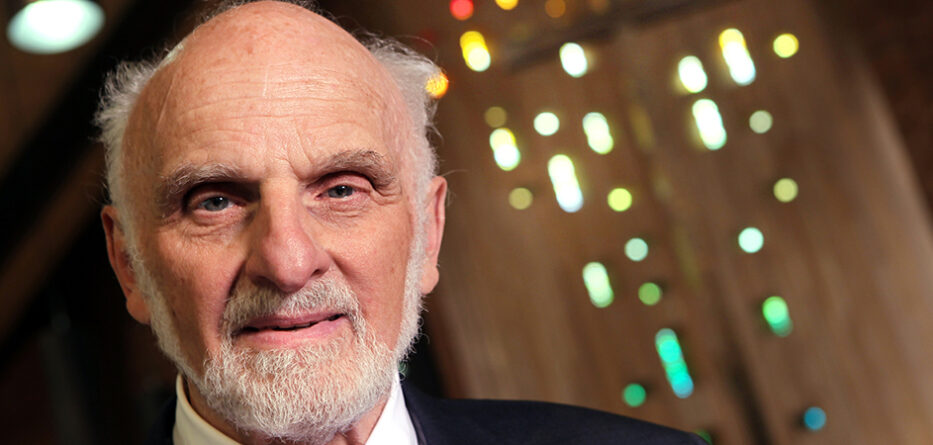
He turned ancient Scripture into a living voice for justice, influencing Protestant, Catholic, and Asian theological traditions
Walter Brueggemann, who passed away on June 5 at 92, redefined how we study, pray, reflect on, and interpret the Bible. His work reshaped Scripture from a distant, static text into a dynamic, living word — alive with tension, poetry, protest, and hope.
Few have contributed as much to the critical understanding of the Old Testament as he did, and few have done so with his bold imagination and fierce honesty.
His influence spanned traditions — from mainline Protestant and Catholic settings to liberationist and contextual theologies throughout the Global South. He spoke to a wide spectrum: biblical experts, pastors, seminary students, and everyday readers alike.
What he offered wasn’t just commentary, but a way of reading Scripture as a practice of justice, lament, and courageous hope.
Brueggemann was one of the most influential Old Testament theologians of our time.
An ordained minister in the United Church of Christ, he spent decades teaching at Eden and Columbia Theological Seminaries in the US. He wrote more than a hundred books, exploring the Hebrew Bible, the prophets, the Psalms, and the moral imagination needed for justice.
While working with the late Father Carlos Abesamis, SJ, who was crafting a grassroots theology rooted in Scripture, struggle, and the Filipino experience, we often turned to Brueggemann’s Old Testament work.
Abesamis’ conviction that salvation is historical and total — unfolding in the real struggles of communities, especially the anawim (the poor and humble), drew deeply from a way of reading Scripture that Brueggemann helped make accessible.
For both of them, the Bible was never a sealed vault of doctrine, but a living document of resistance and reimagination.
Brueggemann never treated Scripture as a closed book. Abesamis said the same: the Bible is an unfinished story, still speaking through the life of a people on the move.
Brueggemann read the Bible with the urgency of one who knew it could still break open hardened imaginations. He taught that the ancient words of prophets and poets speak precisely because they disturb our settled certainties.
Faith, for him, was not about easy answers; it was about holding the contradictions of life and God in the same hand and still daring to hope.
In The Prophetic Imagination, Brueggemann argued that the Hebrew prophets — especially Moses, Amos, and Isaiah — were not merely religious figures; they were also social and political leaders. They were poets of resistance, breaking the “totalizing” narratives of empire (like Pharaoh’s Egypt) by offering a counter-imagination grounded in God’s justice and freedom. That insight shaped readers far beyond the United States.
In Brueggemann’s use, “totalizing narratives” are the dominant stories that empires tell to justify their power and suppress alternatives. These stories claim to explain everything, define reality, and leave no room for dissent. They seep into culture, religion, media, and economics — presenting the status quo as inevitable, natural, even sacred.
In Pharaoh’s Egypt, the totalizing narrative was: “Pharaoh is divine. The economy runs on slavery. Order depends on obedience. This is just how the world works.”
Think of Trump-era politics as a modern-day “totalizing” project. It constructs a narrative that claims absolute truth, dismisses criticism as fake news or treason, rewrites history, elevates strongman rule as patriotic, and divides the world neatly into heroes and enemies. It sells grievance as gospel and power as virtue.
In this narrative, the state, media, religion, and nationalism fuse into one message: only we can fix it. Dissent equals chaos. Fear becomes truth. Loyalty is everything.
Brueggemann helps us see that this isn’t new — it’s empire logic dressed in new branding. And he also reminds us that prophetic imagination is the antidote. Not partisanship. Not tribalism. But a poetic, justice-rooted, Spirit-filled alternative that refuses to believe this is the only world that can be.
Brueggemann’s reading of the prophets — as poets of resistance against empire — found deep resonance in Asia’s struggles for justice and dignity.
In countries like the Philippines, Indonesia, Korea, and India, the prophetic tradition has long fueled grassroots movements that speak from the margins. The cries of the poor, the memory of colonization, and the demand for justice have shaped how many read the Bible, not as comfort for the privileged, but as a call to action.
Brueggemann’s way of reading Scripture widened that path. His biblical imagination offered language and courage for those building theologies rooted in history, community, and the daily struggles of the poor, especially in the Philippines, where faith and social action have always walked side by side.
Asian theologians such as C.S. Song, Aloysius Pieris, and Jose de Mesa share Brueggemann’s understanding that the Word of God cannot be reduced to doctrine or locked in abstraction. It must live among the poor, speak in the local idiom, and disturb any theology that forgets the wounded. Like Brueggemann, they ask: Whose voices are missing? Who benefits from the silences in our Scripture readings?
His writings on the prophets, biblical imagination, and theology of justice found resonance with Catholic thinkers concerned with liberation, inculturation, and the Church’s mission among the poor. His books may not have circulated broadly in parishes, but they became formative texts in Catholic seminaries and graduate programs, shaping how future priests and lay leaders approached the Bible — not as a finished doctrine, but as a living word that unsettles, provokes, and transforms. His impact wasn’t institutional, but it was deeply personal and prophetic, offering tools for Catholics seeking to read Scripture with the eyes of the poor and the urgency of justice.
He invited readers into a posture of honesty toward the text, toward the world, and toward ourselves. His work remains a gentle reminder that true faith does not cling to what is safe but ventures into the unknown, where lament and praise are both welcome.
Now he rests in the eternal hope he traced so often in Scripture: “The grass withers, the flower fades, but the word of our God will stand forever.” (Isaiah 40:8)
*The views expressed in this article are those of the author and do not necessarily reflect the official editorial position of UCA News.
With thanks to Union of Catholic Asian (UCA) News and Jess Agustin, where this article originally appeared.