

When Pope Francis began his papacy in 2013, the people gathered at St Peter’s Square and many carried banners that read “Go and rebuild my Church”. It was, of course, a reference to the dream of St Francis of Assisi, in which he was told to repair the Church that was falling into ruins.
I was drawn to Pope Francis from day one of his papacy because of this Franciscan connection. Though a Jesuit, he was the first pope ever to have chosen the Poverello not only as his namesake but as the inspiration of his pontificate.
It was reported that after he had been elected, Franciscan Cardinal Claudio Hummes, of Brazil, embraced him and whispered into his ear, “Don’t forget the poor”. Without hesitation, he decided there and then to be known as Pope Francis.
I have many layers of identity, such as being male, Vietnamese, a cradle Catholic, a refugee, a naturalised Australian, a friar, a priest and a bishop. Among these, being a Franciscan is a big part of who I am. I live, breathe and sustain my whole being with the Franciscan spirituality and values, such as simplicity, humility, availability, love of nature, solidarity with the poor and marginalised. I do not always measure up to these values. Nevertheless, they inspire and shape me into the person I am today and, hopefully, the person that I am capable of becoming fully in the future.
Pope Francis has been widely described as “Pope of the peripheries”, “Pope of the poor”, “Pope of dialogue”, “Pope of the environment”. All these descriptions apply as much to him as to his namesake. To put it differently, he was profoundly influenced by St Francis of Assisi.
He has shone as a beacon of light and hope for a world shrouded in the darkness of war, violence, hatred, oppression and dehumanisation. Whether it is the homeless, Indigenous peoples, prisoners, refugees, gender diverse, divorced and remarried, Pope Francis has personified the closeness and pathos of God for people on the margins. He has defended their dignity and championed their rights against the evil forces that dehumanise them.
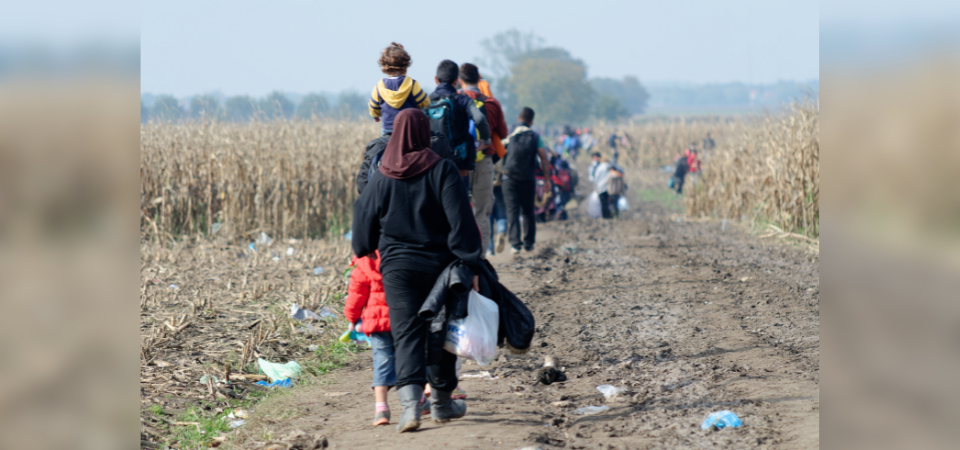
When he visited refugee camps on Lampedusa and returned with a dozen refugees on the papal plane, or when in hospital, he called the parishioners in Gaza every night, it was an unmistakable gesture of solidarity with the expendable.
In a world addicted to consumption and threatened by irreversible damage, Pope Francis’ call to care for our common home has been prophetic. Laudato Si’ has been a gift for the world. He challenged us to embrace a new economy that shifts away from exploitation of the natural world to one that celebrates radical interdependence and reciprocity of all living beings within diverse webs of life.
Another Franciscan trademark was his unwavering dedication to peace, ecumenical and interfaith relations. His encyclical Fratelli Tutti appeals for a love that transcends borders. His leadership in fostering understanding between faith communities, particularly between Christians and Muslims, remains an enduring source of inspiration for us here in Western Sydney.
For me, the most striking and unique legacy of Pope Francis is his vision of a synodal Church, which he boldly declared is what God expects of us in the third millennium. He gave new impetus to the doctrine of the sensus fidelium, stating that synodality represents an indispensable prerequisite for infusing the Church with a renewed missionary impulse: all the members of the Church are called to be active subjects of evangelisation and missionary disciples.
Thus, with Pope Francis, there is no turning back from the reforms of the Second Vatican Council. The old way of being Church, which is steeped in a culture of clerical power, dominance and privilege, is giving way to a new paradigm that is grounded in humility, inclusivity, accountability and servant-leadership.
The recent Synod on Synodality was truly expressive of the essential co-responsibility of all the People of God. If synodality is a constitutive dimension of the Church, then for Pope Francis, the sense of the faithful must be given expressions in a way that witnesses to the dynamism of communion and inspires all ecclesial decisions.
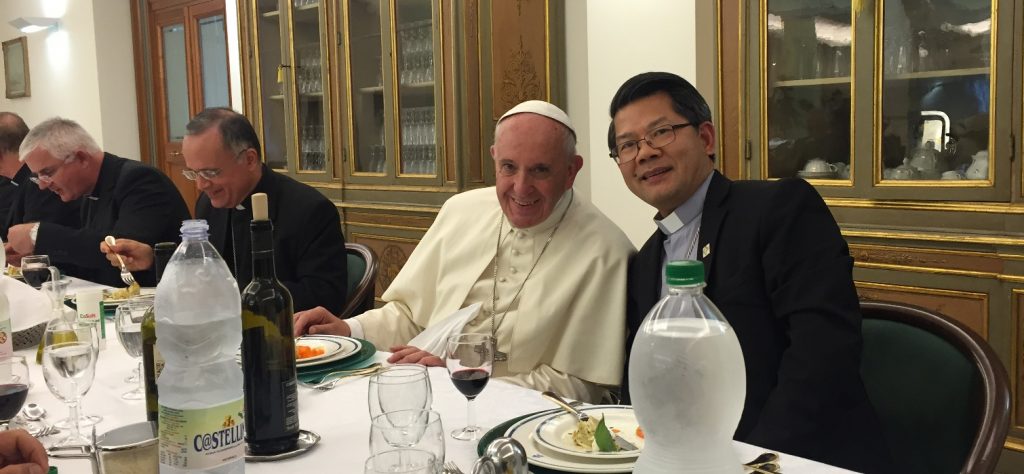
Bishop Vincent enjoys a ‘John the Beloved Disciple’ moment with Pope Francis. Photo supplied.
I had many memorable moments with Pope Francis. Two particular encounters stand out.
In 2016, not long after being installed as the Bishop of Parramatta, I met him at Santa Marta, where he resided. With a stroke of luck, I got to sit next to him at a dinner table, like John the beloved disciple who sat next to Jesus at the Last Supper. He even poured wine into my glass and conversed with me in Italian.
Then, in late 2023, I met him after the General Audience at St Peter’s Square. When I introduced myself to him, he held my hand very firmly while tapping it gently with his other hand. He told me that he knew who I was and that he had heard about me. He looked me in the eye and said: “Be prudent. Go forward and do what you’ve been doing for the people of God. You have my support. You have my support.”
I have endeavoured to follow his leadership, especially in implementing his vision of a Synodal Church. We were the first diocese in Australia to host a Diocesan Synod after the Plenary Council with a whole-of-Church approach.
Here in Parramatta, I would like to think that the Synod has committed us to making synodality a truly constitutive dimension of the local Church, where the seeds we have sown will bear fruit for generations to come.
Though saddened by his loss, we are filled with gratitude for his rich legacy. His outreach to the marginalised, his bridge-building with non-Catholics and his vision of a synodal Church resonate strongly. We have been emboldened to go out into the deep and become the effective vehicle of the Good News for all.
Pope Francis asked us to be signs of hope for others, as he himself has been an outstanding embodiment of Christian hope even in times of sickness, fragility and death. As we remember him in a spirit of thanksgiving and trust, let us endeavour to be the Church that shines forth the light of the risen Christ.
May he rest in peace!
Bishop Vincent Long OFM Conv
Bishop of Parramatta
This article was originally published in the 2025 Ordinary Time | Winter edition of the Catholic Outlook Magazine. You can read the digital version here or pick up a copy in your local parish.