

3 December is the United Nations’ International Day of Persons with Disabilities
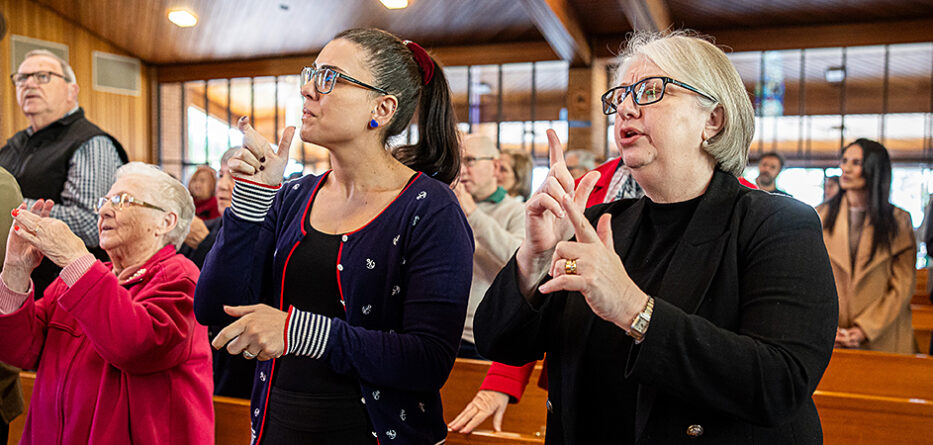
World Days often bring different people together under the one flag. That is certainly true of the International Day of Persons with Disabilities. Their disability can affect hearing, sight, balance, mobility, mental health and many other qualities of life. As we imagine what it may be like to live with each of these various disabilities, we are reminded of the diversity of the persons whom we speak of as disabled, about what their condition means to each person, and how unique each person is.
One of the challenges to us all is see people as unique persons and not to imagine them as part of a standardised group. The problem of lumping people together is that we conceive an idea of what they are like and then assume that they must fit into it. Or we might see them as totally different from ourselves, so that we become afraid or embarrassed to reach out to them. Avoidance can lead to silence and a stigma which grows in our minds, breeding a silence and avoidance that causes pain to the person with disability.
In order to see persons as persons and not as a category, we need to see them from the inside. That demands taking the same kind of interest in them that we would in any other of our acquaintances. We would wonder how they see and live their lives. When we attend to them and are interested in people, of course, the only way we can understand their lives and its conditions is to reach out to them and to ask them. Understanding is always question-shaped. When we ask, we shall find that some will see their condition as a nuisance, others as a blessing, others as a challenge, some as a cause, each in their own way. We shall also then be attentive to the ways in which we might be able to assist them. Again, the only sure way to find out is to ask them if we can be of any help. If we don’t ask, we shall be the target of the cautionary joke about the man who asked why he was having such great difficulty in taking a little old lady across the road. He replied, ‘Oh, she didn’t want to go!’
As we come to know more people with disadvantages of different kinds, we may notice that many find similar obstacles to living a full life. These often have to do with institutional buildings and structures that prevent them from doing what they want. Multi-story schools and offices without lifts, churches with ramps and rails make access to people who are unable to walk freely, for example. People whose hearing and eyesight are limited and those who are intellectually handicapped may need special assistance in filling in forms. Generally speaking, government and other institutions have become much more aware of special needs and address them better than in an earlier age, but much more remains to be done. To recognise these needs and to help meet them, we will naturally attend to the advocacy of people with disabilities and join them in their cause.
Fr Andrew Hamilton SJ writes for Jesuit Communications and Jesuit Social Services.