

Most Reverend Vincent Long Van Nguyen OFM Conv DD STL, Bishop of Parramatta
Homily for the 15th Sunday in Ordinary Time, Year A
Readings: Isaiah 55:10-11; Romans 8:18-23; Matthew 13:1-9
Deepening and interiorising our faith in the time of crisis
Dear sisters and brothers,
Last Saturday, July 4th, was an auspicious day for the USA, as it celebrated the 250th anniversary of its founding. Pope Leo did not go to visit his home country as expected of the first American Pope. Instead, he visited the infamous island of Lampedusa where thousands of undocumented migrants had died trying to escape from war, persecution, starvation and grinding poverty. Like his predecessor, Pope Leo honoured their dignity and called on the rest of the world to act like the Good Samaritan. He reminded us to become neighbours to each other in time of need.
After this highly symbolic gesture, the Pope followed up with a letter to the American people saying that “defending human life also includes welcoming, protecting and assisting immigrants, whose hopes, sacrifices and contribution have formed part of the history of this country from its very beginning.” It is a message that is perhaps as politically unpalatable in America as it is in our own country at the moment. As Christians, we are challenged to put the dignity of the poor and the big picture of God’s kingdom above our own interest.
Scriptures on this 15th Sunday in Ordinary Time summon us to a way of living and witnessing in the world that requires a fundamental disposition of humility, openness and receptivity. Through history’s vicissitudes and life’s changes, God makes us grow. He prods at at our sense of entitlement and our claim to privileges. He leads us and empowers us to move beyond our fears to live a life of faith, hope, love and service. In Jesus, he calls us and forms us into living embodiment of the kingdom.
In the first reading, Isaiah calls his people to an authentic living of the Covenant in the unsettling and demoralising period of the exile. They were confused and lost as they struggled to cope with the loss of their collective identity, which was rooted in such concrete symbols as the land, the monarchy, the temple and the rituals. It was in this context that Isaiah attempted to reformulate their faith. He speaks today about the importance of living God’s word as opposed to observing ritual practices. As Judaism evolved beyond temple worship, the prophet calls for interiorizing the Covenant that defines their unique identity in the Diaspora.
God’s word that Isaiah exhorts the people to live had not yet been codified in the Bible as we know it today. It would have been transmitted to them mostly through oral tradition. The shift from a temple-centred religion with sacrificial rituals to a faith that is nourished by the teachings of Moses and the prophets was under way. It is a basis of an alternative way of life and a model society as they gave witness to the God of love, justice and compassion.
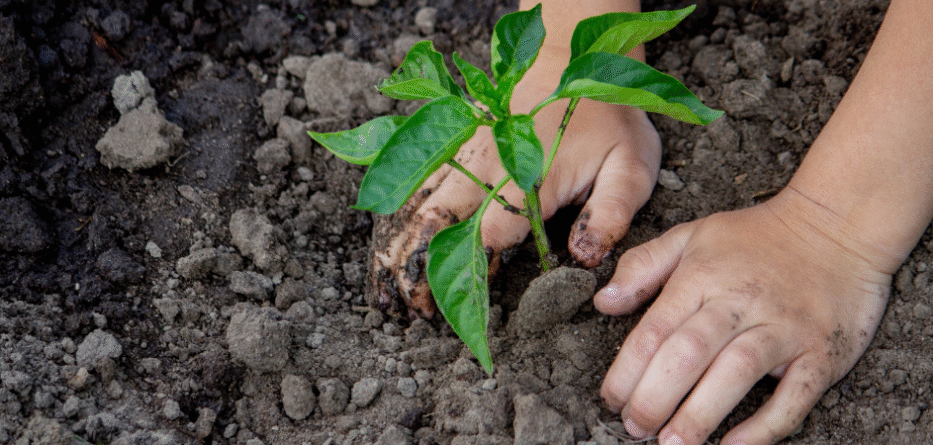
In the Gospel, Jesus also stresses importance of living and enabling God’s word to bear fruit through the parable of the sower. It warns us against a kind of superficial living that seeks short-term gains and successes. This is what the parable refers to when it uses the image of the seeds falling on patches of rock or those smothered by thorn bushes. Superficial living happens when our concerns are no more than skin deep; or when our goals and commitments are short-lived. The seed that produces the harvest is nurtured in deep rich soil, which can be understood as a metaphor for dedication, commitment and sacrifice.
The Gospel points us to the whole new way of living and relating to others. It is a paradigm of love and service as opposed to the way of individualism and self-interest. When we operate out of Jesus’ new paradigm, faith transforms us into humble servants of the kingdom. When the word finds a generous response in our hearts, there is no limit to the riches of God’s love and grace that can be channelled to the world around us.
Dear sisters and brothers,
The Word of God this Sunday calls us to be a different people in the world. Our Jewish ancestors were challenged to interiorise the Covenant and to live by its power. Isaiah’s call to his people to live by the living word as opposed to the imperial system requires generosity, courage and commitment. It is a summons for believers to live their identity much more intentionally and authentically. This summons is ever so relevant for us as we too find ourselves in our spiritual exile and the ground under our feet has shifted beyond what is known as cultural Christianity.
Let us, then, endeavour to be a model community as we are called to be. Let us strive to be a place where everyone experiences the divine hospitality, kindness and generosity. In a world of fear and the circle of sharing is off limit to the poor, we are called to be a Church without borders, a tent that admits even the untouchables and a society that mirrors God’s inclusive embrace.
In the light of the Church’s diminished status, we have a particular duty in regaining a sense of trust and credibility through our authentic witness. Like our ancestors who interiorized their faith in the time of persecution, let us also grow the seeds of God’s grace in the depth and silence of our hearts. Let us strive to be not so much a powerful institution as a community that empowers even the weakest links to achieve their God-given purpose in the world.