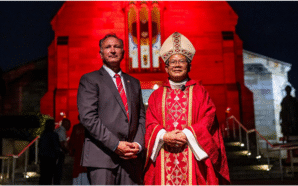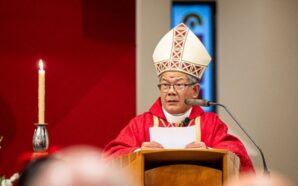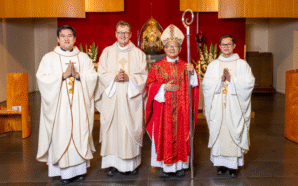


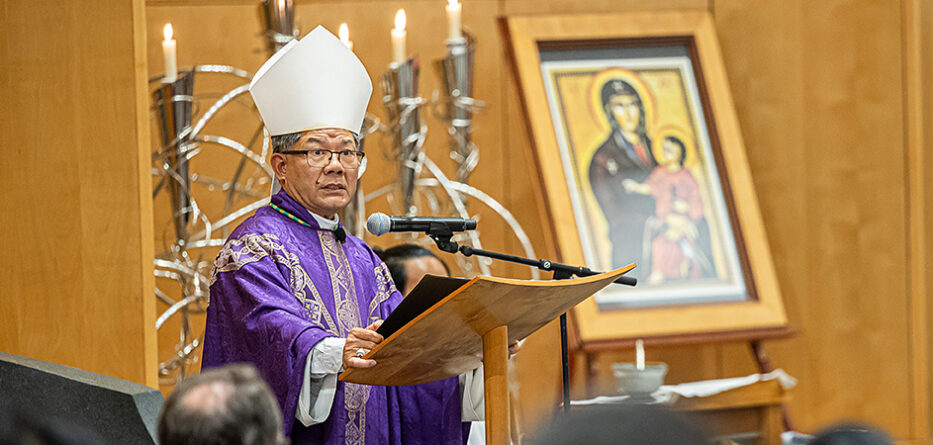
Most Reverend Vincent Long Van Nguyen OFM Conv DD STL, Bishop of Parramatta
Homily for the 1st Sunday of Advent, 2026, Year B.
Readings: Isaiah 63:16-17; 64:1,3-8; 1Cor 1:3-9; Mark 13:33-37
Setback as an opportunity for realignment with God’s purpose.
Dear sisters and brothers,
Today, we begin the new liturgical year with the celebration of Advent. We are reminded that God is not aloof and uninvolved in our struggle. Indeed, God is directing the movement of history. In Jesus who conquered sin and death, he already set in motion the final victory over the forces of evil and darkness. Therefore, no matter what kind of setback we experience, in big and small matters, we journey with a sense of purpose and confidence. This is why we pray at every Mass “as we await the blessed hope and the coming of our Saviour Jesus Christ”. Advent, therefore, galvanizes us. It is an opportunity for us to participate in God’s cosmic liberation and the birthing of the new heaven and the new earth.
The Word of God speaks of trust, perseverance and hope in the time of adversity and hardship. In the first reading, Isaiah utters a heartfelt prayer on behalf of his suffering people in exile. He pleads with God to show tenderness and mercy to Israel as he has done in the past. “Oh that you would tear the heavens open and come down.” Like Job on the dung heap or Azariah in the burning furnace, Isaiah also expresses a deep sorrow for the afflictions his people endured but at the same time a fervent longing for justice. God’s people had experienced the depths of despair. Everything that was dear to them had been destroyed including the land, the monarchy, the temple and the priesthood. Isaiah makes lamentations for these losses. Yet he also appeals to the love that God showed them in the past and entrusts to him the destiny of his people. “Lord, you are our Father; we the clay, you the potter, we are the work of your hand.”
Isaiah called the people to faith despite their afflictions. He taught them that God’s plan for their destiny is being achieved through these traumatic times. He summoned their courage and invited them to look beyond their present predicament to the time of renewal and restoration. More importantly, he called them to commit themselves to working afresh for the realization of God’s purpose.
The Japanese have developed an art called Kintsugi, which specialises in repairing and mending broken vessels. This reminds me of the visit of Jeremiah to the potter’s house where he was told that Israel would undergo the process of being recast into the kind of vessel the Lord desired. The exile would act as the furnace, and Israel would be refashioned like the Kintsugi artist refashions the damaged ceramic. Isaiah’s metaphor of the clay calls us to surrender, trust and willingness to undergo radical recasting so as to be made a fitting vehicle of God’s love.
In the Gospel, Jesus uses the parable of the faithful servant, which is similar to the parable of the virgins, to remind his disciples of the need to be vigilant. The parable is about a kind of vigilance that allows us to discern God’s presence and action in the world. It is about our capacity to read critically the signs of the times and respond to them accordingly.
In fact, throughout the course of Jesus’ ministry, he often highlights the needs to be in sync with the manifestations of the kingdom. Thus, for instance, to John’s disciples who want to know if he is the Messiah, Jesus simply alerts them to the messianic deeds he has been performing: the deaf hear, the dumb speak, the sick recover and the Good News is preached to the poor. To those who want to see the signs of power, Jesus compares himself to Jonah who was a sign of contradiction and weakness. He warns his hearers against the apathy and inertia that the people demonstrated during the time of Noah.
The Word of God calls us to a deep humility, trust and transformative action. Isaiah reminds the people that God acts not just through their successes but even more so through their failures. The exile and all that followed proved to be a much-needed course correction and realignment with God’s purpose. Jesus’ parable challenges the disciples to resist complacency and inertia. We must not allow ourselves to be blinded by our quest for prosperity, security, normalcy and comfort.
Dear friends,
Today marks 40 years since Pope St John Paul II gave a powerful speech in Alice Springs. He reminded us of the importance of justice, respect for cultural diversity, and the protection of the dignity and heritage of our First Nations Peoples. His words still stir our hearts: “You are part of Australia and Australia is part of you. And the Church herself in Australia will not be fully the Church that Jesus wants her to be until you have made your contribution to her life and until that contribution has been joyfully received by others,” he said.
If there is an area we Catholics must resist complacency and inertia, it is closing the gap. Inspired by St John Paul’s appeal and guided by Our own Pastoral Plan let us learn to strengthening our relationship with our First Peoples. Let us listen and share stories and learn from their wisdom and relationship with the land.
Let us learn the art of living deeply in God’s love, attentive to his presence and responsive to his call. Then we can truly be the conduit of mercy and the sign of hope for all. Let us be diligent and responsive to God’s action in the world so that the day of the Lord may be a source of vindication, comfort and joy to us.