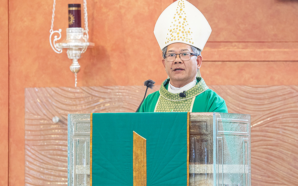


Most Reverend Vincent Long Van Nguyen OFM Conv DD STL, Bishop of Parramatta
The Feast of Saint Josephine Bakhita
Readings: Is 58:7-10; 1Cor 2:1-5; Matthew 5:13-16
8 February 2026
Being the light in the darkness for others
Dear friends,
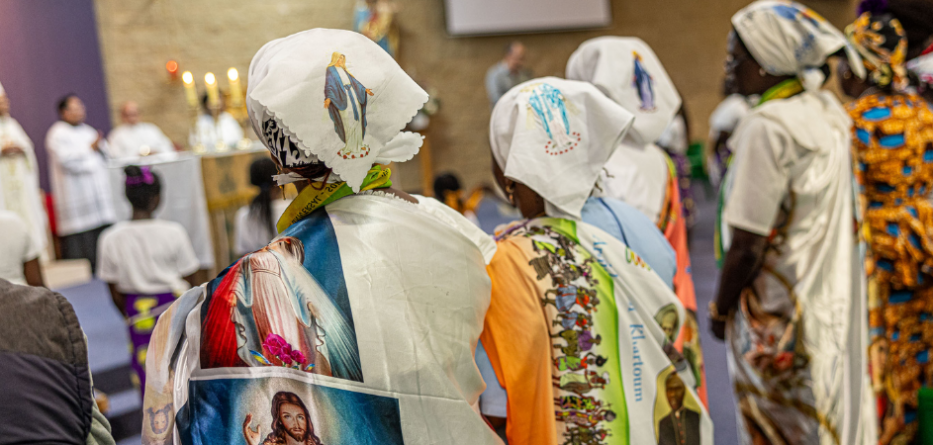
Once again, it is my privilege and joy to celebrate the feast of St Josephine Bakhita with you, the South Sudanese Catholic Community in Western Sydney. Every nation needs a symbol or a hero that embodies its identity and unifies its people. Josephine is such a person for you. She is your pride. But even for the wider world and universal Church, Josephine is an example of being the best possible person under the worst circumstances.
Pope St John Paul II calls her “a shining advocate for genuine emancipation”. In freeing herself from the shackles of forced servitude and slavery, she became the model of living for others. Josephine is a proof that God can use the most unlikely people to do extraordinary things. Her legacy that transformation is possible through suffering is written into the history of the nation and the resilience of the people of South Sudan.
God does work in mysterious ways. He brings about new life from apparent defeat, dispersion and loss. This was true of the chosen people, the early Church as well as the Church of today. When we survey salvation history, we recognise that out of the crisis of the exile, the battered people of the covenant became the nucleus of the new Israel. Similarly, out of the persecution of the early Christians by the hostile forces in Palestine, the universal Church was born. Even in our own days, the Catholic Church in Australia are bolstered and enriched by those who came from war-torn countries like South Sudan.
Scriptures this Sunday encourage us to be the changing agent for the world. Christians are people whose duty it is to shine the light of Christ to the darkness around us. We are called to be salt of the earth in the way we live and witness to the values of the Gospel.
In the first reading, Isaiah exhorts the people to show particular concern for the poor, the marginalised and the vulnerable. They are to share their bread with the hungry, shelter with the homeless and clothe the naked. They are to do away with the yoke, the clenched fist and the wicked word. In other words, they must eradicate practices of oppression, violence and injustice. Only then, can they become the true people of God and the model society. Only then, can they fulfill their mission in being the light in the darkness for others to follow.
These prophetic injuctions had a profound impact to the people of the covenant in their historical context. They had witnessed the collapse of their once powerful nation, along with their proud national symbols such as the temple and the monarchy. They had learned the bitter lesson of the exile which was a dramatic fall from grace. Isaiah interpreted this harrowing experience in the light of their calling. In Palestine where they reached the zenith of political power, Israel had ironically betrayed their calling by engaging in practices of oppression, violence and injustice. They had adopted an unjust system. Solomon with his oppressive regime had become a new Pharaoh and Israel had become a new kind of Egypt, metaphorically speaking. Hence, the exile was a course correction, a reset and a conversion to being a humble, compassionate people and a fitting instrument for God’s purpose.
In the Gospel, Jesus further reinforces the message of Isaiah. On the back of his teaching on the Beatitudes last Sunday, he now highlights the need for true discipleship. He warns us not to lose sight of our identity and mission as agents of change in the world. He speaks of tastless salt which is “good for nothing and can only be thrown out to be trampled underfoot by others”.
These are sobering words that caution us to never betray our mission of caring for one another and for those on the margins. We become tasteless salt when we are concerned with ourselves and not the welfare of others. There was a time when the Church was synonymous with power, prestige and honour. Christendom and for the most part of history, we have tried to be great, powerful and dominant. Hence as it was for the exiled Jews, it must be the same for us in recovering our Gospel compass. We must change course and reset ourselves to the task of rebuilding our diminished credibility. We must reclaim what Christ stands for, or we will forfeit our mission of being the light of the world.
Dear brothers and sisters,
The Word of God challenges us to show our true mettle by domination but by service. In a time of tensions and divisive ideologies, we must resist the temptation of returning to a triumphant and powerful Christendom of old. In fact, the early Christians got the message of Jesus and showed us the way. In the face of a fractured society, they shone like a lighthouse. Against the dominant system of exploitation, self-interest and greed, they enacted a Gospel ethos of communion, justice and compassion. May we learn to walk with the God of love, inclusion and compassion, as we endeavor to make His kingdom a reality in the world. May the example of St Josephine Bakhita inspire us to be the servants of the Kingdom, acting as its leaven in our time and environment.