

Homily for the 3rd Sunday of Ordinary Time, 2026
Readings:Isaiah 7:10-14; Psalm 24; Romans 1:1-7; Matthew 1:18-24
25 January 2026
Listen at soundcloud.com
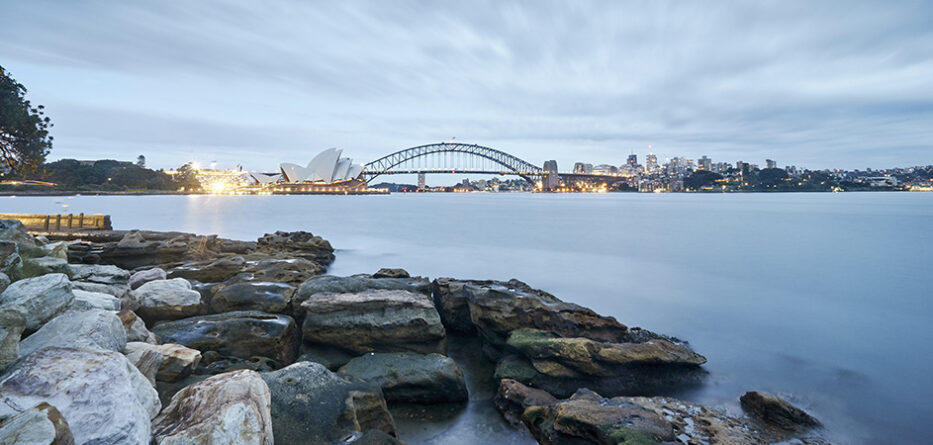
Today we mark the 238th anniversary of the last day when Aboriginal people enjoyed uninterrupted occupancy of the Australian continent. Tomorrow is Australia Day, the anniversary of the day when Governor Phillip came ashore with his officers at Sydney Cove, hoisting the British flag, and proclaiming possession in the name of King George III of the land on which they stood. There were no women in attendance. The convicts were not brought ashore until the next day. Neither Phillip nor his officers had any idea of the extent of land to which they were claiming possession. At that stage, they were simply wanting to establish a penal colony for the 1100 people on the First Fleet.
Whatever our views about celebrating such an event, we all accept that 26 January marks the great caesura in human history on this continent – the setting of a new trajectory of human endeavour in this land.
Every year, we have different experiences to reflect upon about that trajectory. This year undoubtedly we reflect upon the Bondi massacre on 14 December 2025 when Islamic fundamentalists, a father and son, opened fire on the crowd attending the first night of the Jewish Hanukkah celebration. After our parliament made a rushed and inadequate legislative response to the massacre on Tuesday and Wednesday,[1] we participated in a Day of Mourning on Thursday. At the Opera House Gathering of Unity and Remembrance with the theme ‘Light Will Win’, Prime Minister Anthony Albanese offered this apology: ‘Tragically we are gathered here because on the 14th of December, everything changed. And for that, I am sorry. We cherish the promise that this country is a safe harbour. But sadly that promise was broken. You came to celebrate a festival of light and freedom and you were met with the violence of hatred. I am deeply and profoundly sorry that we could not protect your loved ones from this evil.’[2]
Rabbi Yehoram Ulman, the spiritual leader of the Bondi Chabad, applauded that ‘we saw the Prime Minister and opposition leader, all state premiers and local MPs – leaders who don’t often agree but on this they have agreed – that hate has no home here and that the Jewish community is family’. Rabbi Ulman went on to thank the Prime Minister for his apology: ‘I want to take this opportunity also to thank our Prime Minister who as a leader of this country has taken responsibility and apologised for the tragedy that occurred.’ Later he said that this was ‘a very positive step … that’s what every leader should do when something happens under their watch. They have to take personal responsibility and I think that he did the right thing.’
Prime Minister Albanese’s apology was similar to that offered by Kevin Rudd when he introduced the Parliament’s apology to Indigenous Australians at the commencement of his prime ministership in 2008: ‘For the pain, suffering and hurt of these Stolen Generations, their descendants and for their families left behind, we say sorry. To the mothers and the fathers, the brothers and the sisters, for the breaking up of families and communities, we say sorry. And for the indignity and degradation thus inflicted on a proud people and a proud culture, we say sorry.’
On that occasion, the apology was also followed by an expression of thanks. Lorraine Peeters acting on behalf of the Stolen Generations present in the Parliament, presented a glass coolamon to the Prime Minister and the Leader of the Opposition. The coolamon – made by Bai Bai Napangardi, an artist from the Balgo community in Western Australia – contained a message that said:
‘On behalf of our people, thank you for saying sorry. In return we give you this gift on behalf of us affected by being taken away from our families. This is our way of saying thank you. The gift is a glass coolamon, fragile yet strong. Coolamons have carried our children. The gift is a symbol of the hope we place in the new relationship you wish to forge with our people. A relationship that itself is fragile yet strong. We have a new covenant between our peoples, that we will do all we can to make sure our children are carried forward, loved and nurtured and able to live a full life.’
At the commencement of the Opera House Gathering of Unity and Remembrance on Thursday night, Rabbi Pinchas Feldman, Head of Chabad NSW, said: ‘In deep mourning yet with a steadfast spirit we pray for the triumph of light over darkness. As the prophet Isaiah proclaimed: the people who walked in darkness have seen a great light. May he who makes peace in the heavens, the almighty God, bring peace to Australia, to Israel and to all of humanity. And let us say Amin.’
And by an almost providential coincidence, that is the very first reading in our Eucharist today. ‘The people that walked in darkness has seen a great light; on those who live in a land of deep shadow a light has shone.’ And in the gospel from Matthew we are told that this prophecy is fulfilled when Jesus goes to settle in Capernaum preaching his message: ‘Repent, for the kingdom of heaven is close at hand.’
What does it mean to say that light will win? Isaiah’s account of the light winning out over darkness compares the new situation with the joy and gladness of farmers rejoicing at harvest time:
‘For the yoke that was weighing on him,
the bar across his shoulders,
the rod of his oppressor,
those you break as on that day at Midian.’
Let’s pray that the yoke on the shoulders of Aboriginal Australians still seeking a place of secure belonging for their children and on the shoulders of Jewish Australians still needing heightened security for their children whether at school or at Hanukkah by the beach at Bondi can be broken as on the day of Midian. Let’s pray on this Australia Day that all our children – Aboriginal or migrant, Jew, Muslim, Christian or atheist – can be ‘carried forward, loved and nurtured and able to live a full life’ in this Great South Land of the Holy Spirit. May this be the next strong but fragile stage of the new trajectory of human endeavour commenced on this land on 26 January 1788.[3]
[1] See https://www.eurekastreet.com.au/article/preparing-for-a-royal-commission-on-social-cohesion-with-a-delinquently-partisan-parliament
[2] See https://www.pm.gov.au/media/light-will-win-gathering-unity-and-remembrance
[3] See NATSICC’s Australia Day / 26 January Reflection and Discernment Guide 2026 at https://mcusercontent.com/e95c9e915f8aee66b8445f2b6/files/fac62f3e-bc14-36f5-dd8d-d920dda31494/NATSICC_26_Final.pdf
—
Fr Frank Brennan SJ AO, Adjunct Professor of Thomas More Law School at ACU and Adjunct Research Professor at the Australian Centre for Christianity and Culture, is a former Rector of Newman College, University of Melbourne, and CEO of Catholic Social Services Australia (CSSA). His latest books include Pope Francis: the Disruptive Pilgrims Guide (ATF Theology, 2025), and Gerard Brennan’s Articles and Speeches: Maintaining the Law’s Skeleton of Principle (2 volumes) (Connor Court, 2025).