


Every day on my way to work, I drive by this little memorial on the side of the road. There is a cross, a bench and a sign with a person’s name on it (which I can never read). Sometimes I see a man grieving for a loved one who lost their life, presumably somewhere near this spot. I think and I pray. This is my God moment, my reflection, my prayer on my way to work.
We can find many God moments in our daily life. The dominance of secularism in the crusade for “political correctness” and the push “not to offend someone” has made any sign or symbol of religious affiliation seem like a heretical act. Whilst we might debate and complain about the way society is, I think God is beyond that and communicates with us in different ways if we have eyes to see it, if we give permission, give time to God to show us.
Let me explain.
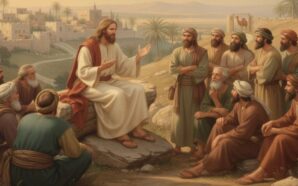
In the Old Testament, God found ways to communicate to the Israelites. God “spoke” to Moses using the burning bush (Exodus 3:4). God “spoke” to Elijah, not in the fire or the earthquake but in the gentle breeze (1 Kings 19:12). In Luke’s Gospel, after Jesus’ crucifixion, on the road to Emmaus, Jesus appeared to two disciples and talked to them but the disciples did not recognise him. It was only after Jesus broke bread with them and then disappeared did they realise, reflect, that it was Jesus who was with them (Luke 24:13-32).
There are many examples in the Old and New Testament which showed how God communicated with his people in different ways. If you think that the Bible was the end of how God communicates with us, can I suggest you have another look?
Just because our society is secular, it does not mean that we have to be secular too. My example of the God moment in the memorial on the side of the road is an obvious one. However, there are less obvious ones. This could be a word someone says to you that you say, in reflection, ah-ha… that was a God moment. Maybe was something you witnessed – a random act of kindness, a shop assistant, nurse or parent trying to help someone, a scene from nature, a sunrise, a sunset. It could be less pleasant instances, an argument between persons, a road accident, a death of someone you hear about in the news.
I suggest you might spend some time at the end of the day (it could be a moment or two or perhaps something a bit longer), meditating on that moment. Try to meditate using your heart and reflect. From meditation, try to feel the consoling and loving presence of God, then perhaps ask yourself some questions:
Where is God in this?
How does this make me feel?
Is there love, forgiveness, resurrection here?
Is there holiness or evilness in this?
What is God saying to me here?
This reflection deepens our relationship, our intimacy, our holiness in and with Christ and helps us to be more like Christ.
In time, you start to see, in the silence, God communicating with us in the here and now, in everyday life, like in the Old and New Testament.
If we become attentive to recognising those God moments, you may start to see that the world is lovingly Christian. The world is not devoid of Christian symbols, nor devoid of God. The world is overflowing with God moments where God is loving us and teaching us. The world is not mono-dimensional and secular and our spirit, our relationship with Christ, are richer for it.
This is a simple and powerful way to see God moments in everyday life. The season of Lent can be a good way to start this as a form of prayer. In time, you might find it easy enough to do it, from time to time, throughout the liturgical year.
Have a blessed Lent.
Zara Tai OCV is a consecrated virgin in the Diocese of Parramatta.