

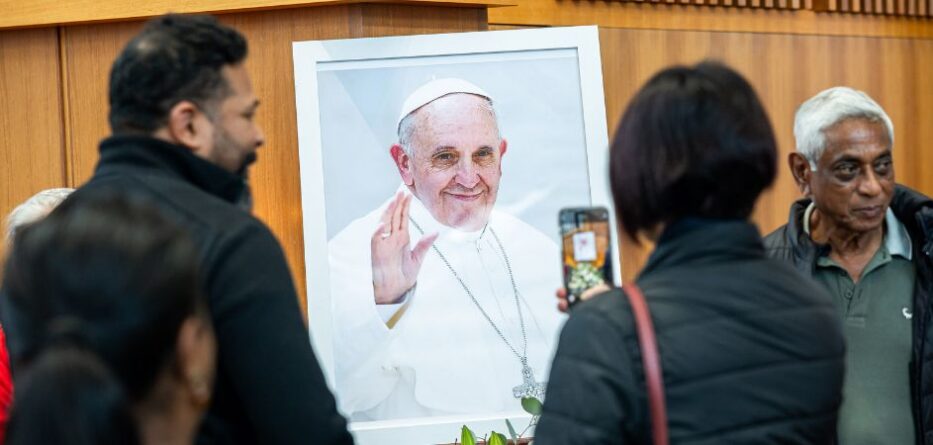
On Easter Monday last year, April 21, Pope Francis died at the age of 88. On Easter Sunday, Francis had delivered the Urbi et Orbi (“To the city and the world”) – the biannual blessing so significant for the Catholic Church – from the loggia of St Peter’s Basilica. Very weak and speaking in a quiet voice, he spoke the words and then drove across the square in the Popemobile.
But what remains of his 12-year–long pontificate? First and foremost, I am thinking of his tireless commitment to world peace. Pope Francis was a passionate advocate for peace, nonviolence and dialogue. His attitude was characterised by the maxim “Never again war”.
He condemned wars as total defeat, emphasised the connection between justice and peace, and actively worked for reconciliation, earning him the reputation of a “prophet of peace“.
He was a strong advocate for dialogue and encounters, in order to build bridges, and called on Christian leaders to do more for peace.
He was convinced that every person could be a bringer of peace.
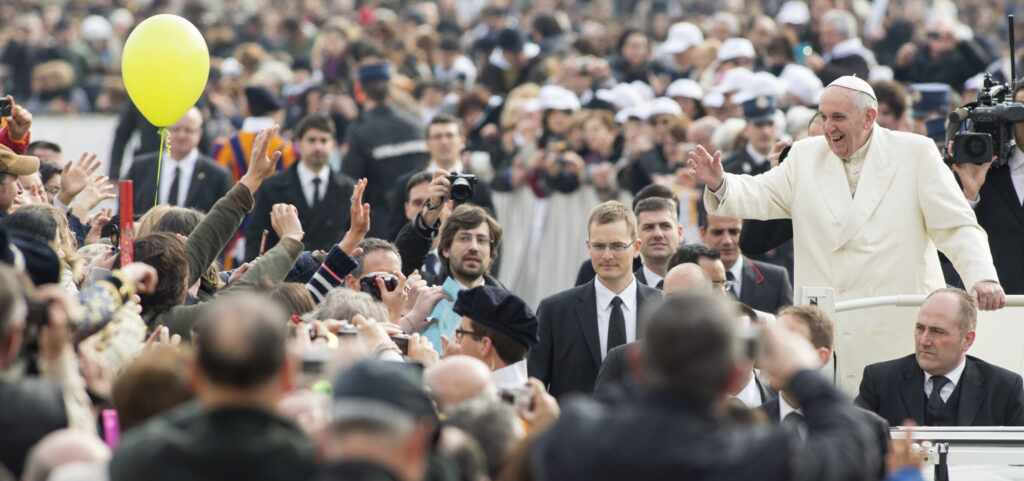
Pope Francis greets pilgrims during his weekly general audience in St Peter’s square at the Vatican in February 2014. Image: Shutterstock
“Each of us can contribute to creating peace. After all, it is not only created by the powerful with their decisions and their international agreements, which remain important and urgent political decisions, but we too build a peaceful society in our homes, in our families, among neighbours, in the places where we work, in the neighbourhoods where we live.”
But there can be no peace without justice.
“If there is no justice, peace is threatened; without peace, justice is endangered. It remains true that justice, understood as the virtue of giving to God and one’s neighbour what one owes them, is linked to peace, in the truest and most authentic sense of the Hebrew word Shalom. A concept that denotes ‘not so much the absence of war as rather the fullness of life and prosperity’,” Francis emphasises.
This call for peace through the creation of a just society also finds an echo in Pope Leo XIV. He consistently emphasises peace as a central goal, achievable only through social justice.
He urges action against inequality and exploitation to prevent violence. His messages call for a just order and link peace to moral action, dialogue and human dignity.
Another theme that runs like a red thread through the pontificate of Francis is mercy.
His motto, “Miserando atque eligendo” (chosen out of mercy), already hints at his understanding. He emphasises that God is not a distant judge, but a patient, loving Father.
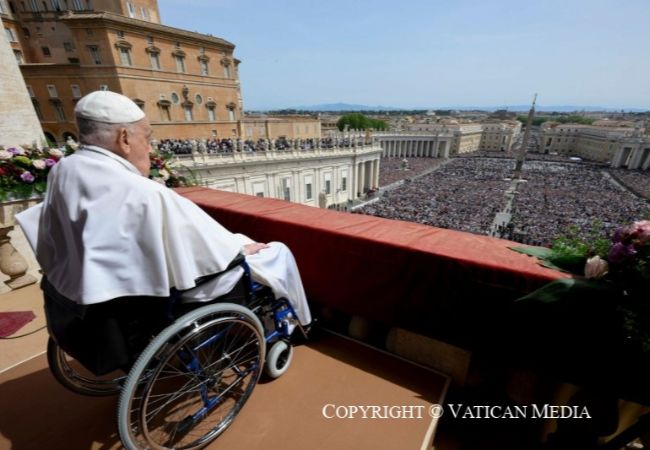
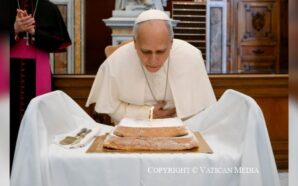
Pope Francis’ last public appearance at St Peter’s square on Easter Sunday 2025. Image: Vatican Media
For him, mercy is not merely theory but is demonstrated in acts of charity. Divine mercy also governs the Church’s actions and structures. The pope said: “If we forget mercy for even a moment, then all our efforts become futile; then we become slaves to our institutions and structures, however reformed they may be.”
Reform alone is simply not enough for Francis. Of course, he is concerned with the core issue: experiencing the “living and enlivening experience of God’s mercy“. In this, the pope is perhaps far more radical than both his critics and his supporters believe. One might call this naive or pious, but above all, this approach is disarming – and uncomfortable.
However, Pope Francis’ greatest quality is his humility, his approachable manner, and his tireless commitment to the poor, the weak and the marginalised. Sergio Mattarella, the Italian president, repeatedly spoke very positively and respectfully about Pope Francis during his time in office.
The relationship was characterised by mutual appreciation, especially on issues of refugee policy, solidarity and international peace. He saw Francis as the “voice of humanity” and highlighted the “indestructible traces” that Francis had left in history, in the life of the Church and in the conscience of people.
For many years I have followed the footsteps of Francis. In many academic articles, I have highlighted the theological and moral aspects of his pontificate. But I will always remember his unwavering friendship and love for Christ.
A sentence from his apostolic exhortation “Evangelii Gaudium” always stays with me: “I invite every Christian, no matter where or in what situation they find themselves, to renew their personal encounter with Jesus Christ today, or at least to resolve to let themselves be found by him, to seek him every day without ceasing.” (EG, no. 3).
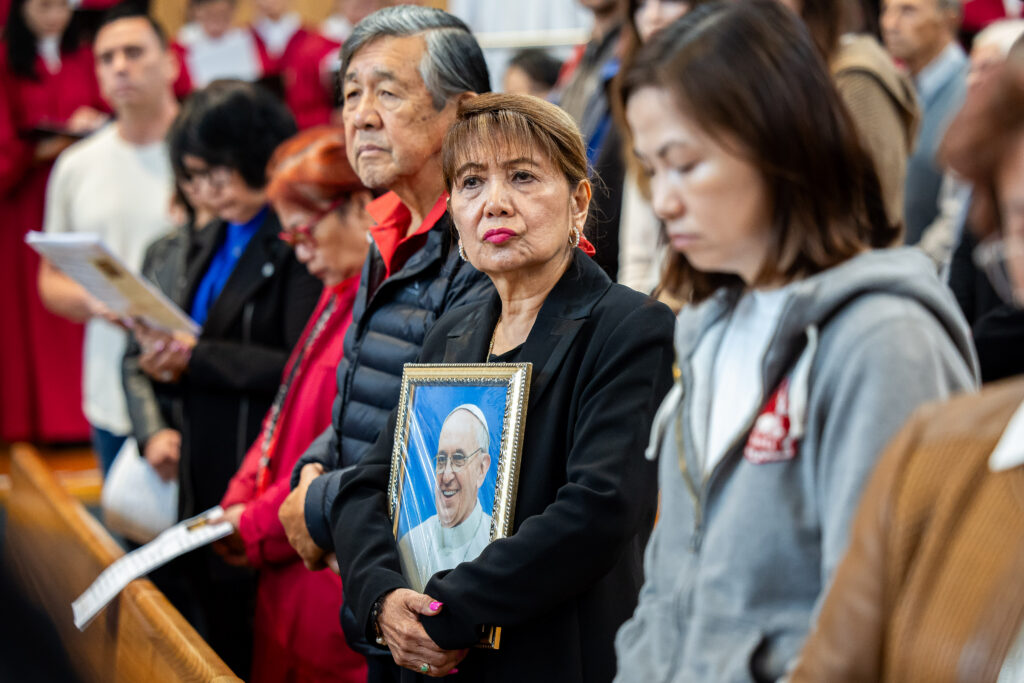
Parishioners at St Patrick’s Cathedral, Parramatta, gather to mourn the death of Pope Francis in 2025. Image: Alphonsus Fok/ Diocese of Parramatta
This joy is not cheap; at times it is hard and demanding, in the shadow of the cross. But because it is proper to the good to share, the only way is to recognise others and seek their good: for the love of Christ compels us (2 Cor 5:14).
Therefore, the joy lies in the experience of giving life, which represents the true dynamic of self-realisation. Therefore, this letter is an encouragement to love Jesus, even naively and to remain on the trail of the whole life of Jesus, because it responds to the deepest human needs.
If we penetrate to the heart of the Gospel and always live and proclaim from this heart, we will discover and open a treasure for today that makes life possible. This is the reason for the enthusiasm for evangelisation and its legitimacy, serving the life and well-being of others.
It makes a difference whether we shape the heart of evangelisation from the enjoyment of his message or not, that is, whether we present our own thoughts and possibilities.
I would like to conclude this brief epitaphic with the words of Pope Leo XIV:
“Pope Francis’ admonitions, which still resonate today, made the Good News more understandable thanks to their vividness: Mercy, peace, fraternity, the smell of sheep, field hospital were just some of the terms coined by Francis, with which he proclaimed the traditional Gospel in a new way.
Fr Joseph Lam is the Parish Priest of St Michael’s Parish of Baulkham HIlls, in the Diocese of Parramatta. He is a prolific writer, having authored 9 books.
His latest book is “Saint Augustine on Listening, Humility and Unity. The Augustinian Root of Pope Leo XIV”.
If you would like a copy of the book, please contact Baulkham Hills Parish via admin@parishofbaulkhamhills.org.au with Subject Line: Book Order.
This reflection is an example of the Diocesan Pastoral Plan priority of Formation, to achieve the objective of becoming a Humble and Healing Church. Visit Synodality to learn more.