

The normally tightly-scripted pope speaks off the cuff to continental synod groups for nearly an hour, mostly in English, demonstrating pastoral sensitivity, flashes of theological brilliance, and a commitment to advancing Pope Francis’s synodality program.
Pope Leo, over the last several days, has had a chock-full calendar of events, and at several of them he revealed new and encouraging aspects of his personality, which many of us had never seen before.
Followers of other religions are not outsiders, but companions on the path of truth
First of all, the pope and his aides put a lot of effort into commemorating the 60th anniversary of Nostra Aetate, the “landmark” decree the Second Vatican Council issued on October 28, 1965, condemning antisemitism and expressing its desire to engage in dialogue and friendship with the Jewish people and other non-Christian religions.
“This luminous Document teaches us to meet the followers of other religions not as outsiders, but as travelling companions on the path of truth; to honor differences affirming our common humanity; and to discern, in every sincere religious search, a reflection of the one divine Mystery that embraces all creation,” Leo said before numerous leaders of various world religions that had gathered at Rome’s Colosseum for an event sponsored by the Sant’Egidio Community. Afterwards, many of those same leaders joined Leo at the Vatican for further discussions on the text and its teaching.
Acting together to alleviate human suffering, care for the planet, and restore hope
The next day, the pope was joined by Jewish rabbis, Muslim imams, Buddhist monks, and other religious leaders for his general audience in St. Peter’s Square, where he urged them to work together to reduce human suffering, care for the planet, and restore hope. His voice sounded stronger, and he appeared more determined in delivering his message than we have seen in the past.
“The spirit of Nostra Aetate continues to illuminate the path of the Church. She recognizes that all religions can reflect “a ray of that Truth which enlightens all men” (NA, 2) and seek answers to the great mysteries of human existence, so that dialogue must never be solely intellectual, but profoundly spiritual,” he told them.
“The Declaration invites all Catholics – bishops, clergy, consecrated persons and lay faithful – to involve themselves sincerely in dialogue and in collaboration with the followers of other religions, recognizing and promoting all that is good, true and holy in their traditions (cf. ibid.). This is necessary today in practically every city where, due to human mobility, our spiritual and cultural differences are called to encounter one another and to live together fraternally,” the pope continued.
“More than ever, our world needs our unity, our friendship and our collaboration. Each of our religions can contribute to alleviating human suffering and to caring for our common home, our planet Earth. Our respective traditions teach truth, compassion, reconciliation, justice and peace,” the 70-year-old American missionary pope insisted.
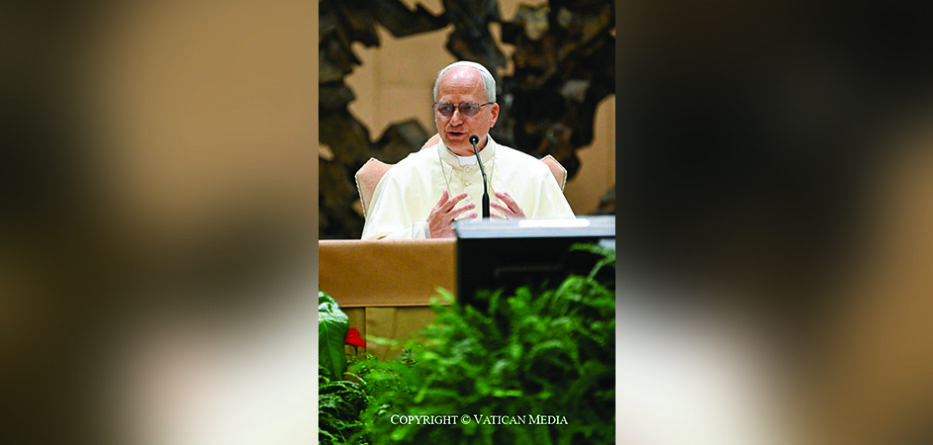
But the real surprise happened on October 24 when Leo met with representatives of the synod working groups from various continents around the world. Eight of them delivered reports on their work so far, and each posed a question to Leo. He answered without a script, and while not everyone will be pleased with his answers, his demeanor was relaxed and natural, clearly the result of careful and attentive listening, which he developed over his 12 years as the international superior general of his Augustinian religious order. This was on full and impressive display. These skills are what some of the cardinals who took part in the last conclave said helped them choose Cardinal Robert Prevost as the next pope.
You can read the transcript here: https://press.vatican.va/content/salastampa/it/bollettino/pubblico/2025/10/24/0888/01432.html
But you probably won’t regret taking a little more time and actually watching the video of this extraordinary event, which the Vatican has made available here:
Pope Leo has, until now, spoken softly and in undertones. He has mostly stuck carefully to reading prepared, scripted remarks. That may reflect his background in canon law. But a little more impromptu, as he did on October 24, could endear him to more people and help him convey his message to a wider audience.
In any case, we have seen once again that Leo XIV, contrary to what some have suggested, is not backing down from advancing Pope Francis’s reforming agenda—especially on synodality. Quite the contrary. We are fortunate that he is the current Bishop of Rome.
With thanks to the Union of Catholic Asian (UCA) News and Robert Mickens, where this article originally appeared.