

Reflection for the Fourth Sunday in Ordinary Time, Year A
Gospel: Matthew 5:1-12a
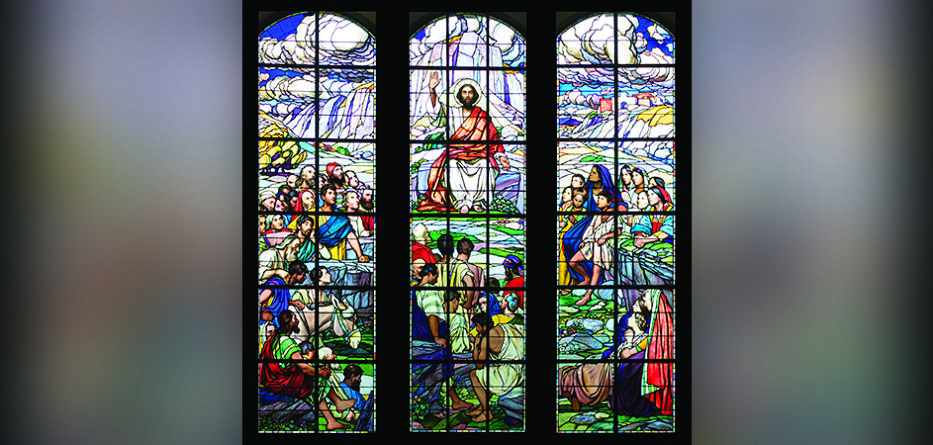
“When Jesus saw the crowds, he went up the mountain,
and after he had sat down, his disciples came to him.
He began to teach them, saying:
“Blessed are the poor in spirit, for theirs is the kingdom of heaven.
Blessed are they who mourn, for they will be comforted.
Blessed are the meek, for they will inherit the land.
Blessed are they who hunger and thirst for righteousness,
for they will be satisfied.
Blessed are the merciful, for they will be shown mercy.
Blessed are the clean of heart, for they will see God.
Blessed are the peacemakers, for they will be called children of God.
Blessed are they who are persecuted for the sake of righteousness,
for theirs is the kingdom of heaven.
Blessed are you when they insult you and persecute you and utter every kind of evil against you falsely because of me.
Rejoice and be glad, for your reward will be great in heaven.”
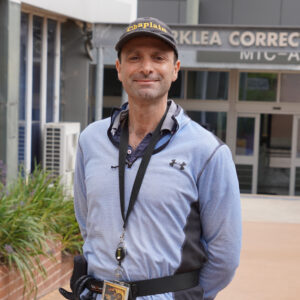
Catholic chaplain, Richard Korkor. Image: Belinda Gadd/Diocese of Parramatta.
Welcome back to my first reflection for 2026. I would like to begin this reflection by drawing on what some have said is one of the best speeches given in the 21st century. It was given by Prime Minster of Canada, Mark Carney, at the 2026 World Economic Forum in Davos, Switzerland.
In his speech, Mr Carney refers to an essay written by Vaclav Haval in 1978, called “The Power of the Powerless” – where Haval attempts to answer the question “How did the communist system sustain itself”. Haval grounded his answer in the behaviour of the greengrocer. Quoting Mr Carney’s speech:
“Each morning, the greengrocer would place a sign in his shop front that says, ‘workers of the world unite’. The greengrocer did not believe the sign, but to avoid trouble, signal compliance and to get along, he did it and so the system persisted that entrapped people to live within a lie. So, the system’s power came not from its truth but from everyone’s willingness to perform as if it were true.”
Seen in another way and perhaps closer to home, we too can find a connection with the greengrocer. How often do we place signs at the front of our own homes that present an image that differs from our reality?
In the era of social media, the modern-day shop front, it appears everyone is always on amazing holidays, always happy, perfect homes, children and marriages.
We can also use the Church as our shop front, providing the outward appearance of moral superiority, relieving us of the need to be true to the Gospel, continuing to carry the hardness of our hearts when we are invited to see in a new way.
Watching the latest season of Emily in Paris (which, for the record, I actually don’t mind), her Instagram posts display a different image of joy to her reality. I am sure one can add much more to this.
At the heart of these examples is a disconnect between the image we want to portray (sometimes termed the false self) and our true self – the authentic self that draws on the Christ that lives within each and every one of us.
Turning to the Gospel for this Sunday, we find Jesus’ teaching on the Beatitudes, the term which derives from the Greek word Makarios which translates as ‘blessed, happy or prosperous.’
In Matthew’s gospel, these nine beatitudes take place early on in Jesus’s ministry. To hear his teaching, the disciples follow Jesus up the mountain.
In our current world, there is no shortage of things that can distract us or even make us feel like there is no need to go up the mountain. But for the disciples, and that includes us, it is where we are reminded of the characteristics and ways to authentic happiness. Perhaps this is why Jesus taught his disciples to pray give us this day our daily bread as a reminder to take a moment each day with him?
As Jesus himself heads up the mountain, I wonder what prompted him to teach his disciples these beatitudes?
What did he see in the crowds, in the people around him, in his disciples that led him to such teaching?
Perhaps he too could see through the many signs outside people’s shop fronts. Perhaps he could also see the need to encourage and affirm those who were already on the way, living out such teachings.
These teachings are not just teachings, but a call to be true to who we are called to be.
Regardless of what role we hold, Jesus teaches us a way to access that inner joy that bubbles away within each one of us. The beauty of such a teaching is that it transcends denominations, cultures and ethnicity. This is a teaching for the whole human race as we are all children of God.
So, as we enter further into this year, may we be encouraged to visit our mountain top where we can sit with Jesus, even for a moment, and reflect on where we are in our journey of accessing our authentic self, guided by the beatitudes.
Richard Korkor is a lay Catholic chaplain serving in the Diocese of Parramatta. Through his work with Catholic Care Western Sydney and the Blue Mountains, the Diocese’s social services agency, Richard offers compassionate care and spiritual support to those in the hospital and prison system – including inmates, staff, and their families. His ministry brings hope and an encounter with Christ to those who need it most. Read more about Richard’s work in Catholic Outlook.
Learn more about Catholic Care’s prison and hospital chaplaincy services.