

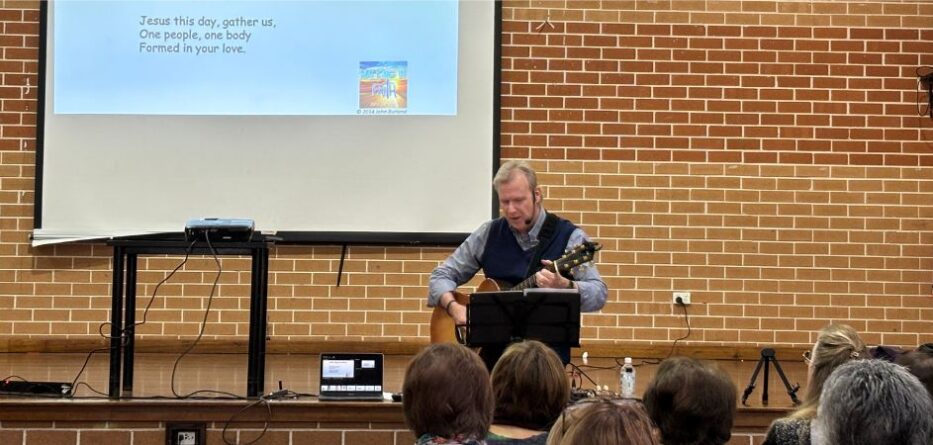
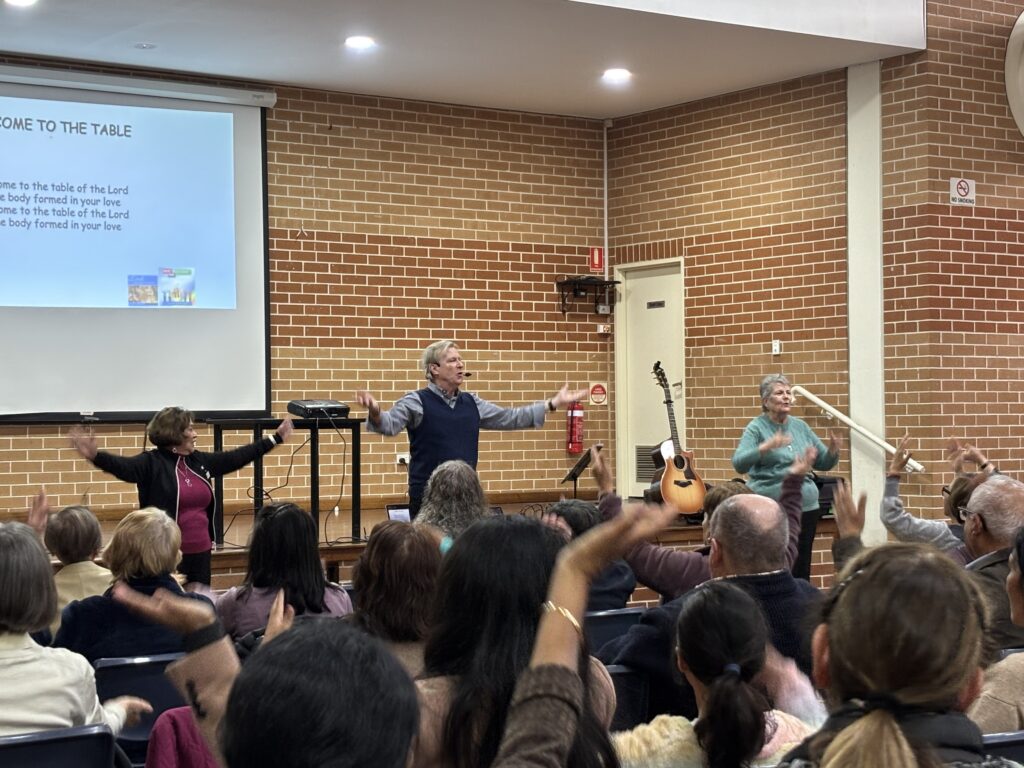
The workshop was for SRE Catechists of the Diocese of Parramatta. Image: Diocese of Parramatta
She found the day exciting and inspiring. “John Burland’s music is very uplifting, and so ideal [to be] used in liturgy for masses.”
The workshop’s topics focused on the importance of inclusive, religious education for children. The magic ingredient? Music.
Music, dancing and followable actions have always been a trademark of Mr Burland’s work, making the beauty of the Catholic faith accessible for everyone, no matter their age, ability or circumstances.
This was evident right from the start, as he invited all children present to join him at the front, leading the group in memorable dances.
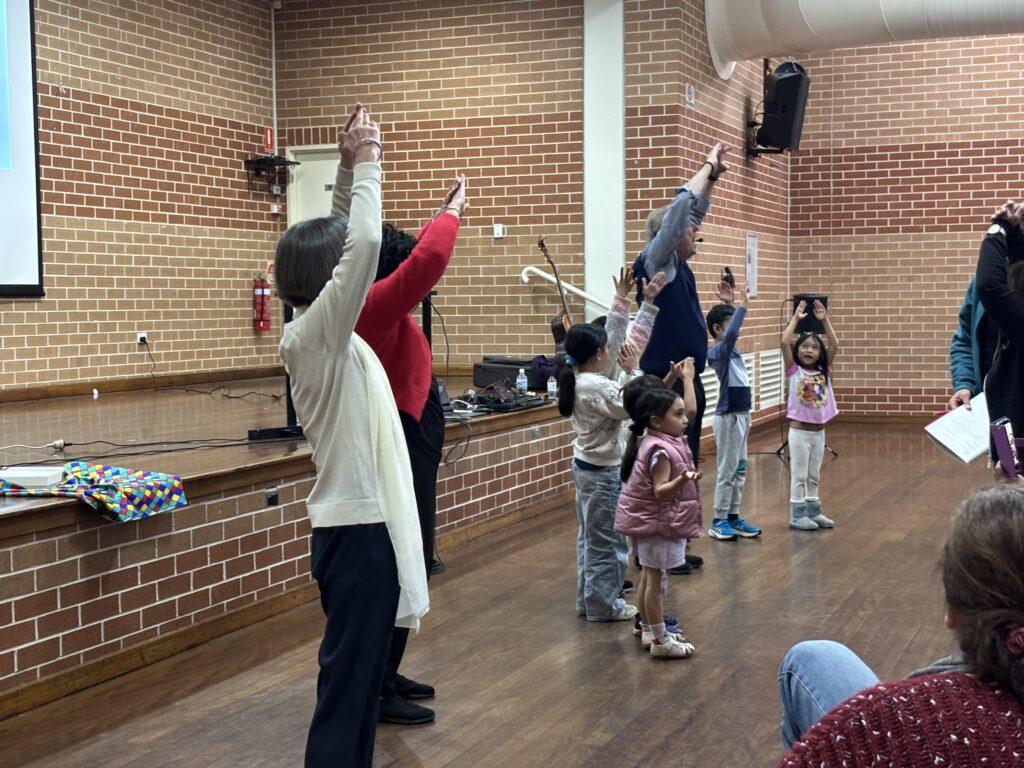
John Burland believes that through music, movement and song, children participate actively in their learning. Image: Diocese of Parramatta
“Through music, movement and song, children are invited to participate actively in their learning, helping them to explore, remember and express their faith in meaningful ways,” he said.
CCD manager Fiona Clark, who arranged the event as a thank you gift for the diocesan catechists, commended their hard work from the last semester and beyond.
She said this vitally important, but sometimes difficult role, requires catechists to wear several different hats. In one class alone, catechists must balance classroom management, accommodate various learning needs, and engage children of various backgrounds and abilities.
SRE Catechists are also required to build student rapport and trust over shorter periods of time.
“With some children, you don’t know their background,” she said, “…but music is inclusive to everybody.”
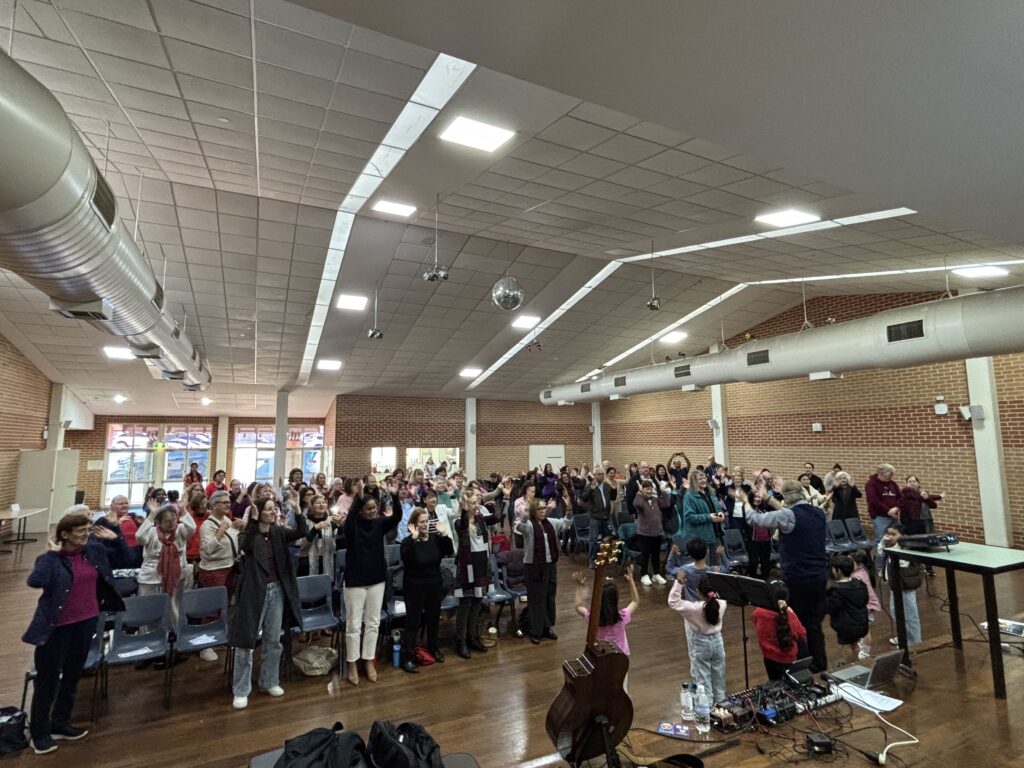
More than 100 people attended the workshop. Image: Diocese of Parramatta
This sentiment was echoed by Mr Burland, who emphasised the importance of music as a tool in curriculums. He expressed how music does not only have to convey content.
It can be helpful in “establishing effective routines in the classroom for gathering and sending forth, creating a prayerful space, a welcoming and focused atmosphere that supports learning, and faith formation.”
Mr Burland’s methods are more than a ‘how to make learning fun’ guide. He exemplifies the goal of every religious educator and catechist: teaching students how to participate and engage with the source and summit of our faith.
This is not engagement for engagement’s sake. By incorporating songs such as One Family and God’s Love is… educators can draw children into a deeper appreciation and excitement for liturgy. An excitement that, overtime, develops into a life-long love for God.
For some children, this approach to religious formation may be a stepping-stone to their first genuine encounter with their faith.
The workshop was an example of the Diocesan Pastoral Plan priorities of Formation, and Listening, Dialogue and Discernment. Visit Synodality to learn more.