

Dear friends,
Pope Leo is at the “wheel”.
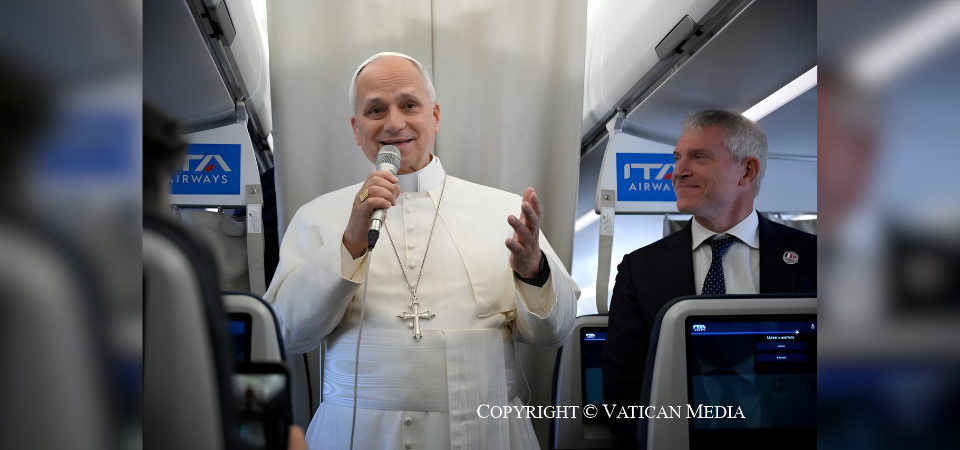
Did you know Pope Leo XIV is an avid car enthusiast and genuinely enjoys driving? Known as a true “car guy” who even knows how to change spark plugs and handle oil changes, his passion for driving dates back to his younger years, when he would frequently drive long road trips across the United States.
This passion clearly followed him to Peru, where he went as a missionary for the first time in 1985, even though he sometimes swapped the steering wheel for a horse saddle to reach certain isolated communities in the Andes.
One of his close friends recently recounted Leo’s love of cars in a New York Times story. “To get to Lima from Chiclayo, he always took the car. Just imagine, that’s between 12 and 14 hours of driving. It’s not something you see every day”.
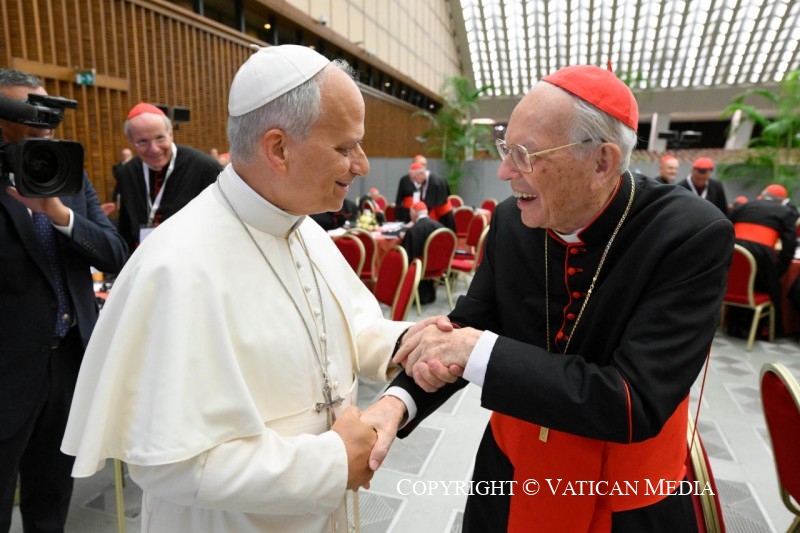
Pope Leo XIV at the Opening Session of the Extraordinary Consistory 2026. Image: Vatican Media
The GPS is active and Leo has set it!
Well, Pope Leo is now ‘driving the vehicle’ of the Catholic church into the future.
Antonio Spadaro SJ noted this week that “Leo has become, by now, the one figure of reference on the great questions of this age, listened to nearly everywhere – even if his message is not always taken to heart.”
Some of Leo’s key fellow pilgrims (drivers) – 178 Cardinals – met with him at the Vatican in the last few journeys to discuss the way ahead. In October, Leo will meet with another group, the Presidents of National Bishops’ Conferences and the Heads of the Eastern Churches to assess the progress made since Pope Francis’ apostolic exhortation “Amoris Laetitia” was published in 2016. Some families will share their experiences at that meeting, and “their presence is essential,” Leo has said.
And thank God it’s not all about discussions with the hierarchy. The whole of the people of God is to be involved in Leo’s ongoing synodality project. Despite a campaign by mainly right-wing USA Catholic conservatives, who are hell-bent on trying to paint Pope Francis’s prophetic papacy as a once-off aberration, the project of synodality goes on!
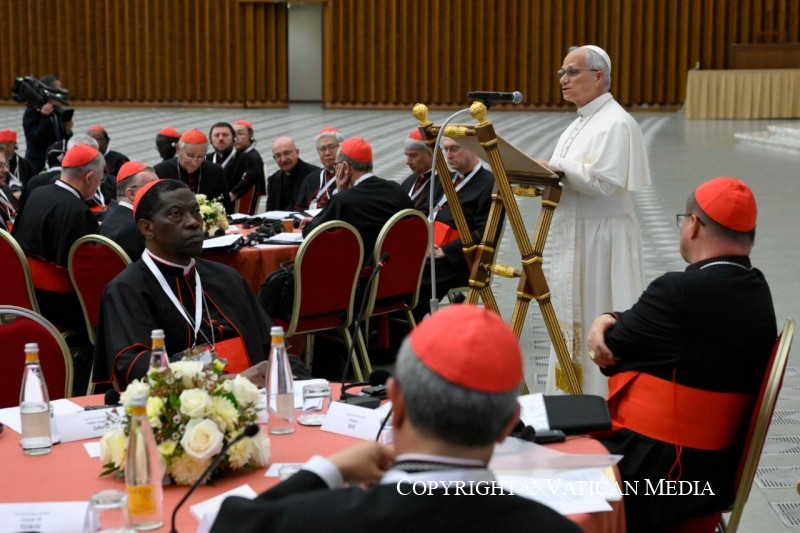
Pope Leo XIV addresses the cardinals at the Opening Session of the Extraordinary Consistory 2026. Image: Vatican Media
These USA Catholic (invariably) converts sometimes seem to think that synodality and especially the German Church and its synodal path is practically evil. But hey, Donald Trump can be forgiven for absolutely every immoral action possible…go figure!
Thank God, there will be another major universal gathering of the synodality process, involving crucially many lay people, which will be an Ecclesial Assembly held at the Vatican in October 2028. The ongoing dynamic participation of the laity is so crucial for the Church’s credibility and apostolic effectiveness.
But we should also never forget Pope Leo’s consistent message to us all, reiterated throughout the now-concluded Extraordinary Consistory. Namely, “synodality is ‘not a series of meetings, nor a working method, it is a spiritual way’. It is an ‘attitude, an openness, [and] a willingness to understand’.”
Leo’s key instructions for the ‘Camino’ ahead
Leo started the Consistory by outlining his synodal vision in a poignant homily and opening address. This short video captures well the overall themes of the Extraordinary Consistory, especially Pope Leo’s opening address.
Certain phrases from Pope Leo’s opening speech moved me deeply. For Leo revealed his own vulnerability and depth as a person, especially with words like these to the assembled Cardinals: “I need your support: strong, explicit, and public. I need to feel sustained by you, as by brothers.” (After all, the driver needs support – put in terms of my metaphor…)
And again, where Leo expressly and honestly reveals: “You will find in me one who asks, not commands. The authority of primacy belongs to the one who listens and only then leads, to the one who learns and only then teaches.”
Pope Leo also powerfully reminded the cardinals that: “We are not here, first and foremost, to reflect on the internal life of the church.”
In other words, mission, not maintenance is the priority. What a grace to have as the Successor of Peter a man of such humanity and deep spirituality!
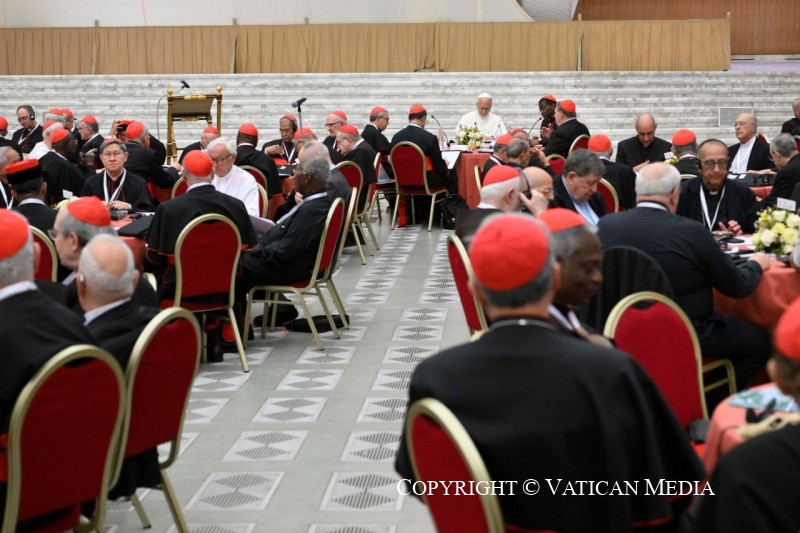
The Opening Session of the Extraordinary Consistory 2026. Image: Vatican Media
Possible responses to Leo’s ‘road trip’ instructions
There is considerable diversity in the College of Cardinals gathered here in Rome, which includes many over the age of 80. They will each have diverse personal histories and even more diverse theological orientations. As I watched them, I wondered how they would react to Pope Leo’s vision for the ‘road trip’ ahead. Some of them might even be tempted to be ‘backseat drivers.’
I imagined, as I gazed at their faces in the televised events (the Consistory is a closed event), several of the many possible positions amongst the Cardinals. Put in Leo’s car idiom they are:
1. Reverse!
A small minority of Cardinals are still probably wary of the vision of Pope Leo. Hostile or at best lukewarm to Pope Francis, they are suspicious of Leo’s embrace of the key elements of Francis’s project, best outlined in the vision of Evangellii Gaudium.
Some tiny number of them even seem receptive to the concerns of the schismatic St Pius X association and their recent breathtakingly arrogant letter to Pope Leo and the Consistory.
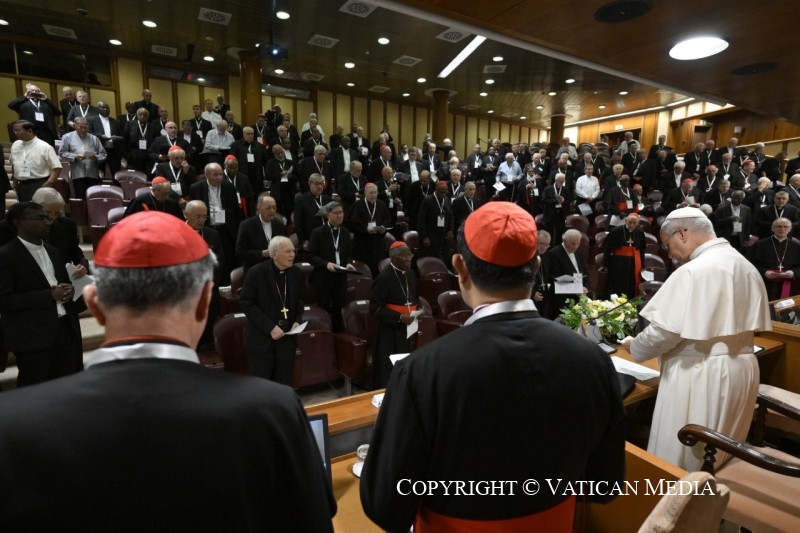
The Extraordinary Consistory 2026. Image: Vatican Media
2.Put the handbrake on!
There are others who support Pope Leo’s pastoral leadership but have questions especially about synodality and the participation of non-bishops in the process. They fear it may undermine episcopal authority. Note their voices seem to emerge in the final session of the Consistory when several Cardinals raised concerns about synodality and worried that because it was a very time-consuming process, it threatened the effectiveness of their witness to more crucial Gospel issues.
3.Cruise Control please! Let’s move forward at a steady pace as things are going well under Leo!
Some Cardinals embody a mature commitment to Leo’s vision and pastoral style as the way forward. I suspect these are the majority of the College of Cardinals.
4.Accelerate!
Perhaps there are also a few Cardinals who were deeply inspired by Francis’s radical Gospel impulse of the church as a “field hospital”. I hope so. They appreciate how Leo continues to live this out, as he has done so magnificently in his first encyclical and in his pastoral missionary trips to Africa and Spain. They would be the ones seeking to explore new non-violent ways of peace-making, given the obvious abuses we are seeing in the application of classical just war theories.
These are just a sampling of trends and ‘driving directions’ imaginable. There are indeed many more names and pastoral nuances possible.
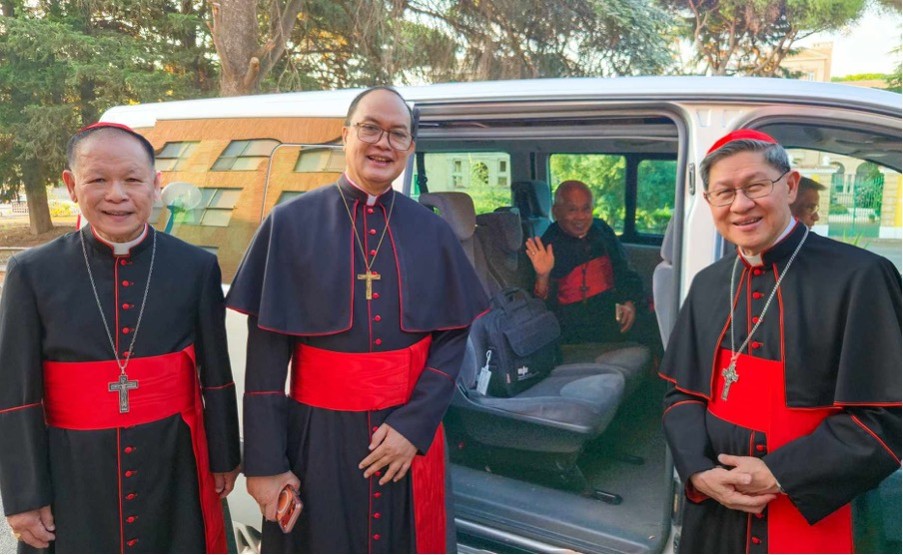
Filipino cardinals at Consistory. Image: Br Mark O’Connor
So what actually happened at the Consistory?
Since all of the Consistory’s sessions were necessarily only attended by the participant Cardinals. We don’t know what was specifically said in the small groups or in the final dialogue session with the Pope.
But perhaps the real significance of this Extraordinary Consistory was the fact that it was happening at all. Unlike Pope Francis, who favoured a different approach – consulting regularly with a small Council of Cardinals, Leo was insistent that the Cardinals patiently practice ‘synodality’ themselves and experience it firsthand. As Leo told the Cardinals: “I am well aware that, for many of us, this is not the usual way of conducting a Consistory. Yet this too is part of the journey along which the Lord is leading us… I ask you to enter into this ecclesial exercise with trust. We too learn synodality by practicing it; we learn together to grow in communion.”
We can, however, piece together a very limited picture of this Extraordinary Consistory from the published speeches of the Cardinals, the reports in Vatican News and the Pope’s final talk where he at times responds to their questions. Listen to Leo’s final moving address, delivered in Italian with English subtitles.
Below you will find brief Vatican News reports of each Consistory session. They provide a handy summary which I urge you to read:
- First day of discussions concludes with a focus on peace (this article covers the first two sessions)
- Third session upholds Gospel hope as antidote to individualism
- Cardinal Brislin: Human progress must serve dignity and common good
- Fourth session focuses on the Synod and priesthood
Fortunately, two excellent Vatican specialist journalists have provided us with a very good overview of the two-day Extraordinary Consistory. Namely, National Catholic Reporter’s Justin McClellan and America’s Gerard O’Connell. Some salient points from their reporting from the Extraordinary Consistory follow:
War and peace and the contribution of Catholic Social Doctrine
The call to peace in our violent world and the call to build a ‘civilisation of love’ dominated this Consistory.
Pope Leo, again and again, passionately cried out for peace and unity over against the logic of war.
The Cardinals over the four sessions notably discussed shifting the language in the church’s moral engagement on conflict from one of “just war” to that of “proportional defence,” since just war theory has been used to morally ‘justify’ the launching of evil wars e.g. Putin’s invasion of Ukraine.
Indeed, in his closing remarks, Leo recalled that several groups of cardinals “emphasised the need to continue exploring the topic of self-defence in light of the profound changes that have taken place in the nature of contemporary conflicts” and said the issue must “be further developed with the necessary theological and pastoral rigor.”
The pope said his first encyclical argued that “war is not merely a conflict between states” but rather “originates much earlier, from a culture of power that permeates the way we think, the way we relate to one another, the way we exercise power, and the way we use the economy, technology, and even religion.”
“God desires peace for every nation and every people,” Leo said. “That is why we must not resign ourselves to violence. Violence will not have the last word.”
And Leo is not afraid to confront the powers of this world with the peace-making message of the Gospel.

Armoured vehicles are seen during the conflict in Ukraine. Image: Aid to the Church in Need/Supplied
Magnifica Humanitas
At Leo’s request, the cardinals also focused on Chapter 5 of his recently published encyclical, Magnifica Humanitas. Leo commended them for “having grasped with great clarity” one of the encyclical’s insights, namely that “war is not merely a conflict between states. It arises much earlier, from a culture of power that permeates our way of thinking, of living in relationships, of exercising power and of using the economy, technology and even religion.”
On this journey, he said, “the contribution of the lay faithful engaged in public life is essential: They need the closeness and support of the church community to live out the ‘political charity’ that you mentioned.”
Pope Leo said he found “particularly valuable” the way “some” cardinals “addressed the issue of nonviolent response in the face of the many forms of violence.” This “is a profoundly evangelical way of living out our place in history, the fruit of contemplating Jesus’ way of acting,” he said.
Such an approach, he said, does not consist in “adopting a passive attitude” toward violence, “but in choosing to confront it without reproducing its logic. It does not renounce the truth or remain silent in the face of evil, but it refuses to defend the truth through violence and to turn the other into an enemy: It begins by disarming oneself.”
Of course, there is much more to Magnifica Humanitas – for it provides a synodal path for the global Church in imaginative detail.
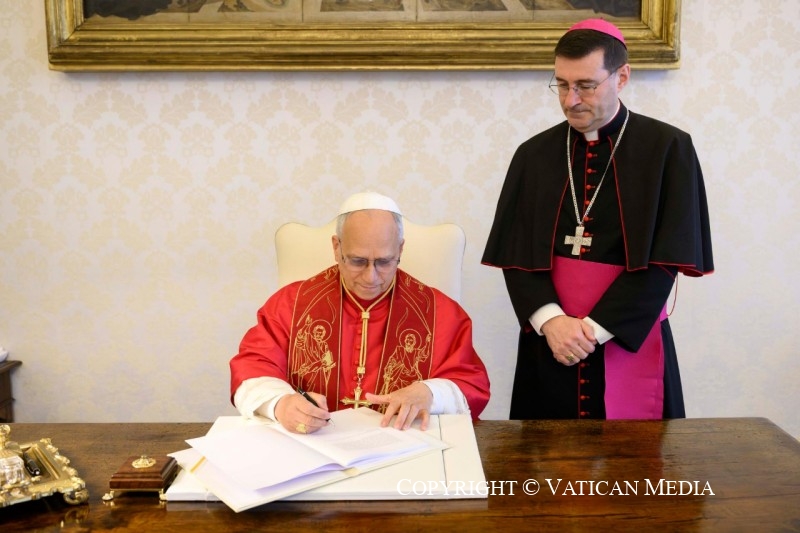
Pope Leo XIV signs his first encyclical ‘Magnifica Humanitas’. Image: Vatican Media
Advancing the church’s synodal process
Perhaps the most striking thing about this Extraordinary Consistory was Pope Leo’s determined commitment to synodality as the way forward for the pilgrim people of God. He did not retreat from Francis’s vision – he doubled down on it!
Leo clearly knew of the resistance from some Cardinals to synodality, but eloquently and firmly insisted, like Pope Francis, that the Church’s way of being must involve first “encounter, then grow through listening, and mature through discernment.”
Leo supported the leadership of Cardinal Mario Grech, head of the Vatican’s synod office, who said on the second day of the consistory that “synodality is not an end in itself. It exists so that the church may proclaim the Gospel more effectively and serve the men and women of our times more fruitfully,” describing the synod’s implementation as “a new stage in the reception of the Second Vatican Council and in the missionary renewal of the church.”
As Leo put it in his closing remarks:
I believe that, little by little, we are rediscovering the most authentic meaning of the Consistory: the gathering of the College of Cardinals around the Successor of Peter so that, in mutual listening and common discernment, the Holy Spirit may help the Pope to guide the Church. Not a parliament, not a congress in which opinions or interests prevail, but an experience of communion at the service of the mission.
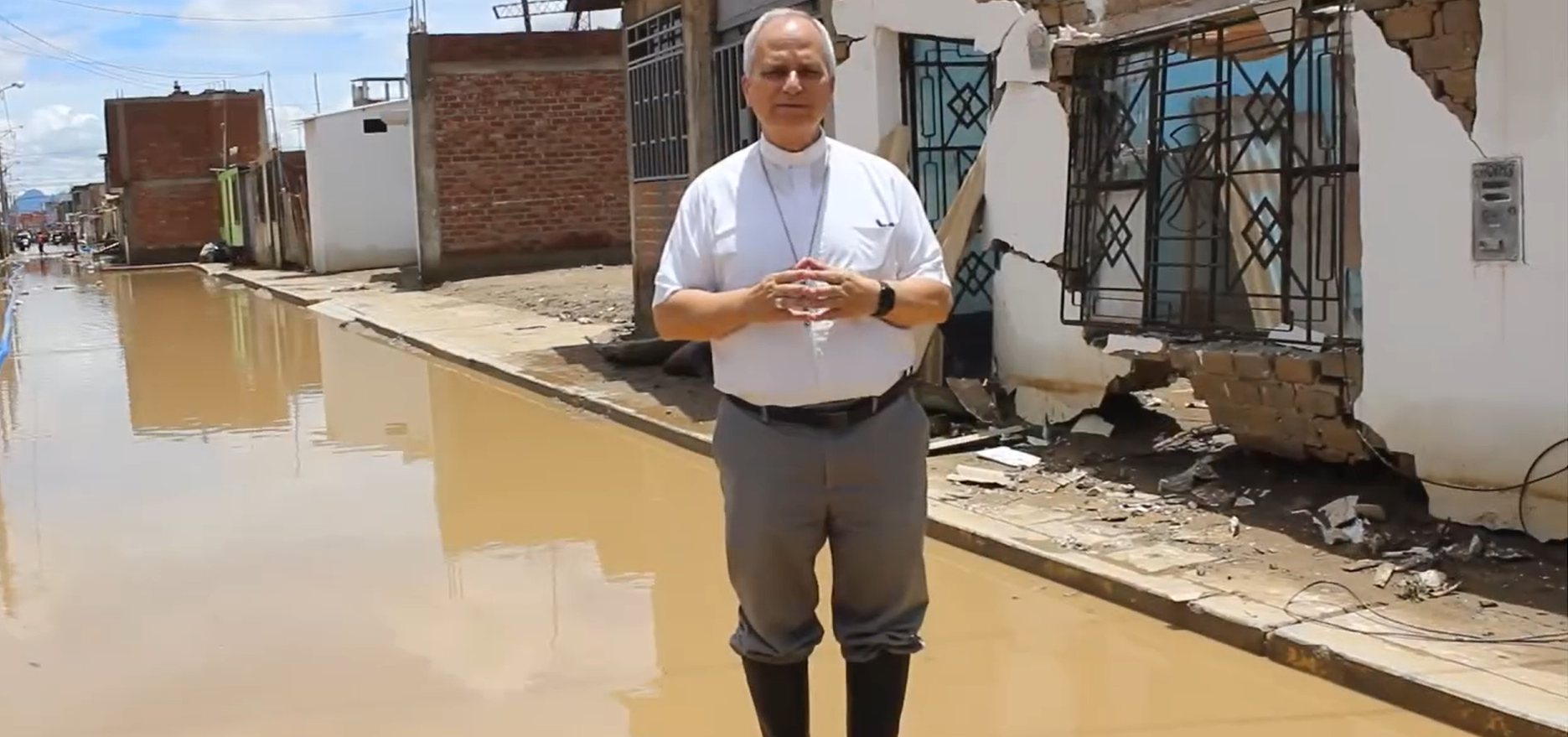
Then-Bishop Robert Prevost, now Pope Leo XIV, stands in floodwaters in the aftermath of heavy rains in northwestern Peru in 2023. Image: Screenshot from a video by Caritas Chiclayo
Final words
When all is said and done, however, we must avoid too much abstract theorising about our pastoral plans and hopes for our Church.
Documents and discussion are good but what counts is the witness of our lives. Even synodality is only a pathway, not the destination itself.
A recent comment of Dr Shaun Blanchard of Notre Dame Perth stood out for me in this regard: “It is noteworthy that [Yves] Congar sought to re-centre the Holy Spirit in Catholic ecclesial discourse. The Spirit, after all, is poured out on people, not ideas.”
Precisely. Let’s face it, who was ever really deeply changed by an argument? Especially a theological argument – even one about synodality!
People, rather, are only changed by encountering credible persons and insights are “caught, not taught” from authentic witnesses to the Gospel. And what a witness Leo has shown himself to be! Leo was precisely so impressive at the Extraordinary Consistory, because he was living what he preached as the Successor of Peter.
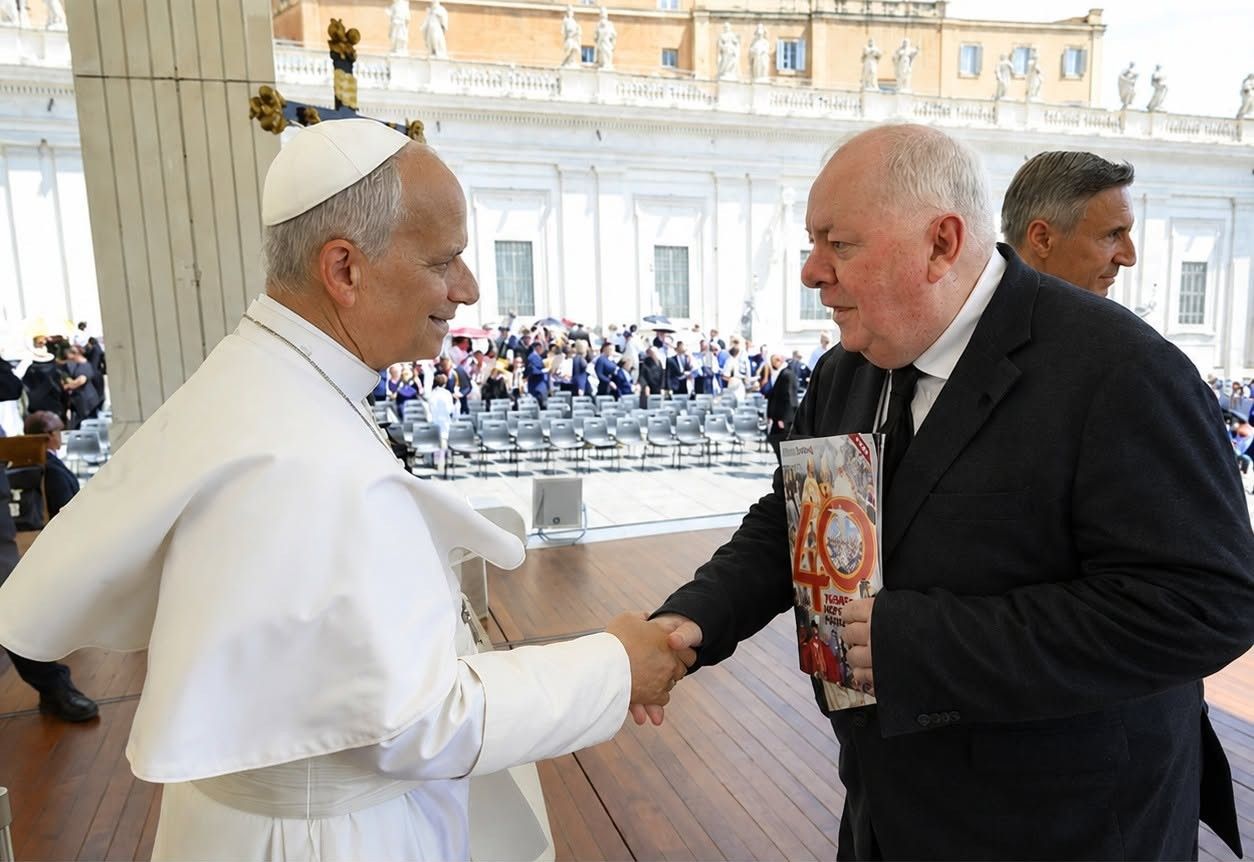
Br Mark O’Connor meeting Pope Leo XIV in June 2026. Image: Vatican Media
My conclusion therefore from these very hot days in an early summer in Rome? We are in safe hands with Pope Leo at the “wheel”.
During these days, in Rome, the Spirit of the Risen Jesus is hovering over the ‘chaos’. The Spirit is indeed breaking through and breathing new life into the Universal Church. Let us take heart then and deepen our hope to live out the Gospel in these fraught times, in the spirit of Augustine and his spiritual son Pope Leo:
“Bad times, hard times, this is what people keep saying; but let us live well, and times shall be good. We are the times: Such as we are, such are the times.” ― St. Augustine of Hippo.
Br Mark O’Connor FMS is the Vicar for Communications in the Diocese of Parramatta and the Pope Francis Fellow, Newman College, University of Melbourne.