

Pope Francis repeatedly insisted that “every war is a defeat.”[1] For Francis, war is “a senseless and inconclusive venture”[2] because “no one emerges a winner.”[3]This distressing statement sounds so true for those who have lived through the unfortunate experience of war or a tragic conflict of some sort. The late pope was firmly convinced that “violence will never bring peace.”[4] Lives are destroyed on all sides, generations are wiped out, hatred and vengeance are nurtured, people are divided, more unnecessary suffering and poverty are engendered, property is destroyed, and peace sought through this means becomes sheer illusion.
The ongoing Anglophone Cameroon conflict since 2016 is a case in hand.[5] Unfortunately, this tragedy is not always relayed by the mainstream media. For six years, the Norwegian Refugee Council Report has classified the Cameroonian displacement crisis as among the top 10 most neglected crises in the World.[6] The gravity of the situation in Cameroon has been overshadowed by numerous other current crises currently rocking the world (Ukraine, Gaza, Israel, Iran, Sudan, Boko Haram in Northern Nigeria, etc). Ironically, Cameroon is probably better known for her football prowess in the 1990s.
To better appraise the extent and gravity of what is going on in the Anglophone Cameroon, the historical background to the conflict will given, then a description of the jarring present realities of this seemingly overlooked crisis will be discussed, and finally, some recommendations for dialogue and sustainable peace as a way forward to end the bloody conflict will be proposed.
Background to the Anglophone Crisis in Cameroon
The background to the crisis in English-speaking Cameroon can be divided into remote and proximate causes. The origin of the crisis is deeply historical as well as political. Researchers Henry N. Bang and Roland A. Balgah assert that the Anglophone crisis stems from its “troubled colonial history that eventually gave birth to its dual bilingual heritage (French and English official languages).”[7] Moreover, what is known today as the “Republic of Cameroon” was a German protectorate from 1884, known as “Kamerun.”[8] It remained a German colony until 1916 when it was captured from the Germans during the World War I, and divided into the territories of British and French Cameroons. These territories’ status as colonies of European nations were “confirmed, with some slight modifications, by the Milner-Simon Agreement of 10 July 1919.”[9]
It is worth noting that with the “Treaty of Peace signed at Versailles on June 28, 1919, Germany renounced in favor of the Principal Allied and Associated Powers all her rights over her oversea possessions, including therein the Cameroons.”[10] Both the British and French Cameroons were thus, a “Mandated Territory of the League of Nations until 1946 when they became United Nations Trust Territories.”[11] France controlled 80 percent of the former “German Kamerun” while Britain managed 20 percent of the remaining territory from neighboring Nigeria. The British Cameroons was made up of the Northern and Southern Cameroons.
Worthy of note is the fact that “after the Second World War, the United Nations (Article 76, b) explicitly called on the British and French to administer their respective spheres of Cameroon toward self-government. It called on the Administering Authorities to ‘promote the political, economic, social and educational advancement of the inhabitants of the Trust Territories, and their progressive development toward self-government or independence as may be appropriate to the particular circumstances of each territory and its peoples’.”[12]
French Cameroon gained independence on January 1, 1960, becoming La République du Cameroun. On February 11, 1961, under the supervision of the United Nations, a plebiscite was conducted in British Cameroons in which English-speaking Cameroonians were given the choice either to join Nigeria or to join the newly independent Republic of Cameroon (the former French Cameroon). Unfortunately, a third choice was not on the table, that is, the choice to become an autonomous state despite the fact the majority of people in British Cameroons wanted an independent state.[13] According to the Bishops of the Ecclesiastical Province of Bamenda, “the UN General Assembly Resolution 1352 (xiv) on the British Cameroons’ Plebiscite of 1961, clearly ruled out the separate independence of Southern Cameroons, the most popular of the three options.”[14] The seed of the “Cameroon Anglophone problem”[15] was sown right there.
With the vote of February 1961, the northern part of the British territory opted to join Nigeria while the southern part voted to join La République du Cameroun. With this choice was born, on October 1 1961, the Federal State of Cameroon,[16] composed of two entities: East Cameroon and West Cameroon (previously British South Cameroon). This federal structure remained in place until May 20, 1972,[17]when through a referendum generally considered to have been a sham, the then President of the Federal Republic of Cameroon, Amadou Babatoura Ahidjo, dismantled the “federal structure of the country in favor of a unitary state called United Republic of Cameroon.”[18] Such a move was in total violation of the Foumban Constitution of July 1961, which laid out the terms of the federation of the two states of East Cameroon and West Cameroon.
Furthermore, “in 1984, a constitutional amendment changed the country’s name from the United Republic of Cameroon to the Republic of Cameroon. In the eyes of West Cameroonians, Law No. 84-1 of February 4, 1984, was incontrovertible evidence that the original intentions of our Francophone brothers and sisters were to absorb Western Cameroon and not to treat with it as equals.”[19]
From the foregoing historical facts, the dismantling of the Federal State by President Ahmadu Ahidjo and the unilateral change of the appellation “United Republic Cameroon” to “Republic of Cameroon,” are certainly two of most fundamental remote causes of the Anglophone crisis. The modification of the 1961 Constitution in which the federation was created is viewed by many as an implicit attempt by La République du Cameroun to erase the identity of West Cameroon.
In this context, the huge “francophonization” of the management of state affairs today by the Francophone majority does not belie this sentiment of marginalization of Anglophone heritage or even “assimilation” tendencies. This is underscored by the academics Emmanuel Y. Sobseh, Charles N. Agbor and Innocent A. Afuhnghang when they affirm that “the increasing consciousness of Anglophone exclusion and marginalization within the context of forceful assimilation of the Anglophone population into a Francophone-dominated state in terms of language and population has resulted in a bloody civil war.”[20]
The bishops of the Ecclesiastical Province of Bamenda are even more emphatic about marginalization of the Anglophone Cameroonian, particularly in the south west and the north west as the root cause of the current crisis: “Anglophone Cameroonians are slowly being asphyxiated as every element of their culture is systematically targeted and absorbed into the Francophone Cameroon culture and way of doing things. These include the language, the educational system, the system of administration and governance (where appointed leaders are sent to lord it over people who cherish elected leaders), the legal system, and a transparent democratic process where elected leaders are answerable to the electorate who put them there in the first place.”[21]
The Proximate Causes of the Conflict
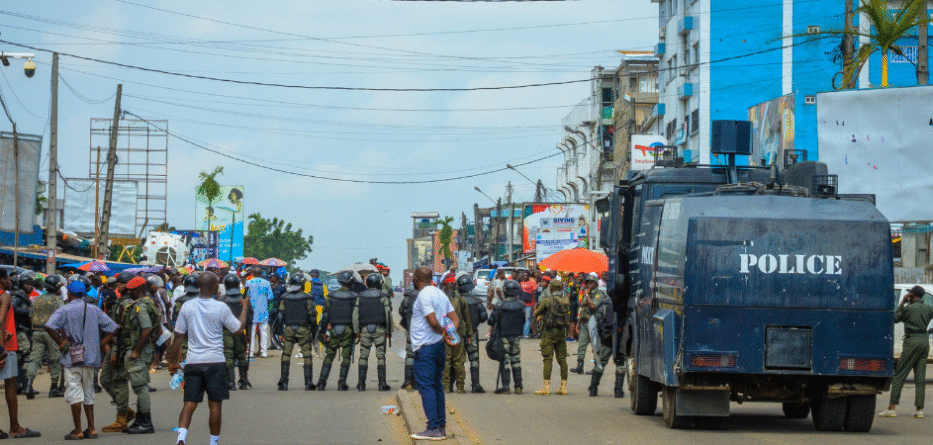
The immediate cause of the current crisis in former British Southern Cameroons can be traced to October 2016, when the Anglophone Lawyers and the Teachers’ Trade Unions of the English Sub-system of Education, frustrated by the systemic marginalization and the erosion of legal and Anglophone educational values, launched peaceful protests that were met with violent repression from the Cameroonian government. The disproportionate use of brutal military force escalated to a full-blown civil conflict. The use of brutal force to solve a political issue has engendered the so-called“Amba boys,” separatist fighters who want total secession from the French dominated Cameroon to form a new state called Ambazonia. They are dubbed as “terrorists” by the current government in Yaoundé. There have been wanton and extra-judiciary killings by both the separatists and the Cameroonian military (for example, the Ngarbuh massacre).[22]
The brutal and unnecessary crisis has led to so many killings, incidents of arson, and destruction of property and innocent lives. Villages have been wiped out. The economy is paralyzed in the Anglophone part of Cameroon. Over 6,000 Cameroonians have died in the conflict and hundreds of thousands have been displaced of whom 80,000 are refugees in neighboring Nigeria.[23] For the past to seven eight years, schools have either been operating in a dysfunctional manner or have closed. According to the International Crisis Group, the education of over 600,000 people has been affected by the conflict.[24]
Some Initiatives Undertaken to End the Anglophone Crisis
Numerous initiatives have been proposed to solve this crisis from within and outside of Cameroon. Some of them include: Swiss and Canadian mediations, the 2016 Memorandum of the Bishops of the Ecclesiastical Province of Bamenda, and the aborted 2018 All Anglophone General Conference (AGN) led by the late Cardinal Christian Tume. Moreover, the late Pope Francis was so concerned about this sad situation that he sent his Secretary of State, Cardinal Pietro Parolin on a six-day visit (from January 28, 2021- February 3, 2021) to bring a message of peace amidst the crisis rocking Cameroon.
With growing concern about the destructive nature of the conflict, the human rights abuses by both the government military and the separatists, and its adverse impact on the economy, in October 2019 the Cameroonian government organized the “Grand National Dialogue” in view of solving the Anglophone crisis. However, the neuralgic question of the “form of state,” which is actually one of the root causes of the current crisis, was regrettably not on the agenda. The outcome of this National Dialogue was the granting of the Special Status (a decentralized status of some sort) to the Anglophone regions. This was unacceptable for those who wished for a return to the Federal state model or total secession from the Francophone dominated, Republique du Cameroun.
In short, these initiatives, specifically mediation attempts and the Grand National Dialogue, have not borne the anticipated and desired fruits. Unfortunately, the conflict goes on. It is worth noting that the Cameroonian government bowed out of the initiative announced by the Canadian Foreign Minister Mélanie Joy on January 20, 2023, to facilitate the talks between the Cameroonian government and the “separatist” groups that sought a viable solution to the current crisis.[25]
The Way Forward for Sustainable Peace in the Anglophone Cameroon
Given the fact that to date, the military option by the Cameroonian government since 2016 to end the revolt in Anglophone Cameroon has failed, and given that armed resistance to Yaoundé has proven both militarily futile and continuous to wreck havoc on the innocent, alternative means must be envisaged to end the bloodshed.
The tragedy of Cameroon is a tangible proof that a political problem cannot be solved by repressive military means. Similarly, the armed struggle– with escalation and atrocity– is a sobering warning against too speedy resort to a “just revolution” no matter the justness of the cause.[26] Dialogue seems to be the most reliable and sure way forward.
Therefore, the following initiatives seem indispensable in putting an end to this conflict which has caused so much havoc to lives and property.
Firstly, the need for an inclusive national dialogue of peace and reconciliation in Cameroon where all the stakeholders are convened, government and separatists alike, is essential. A genuine no-holds barred dialogue is essential, given that at bottom this is about saving the lives of people.
Secondly, in so far as the root causes of the crisis are not honestly investigated in all humility, a true and lasting solution will never be found. Solutions like the previously mentioned Grand National Dialogue of October 2019 have not been sufficient.
Conclusion
It has been argued in this reflection that the root causes of the current crisis in the Anglophone Cameroon are both historical and political. After the First World War, Cameroon became a Mandatory Territory of the League of Nations (1919), managed by France and Britain. This territory eventually became a Trust Territory of the United Nations after the Second World War (1946). Unfortunately during independence in the 1960s, the British Cameroon territories were not given the option to become an autonomous state. This led to the Northern part voting to join Nigeria and the Southern deciding to join French Cameroon (La République du Cameroon), forming a Federal State of Cameroon in 1961, which was dismantled in 1972, becoming the United Republic of Cameroon, in total violation of the Foumban Constitution, which laid out the term for the Federation. Additionally, “in 1984, a constitutional amendment changed the country’s name from the United Republic of Cameroon to the Republic of Cameroon.”[27] To many, such a move was tantamount to the assimilation British Cameroons by La République du Cameroun.
The outward marginalization and “francophonization” of Anglophone Cameroon has caused frustration, dissatisfaction and a sense of being assimilated that has ultimately led to the “Anglophone crisis.” Consequently, when lawyers and teachers protested against this continual erosion of their Anglosaxon legal and educational heritage by the French Cameroon, they were met with brutal repression from the Cameroonian government, escalating to the current crisis which has been ravaging the British Cameroons since 2016.
Some initiatives have been undertaken to put an end this ugly conflict but in vain. Tragically, lives continued to be lost and property destroyed. Ironically, in this age of instant information, the situation barely features in the global news cycle.
A source of great hope is the visit that Pope Leo XIV will make to Cameroon from April 15-18, 2026, with stops in Yaoundé, Douala and Bamenda, the latter being in the Anglophone region. It will be a particularly important occasion to encourage the political authorities and the people of Cameroon toward reconciliation and the building of a durable peace.
Reproduced with permission by La Civilta Cattolica.
DOI: https://doi.org/10.32009/22072446.0426.3
[1]. Francis, “Address to the Participants in the Meeting of AID Agencies for the Oriental Churches (ROACO)”, June 27, 2024.
[2]. Ibid.
[3]. Ibid.
[4]. Ibid.
[5]. The territory which covers the Northwest and Southwest Regions has been called various names in the history of Cameroon: British Southern Cameroons, West Cameroon, Anglophone (English-speaking) Cameroon. Cf. Memorandum Presented to the Head of State, His Excellency President Paul Biya, by the Bishops of the Ecclesiastical Province of Bamenda on the Current Situation of Unrest in the Northwest and Southwest Regions of Cameroon, December 28, 2016 (westcamassoc.org/memorandum-bishops).
[6]. Cameroon ranked 2nd in 2023, 7th in 2022, 3rd in 2021, 2nd in 2020 and topped the list in 2019 and 2018. Cf. Norwegian Refugee Council, Cameroon: the world’s most neglected displacement crisis, June 3, 2025 (www.nrc.no/news/2025/june/cameroon-the-worlds-most-neglected-displacement-crisis).
[7]. H. N. Bang and R. A. Balgah, “The ramification of Cameroon’s Anglophone Crisis: Conceptual Analysis of a Looming Complex Disaster Emergency”, Journal of International Humanitarian Action, 76 (2022/6) 2.
[8]. Cf. Memorandum Presented to the Head of State…, op. cit.
[9]. Ibid. Those behind the accord were Viscount Milner, Secretary of State for the Colonies of the British Empire and M. Henry Simon, Minister for the Colonies of the French Republic. Cf. “British Mandate for the Cameroons”, in The American Journal of International Law 17 (1923), Supplement: Official Documents, 141.
[10]. Ibid., 138.
[11]. Memorandum Presented to the Head of State…, op. cit.
[12]. Ibid.
[13]. Cf. Ibid.
[14]. Ibid.
[15]. The “Anglophone problem” could be described in a nutshell as that feeling of frustration by English-speaking Cameroonians of having been denied their right to autonomy by the UN during independence, forcing them to vote to join the French Republic Cameroon, a “marriage” which has resulted in their total marginalization and sidelining in the state affairs compounded by the erosion of the legal and educational systems inherited from the British.
[16]. Cf. H. N. Bang – R. A. Balgah, “The ramification of Cameroon’s Anglophone crisis…”, op. cit., 2.
[17]. Ibid.
[18]. Ibid.
[19]. Memorandum Presented to the Head of State…, op. cit.
[20]. E. Y. Sobseh – C. N. Agbor – I. A. Afuhnghang, “The 1961 United Nations Plebiscite in British Southern Cameroons: Conduct, Results, Post-Plebiscite Challenges and Conflicts”, in American Research Journal of History and Culture, January 10, 2024, 7.
[21]. Memorandum Presented to the Head of State, op. cit.
[22]. On February 14, 2020, Cameroonian military with some ethnic Fulanis, raided Ngarbuh in the North West Regions, killing 21 civilians of which 13 were innocent children. Cf. “Cameroon’s Massacre Victims Wait for Justice Five Years On”, in ReliefWeb (reliefweb.int/report/cameroon/cameroons-massacre-victims-wait-justice-five-years), February 17, 2025.
[23]. N. Akua, “What Were You Expecting? A Bloodless War? How Cameroon Became Trapped in a Forgotten Standoff”, in The Guardian (theguardian.com/global-development/2024/nov/21/what-were-you-expecting-a-bloodless-war-how-cameroon-became-trapped-in-a-forgotten-standoff), November 21, 2024.
[24]. Cf. “A Second Look at Cameroon’s Anglophone Special Status”, in International Crisis Group (www.crisisgroup.org/africa/central-africa/cameroon/b188-second-look-cameroons-anglophone-special-status) March 31, 2025.
[25]. The Canadian Mediation Proposal was disclaimed by the Cameroonian Government through its Spokesperson, Emmanuel René Sadi, on January 23, 2023.
[26]. On the concept of “just revolution”, a development of just war theory and its risks and limitations, see A. F. Scheid, Just Revolution: A Christian Ethic of Political Resistance and Social Transformation, Lanham, MD, Lexington Books, 2015; A. Egan, The Church and War in the 21st Century, Pietermaritzburgh, Cluster Publications, 2012.
[27]. Cf. Memorandum Presented to the Head of State, op. cit.