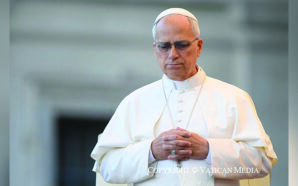


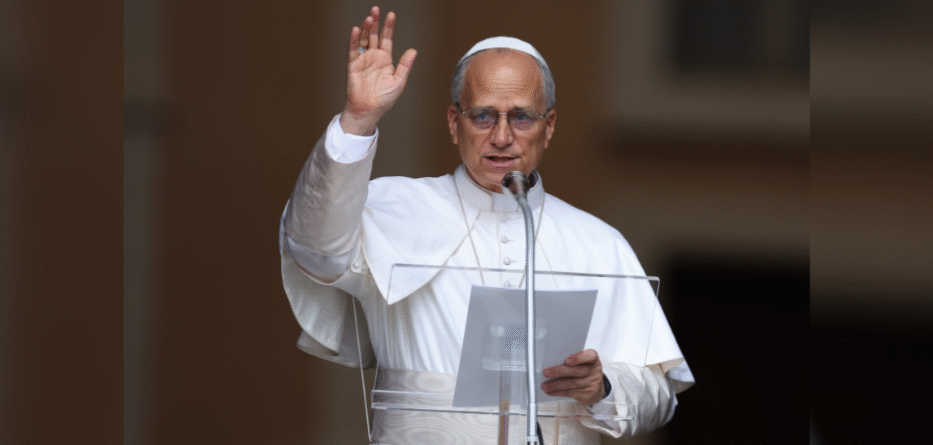
Pope Leo XIV went on vacation to Castel Gandolfo, but the Church continues to make headlines or, even better, to capture the attention of astute observers.
On July 14, New York Times columnist Ezra Klein published a 100-minute podcast interview with Kevin Rudd, a former Australian prime minister (2007-2010 and from June to September 2013), Australia’s ambassador to the USA (from March 2023 to March 2026), and an eminent China expert.
Kevin Rudd was raised in a Catholic family in rural Queensland, attended a Catholic school, and, as an adult, shifted his religious practice to the Anglican Church.
In the final minutes of the interview, among the three books he recommends to the audience is the first encyclical of Pope Leo XIV (or, as he calls him, “pope Bob the First, a guy from Chicago”), Magnifica Humanitas: “I’ve been working my way through it, and it’s a great read about the essential dignity of the human person and how A.I. uplifts that dignity or how it might impair it.”
Two days after, on July 16, a group of Nobel Laureates signed the “Rome Declaration on an Unarmed and Disarming Peace in the age of Artificial Intelligence and Nuclear Weapons.”
The assembly, which brought together more than 200 of the world’s most authoritative figures and representatives of leading international research institutions (including Catholic theologians and experts in peace and artificial intelligence), was inspired by Leo XIV’s encyclical Magnifica Humanitas.
The Vatican hosted the event from July 14–15 at “Borgo Laudato Si’” in the Pontifical Gardens of Castel Gandolfo, and it concluded on July 16 at Rome’s Capitoline Hill with a ceremony opened by the mayor of Italy’s capital, Roberto Gualtieri (a member of the European Parliament from 2009 to 2019, during which he chaired the influential Economic and Monetary Affairs Committee within the Parliament from 2014 to 2019).
The day after the signing of the Rome Declaration, on July 17, Chinese President Xi Jinping delivered a keynote speech at the opening ceremony of the 2026 “World AI Conference and High-Level Meeting on Global AI Governance” in Shanghai. In that speech, President Xi Jinping advocated for global governance of AI.
Today, influential Catholic observers are divided on the sincerity of the Chinese position and on the effectiveness of the Vatican’s stance on AI and on Xi Jinping’s China overall.
Rendering traditional theology insufficient
Speaking about China at the beginning of July, Peter Thiel, one of the wealthiest men in the world and the one who made Vice President J.D. Vance’s political career possible, stated at the Aspen Ideas Festival that Leo XIV is indirectly working for the Chinese Communists.
He argued that the pope’s calls to regulate artificial intelligence will slow United States tech growth and give China an advantage in the global AI race. (This is happening at the same time the Trump administration is ramping up its anti-communism rhetoric.) Thiel’s was not just an isolated, off-the-cuff remark.
The most direct and extraordinary mention of the Vatican and the papacy recently came in the July 15 article Thiel published in the New York-based magazine First Things, titled “The Pope and the Antichrist.”
The article is also extraordinary because it appeared in the magazine that both conservative and right-wing Christians consider authoritative, and in which Thiel calls theologians who believe in and engage in interreligious dialogue and peace “antichrist.”
Thiel’s article is a follow-up to Thiel’s exclusive, private “Antichrist lectures” held in Rome, a few steps from the Vatican, March 16–18, 2026. He singles out German Catholic theologian Hans Küng (1928-2021) and judges Joseph Ratzinger — Benedict XVI — too timid to openly declare that we live in the end times.
Thiel suggestively leaves open the question of whether Pope Francis was the Antichrist, too. During Francis’ pontificate, his accusers went so far as to accuse him of heresy. Now we’re beyond that.
Thiel thinks that we are in end times and in times of war – and in his view, a war bigger than the one with Iran or one day with China. This thinking is more extreme than the mainstream conservative Catholic right.
The Vatican today is, geographically and morally, in a central position to understand the new arms race and the attempts to create new narratives of war.
It is not theological traditionalism. It is something new and different that comes from authoritarian technocrats posing as theologians. The old political-theological categories from European Christianity are no longer sufficient to understand what is coming from America’s religion.
European elites should wake up to the fact that a new theological wave is coming to the old continent. Next September in Berlin, Thiel will receive the “Springer Award” from the multimedia conglomerate, which is very active in the populist right-wing media machine.
In these tumultuous times, when chaos is intensified by the intersection of technology, geopolitics, and war, the Vatican finds itself in a position that reminds us of the one it was in at the beginning of the 1960s.
A different Church; a different pope
In the aftermath of the Cuban Missile Crisis of October 1962, John XXIII published his last encyclical, Pacem in Terris. The encyclical repositioned Catholics’ alignments during the Cold War: away from the imagined role of the Vatican as the chaplain of the West in the confrontation with world Communism.
Pacem in Terris’s message shocked and dismayed the political, diplomatic, and theological elites in Western Europe and the USA at the time (I have recently published a book on this).
There are significant differences between today and the early 1960s.
First, today, technology (AI, but not only) plays a much greater role in politics. It is a threat not only to democracy but also to the dignity of the human person and the very idea of politics as an eminently human activity.
Sixty years ago, the so-called military-industrial complex of the leading Western superpower was at least rhetorically defending democracy. This is no longer true. For Catholics and non-Catholics alike, Leo XIV’s Magnifica Humanitas is the best document for understanding what is at stake here.
The second difference is that in the 1960s and until the end of the Cold War, the Vatican could maintain some distance from the West because it was clear what the West was. The Church was creating space for its own freedom of thought and action, because there was little question about the solidity of Western alliances. This is no longer true.
In remarks on July 17 alongside French President Emmanuel Macron, German Chancellor Friedrich Merz made it clear that Russia, China, and the USA pose strategic and defense challenges to Europe; the alliance with America is no longer guaranteed. This is a recognition that the concept of the West no longer applies to contemporary geopolitics.
The third difference is that today, on the throne of Peter, there is the first pope born in the US and the first pope born after World War II and during the Cold War. Leo XIV has a vision of the Church’s contribution to something like the West. His vision is distinct from those of his predecessors, especially from Francis.
So far, we have seen his clear responses to Trumpism and his take on AI and technology, which stand in opposition to Thiel and Silicon Valley’s “technobros.” But more is coming on that front from the Vatican in the next few weeks, especially with Leo’s trip to France in September.
Rome has learned to resist attempts to constrain the Church’s voice within the ideological exigencies dictated by the USA or Europe. The Vatican today is, geographically and morally, in a central position to understand the new arms race and the attempts to create new narratives of war.
Today, these narratives also come from very influential individuals like Thiel, who concluded his First Things article with these words: “For when the time is short and the hour late, who can hope for salvation in philosophical reticence?”
He was talking about Benedict XVI, but indirectly he was also accusing his successors, including Leo XIV.
With thanks to Global Catholic and Massimo Faggioli, where this article originally appeared.