

In May 2023, Lorenzo Fazzini, editorial director of the Vatican’s Publishing House, in agreement with Paolo Ruffini, prefect of the Dicastery for Communication, contacted Spanish writer Javier Cercas and asked him if he would agree to write a book about Pope Francis, or more precisely, to accompany him on his upcoming trip to Mongolia. When asked, the world-renowned Spanish author replied, “You know that I am an atheist and anti-clerical, don’t you?” “Yes, of course, and it is this outside perspective that interests us,” was the response.
Initially reluctant, Cercas then discussed it with his wife and friends, and they all encouraged him to embrace this unique experience.[1] He decided to say “yes,” on one non-negotiable condition: that he be given five minutes to ask the pope a question in private. “What question?” asked Ruffini, somewhat concerned. “What he believes about eternal life. My mother recently lost her husband, my father, and her only hope today is to find him again. I would like the pope to answer me, so that I can pass on his answer to my mother.” “That should be possible,” Ruffini replied, “although you will understand that I cannot make a commitment on behalf of the pope.” Cercas then states: “This last uncertainty is the most painful, for one reason: if I cannot ask the pope this question in private, this book is meaningless.”[2]
This is the unlikely starting point for a book that defies classification. A book that Cercas describes as follows: “A different kind of book, as extravagant as possible, a mixture of chronicle and essay, biography and autobiography, an eccentric experiment, a hodgepodge.”[3]
It is impossible to summarize a work of this kind: a work that effectively presents itself as a kind of Persian Letters[4]looking into the world of the Vatican, an original and disconcerting portrait of Pope Francis, a fascinating reportage on the Catholic Church in Mongolia, a strictly spiritual autobiography of Cercas, and an investigation into the mystery of faith.
Restless Atheism
Cercas is not an aggressive atheist or one who is well-versed in certainties. Raised in a staunchly Catholic environment, he lost his faith at the age of 14 after reading a story by Miguel de Unamuno, Saint Manuel Bueno, Martyr, published in 1931. This superb poetic story tells of a saintly priest who is adored in his village, where he devotes himself to the good of all, while confessing to a narrator that he no longer has faith. Cercas cannot explain exactly how this text shook his faith, because the mystery ultimately eludes him. Moreover, he acknowledges that in his conscience the reasons – or the intertwining of reasons – behind this decision elude him. He recalls how his abandonment of faith was influenced by “emigration, uprooting, and the discrediting of the Spanish Church for its association with Francoism.”[5]
For him, losing his faith meant entering a world of anguish and anxiety, a situation that is not enviable. He does not yet tell Ruffini, but this absence is a reality that weighs heavily on him: “I did not say that, during my Catholic childhood, I had not known anguish and that I had discovered it when I lost God. I did not say that this sphere occupies a tangible space within me and that this tangible space is a tangible absence and that this tangible absence is the absence of God.”[6]
Throughout the book, Cercas recounts his conversations with influential figures in the Vatican. He discusses at length the nature of faith and its relationship with reason with Father Antonio Spadaro, who, although a Jesuit, plays the role of a Dominican of firm Thomistic faith. “What you mean is that the triumph of reason in the West did not necessarily have to imply the defeat of faith.” “Yes.” “The fact is, however, that this is what happened. Perhaps it was partly the fault of the Church, which closed itself off to reason, considering it dangerous.” “Yes, but reason is essential to faith.” “Essential?” “Yes. The act of faith cannot be separated from reason.”[7] And the dialogue continues: “In the West, we have separated reason from feeling. We have set them against each other. The problem is that we believe that everything that is feeling, love, faith has nothing to do with reason, which is only calculation, method. This view of reason is very poor, abstract, cold. This rationality is not human rationality: it is computational rationality. The problem, therefore, is how we define reason, not whether reason participates in the act of faith. People reason. Your mother reasons. The people of your country reason. Faith is not a pure act of feeling. Reason is a complex factor of our humanity: it is not simply two plus two equals four.”[8]
Cercas then meets Cardinal José Tolentino de Mendonça. With this poet and writer he has an immediate understanding and rapport. Cercas agrees when the Portuguese cardinal speaks to him of faith as a “poetic intuition.” “For me, faith is a kind of intuition, a poetic intuition, which you either have or you don’t; and also a form of emotional attachment to something that is bigger than you, something that transcends you. […] But it is not a rational discovery. And this intuition, this feeling, is very difficult to convey, assuming it can be conveyed at all.”[9] Tolentino rightly speaks of the role of questions in the world of faith and the place of literature: “We Westerners have a difficult history of struggle between reason and faith, says the cardinal in his deep, velvety voice, but I, as a European, believe that this struggle does not necessarily lead to atheism. Dostoevsky, for example, said: ‘My faith arises from the furnace of my doubts.’ Therefore, we can think that even the most extreme questions that Western reason has asked can be a component of faith. And certainly Pope Francis’ faith is not a faith that does not ask questions. I believe that he likes to talk to lay people because he understands the challenges and difficulties of faith. And I also believe that reason can purify a faith that is too easy. Believing should not be too easy. Flannery O’Connor said: ‘Believing is harder than not believing’.”[10]
Cercas later returns to the theme in Mongolia with Cardinal Giorgio Marengo, who talks to him about the place of the sacred in Asia.
The writer also meets Cardinal Víctor Manuel Fernández and Sister Nathalie Becquart, who talk to him with humanity and frankness. Overall, contrary to his initial prejudices, he is struck by the seriousness and dedication of those who work in the Vatican. After all, they are workers like any others.
Bergoglio, a complex character
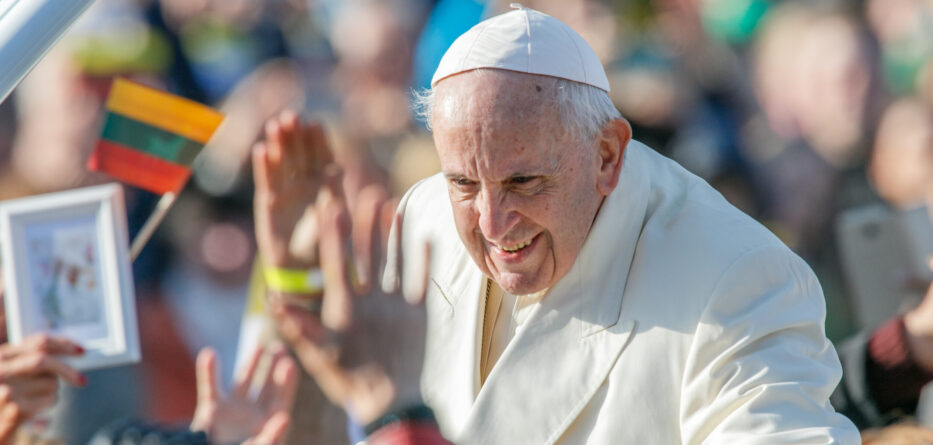
When Cercas wrote his book, Pope Francis was still alive, but the style of his book, which takes no interest in diatribes between different ecclesiastical groups, allows him to take a curious and acute look at Francis’ personality. He is struck by the contrast between the austere and reserved Bergoglio of Buenos Aires and the smiling and joyful Francis of the Vatican. He dares to describe the former, without fear, with critical adjectives: “Where is the harsh, temperamental, haughty, despotic, and ambitious Bergoglio who lived with the Argentine Jesuits for more than twenty years?”[11] And he presents this beautiful portrait of Pope Francis, the work of a Chilean poet invented by him: “This is a pope who does not speak ex cathedra. An anticlerical pope who believes that clericalism is the worst enemy of the Church. A pope who loves soccer. A pope of the poor rather than the rich. […] A pope who is too human. An Argentine pope. But modest. A pope who calls a spade a spade. An ecologist pope. […] This is a pope who thinks like an old woman of Buenos Aires dressed entirely in black whom he met many years ago: without God’s mercy, the world would not exist.”[12]
The entire poem deserves to be quoted. Cercas also makes this observation about the early Bergoglio: “Bergoglio has been accused of being conservative or ultra-conservative, of being too concerned with feeding the poor and too little with asking why they are poor, of having a ‘sacramentalist, uncritical, and welfare-oriented’ social vision, in the words of Jesuit Juan Luis Moyano.”[13] On the other hand, Cercas is struck by Francis’ prophetic freedom, his closeness to the little ones, his sense of dialogue, his rejection of clericalism and pharisaism (as understood in dictionaries, we mean).
How can this contrast be explained? A hypothesis then arises in him: “Immediately afterwards, almost without meaning to, I ask myself who Francis really is, or rather, who Bergoglio really is; I wonder if Francis and Bergoglio are the same person, or if Francis is simply a character played by Bergoglio as an actor plays a role on stage.”[14] The pope has experienced an intense inner struggle against pride and harshness. For Cercas, his election allowed him to become the Bergoglio he wanted to be from the beginning, but was prevented from being: “Perhaps Francis is more Bergoglio than Bergoglio himself, because he is the Bergoglio that Bergoglio aspires to be […]. More the Bergoglio he was trying to be–the man without aspirations, meek, good, humble, and lover of anonymity, the simple follower of Jesus of Nazareth – than the Bergoglio he had been for decades: the harsh, temperamental, haughty, despotic, scheming, and ambitious Bergoglio with whom his Jesuit brothers had had to deal.”[15] Thus, even Archbishop Bergoglio had not completely overcome the trials of his provincialate and exile in Cordoba, and “perhaps only his election as pope brought Bergoglio a certain peace with himself. Perhaps this is why Francis is more Bergoglio than Bergoglio himself.”[16]
It is a beautiful and fascinating hypothesis, which historians of the future will have to take into consideration. On the other hand, it subtly points out that, given the personality and actions of St. Peter, Bergoglio, at the moment of his election, could not have responded: “Although a sinner, I accept,” but rather: “Because I am a sinner, I accept.” “On March 13, 2013, at 7:05 p.m.in the Sistine Chapel, Bergoglio was betrayed by the solemnity of the moment and confused a concessive conjunction with a causal one: he should not have said that he accepted the office of pope “although I am a great sinner”; he should have accepted it “because I am a great sinner”; or even better: “precisely because I am a great sinner.”[17] As Simon Peter had been.
The Church as Mission
The trip to Mongolia included unforgettable encounters, especially with an extraordinary Italian missionary from the Consolata, Fr. Ernesto, who has been in Mongolia for almost thirty years. The mission in this land has been and remains difficult. The cold, cultural differences, and lack of resources all make this work unrewarding. Yet Cercas meets nuns, priests and lay people animated by selfless charity and an inner fire that makes their eyes shine. He is deeply impressed not by their words – he has heard them hundreds of times – but, as he himself says: “If spoken by anyone else, Sister Francesca’s words would seem to me to be blatantly false, not to say appallingly kitsch; spoken by Sister Francesca, they seem to me as clear and indisputable as a mathematical proof, as I try to free myself from this woman’s spell.”[18]
Cercas is impressed by their self-sacrificing lives. When he returns to Rome, he likes to surprise and provoke his Catholic interlocutors, telling them clearly: “You know, I have the solution to all your problems in the Catholic Church, and God knows you have some!” He teases his interlocutors until they dare to ask what it is. They think he is going to come up with a wisecrack, or boutade. Instead, he tells them with seriousness and simplicity: “You must all be missionaries, just like the ones I saw in Mongolia, and then your problems will be solved.”
This certainty came to him while he was talking with Fr. Ernesto: “What’s more, I have discovered the solution to all the problems of the Church […] ‘All missionaries,’ I tell him. ‘The pope is right: a Christian who is not a missionary is not a Christian. When all Christians are like you, the problems of the Church will be over’.”[19]
How can we not agree with him? We do not want to reveal whether he managed to see the pope alone, and what Pope Francis may or may not have said to him. Because, from this point of view, the book reads like a thriller, saving its revelation for the very end. But hope does not disappoint.
Conclusion
With disarming authenticity, Cercas not only bares his soul as a writer and as a person, telling us about his mother and his metaphysical anguish, which literature can only partially calm, but also gives us a subtle and admiring portrait of Pope Francis. The most surprising thing about his work is that it allows us to penetrate two great mysteries: faith and resurrection. Yes, faith is a radical rejection of mortality, just as the biblical God revealed himself as the God who brought the people of Israel out of the house of slavery to call them to freedom and life. As the American theologian Robert Jenson states: “God is whoever raised Jesus from the dead, having before raised Israel from Egypt.”[20] And this faith was at the heart of Jesus’ personal faith. In his only debate with the Sadducees, who are eternally present and will remain so until the end of time, he expresses his deepest conviction, the one that will enable him to persevere in his prayer in Gethsemane, despite his un-Socratic anguish: his “Abba” “is not the God of the dead, but of the living” (Mark 12:27a). The strongest critics of Christianity have long judged these words as a form of fascination with death, but are they not, instead, a powerful and unfailing affirmation of life? This corresponds to the question that troubles Cercas: “What if the resurrection of the flesh and eternal life were the highest form of insurrection within our reach, the superlative rebellion?”[21]
We can only thank Cercas for such an original and powerful book. But after Emil Cioran and Friedrich Nietzsche, isn’t it paradoxical that it is a non-believer who speaks so eloquently about the essence of faith?
Reproduced with permission from La Civiltà Cattolica.