

When Vatican II promoted the “full, conscious and active participation” of the faithful, one of the first things people noticed was the placement of the altar: it moved to the centre of the sanctuary, no longer distant but where everyone could gather and see.
Latin gave way to living languages. Suddenly, the community’s prayers and responses belonged to the people. Voices rose together, and the liturgy felt close, human, and shared.
Beside the altar, the ambo (lectern) found its rightful place.
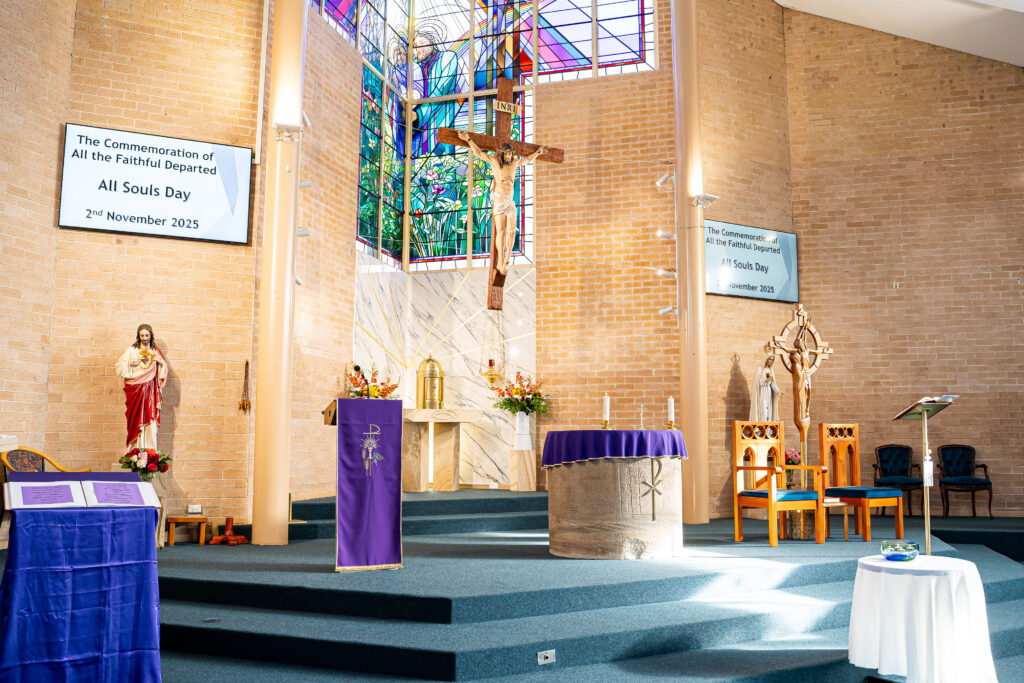
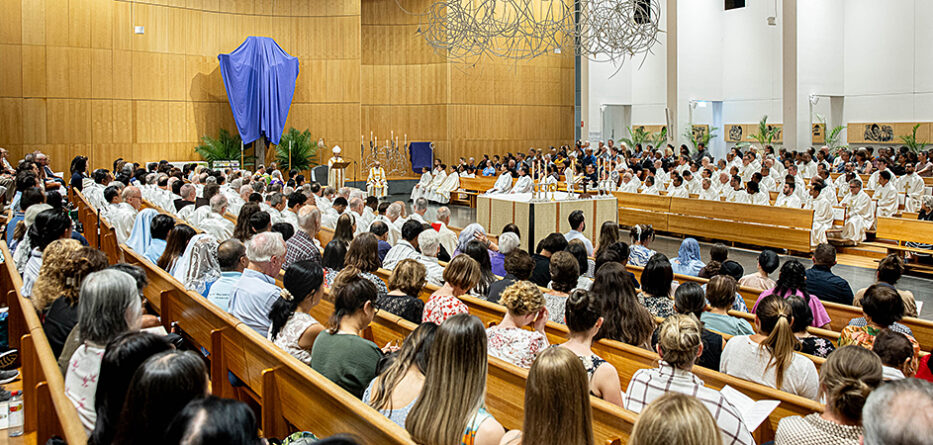
A view of the sacred space at Holy Family Church, Luddenham. Image: Donna Laurianto /ThreeTwoOne Photography/Diocese of Parramatta
Word and Eucharist stood side by side, the two tables of one celebration, inviting all to listen, to respond, and to be fed.
Ancient churches that couldn’t move their marble altars built new ones forward, drawing the community closer. Renewal met tradition, and something sacred shifted in the heart of worship.
For many, these were powerful changes.
From private devotion to community prayer
These changes improved congregational participation and reflected the public nature of worship. The focus moved to people praying together in their own language.
Private devotions, including the Rosary during Mass, gave way to a community-centred celebration. Readings of God’s Word were in local language, and communal prayers were said aloud.
It was a vast and vital development. Yet hindsight shows the new design created a “performance” dimension.
Readings are proclaimed from the ambo, and the presider faces the people, all called to project and engage with the pew-lined community.

A parishioner reads during Mass at Corpus Christi Parish, Cranebrook. Image: Alphonsus Fok/Diocese of Parramatta
The basilica still thinks it’s an empire
However, there are significant historical limits on the new liturgy imposed by the church’s design; the walls determine the prayer.
In design, form follows function, and so where architecture has dictated the creed, it isn’t easy to celebrate community in a space built for spectators.
The room preaching louder than the ritual is, in part, the result of long, narrow church design inherited from the fourth-century basilica, which is more like a concert hall than a gathering of the People of God around a banquet table.
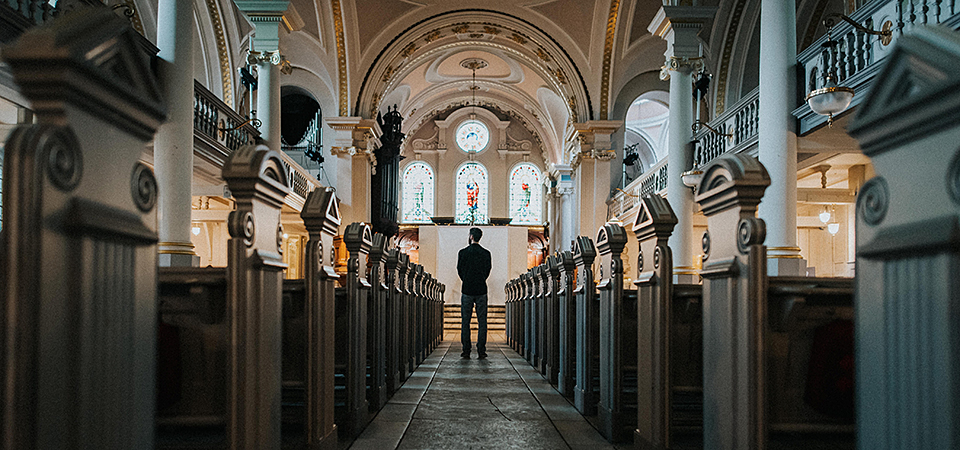
Image: Lea Fabienne/Unsplash
Architecture evangelises before anyone speaks
With sixty years’ experience of the walls deciding the prayer, liturgists, architects, theologians and many faithful now recognise its limitation.
They argue that it is hardly the way for the faithful to gather around the sacred banquet table.
They point to Jesus’ pre-arrangement of the upper room, when the apostles found it already furnished and later heard him say, “I have longed to eat this Passover with you” (Lk 22:15).
We are shaped by space, they remind us. Unity and intimacy cannot be achieved with distance and wide distribution. Real participation requires a better sense of proximity to the sacred offering.
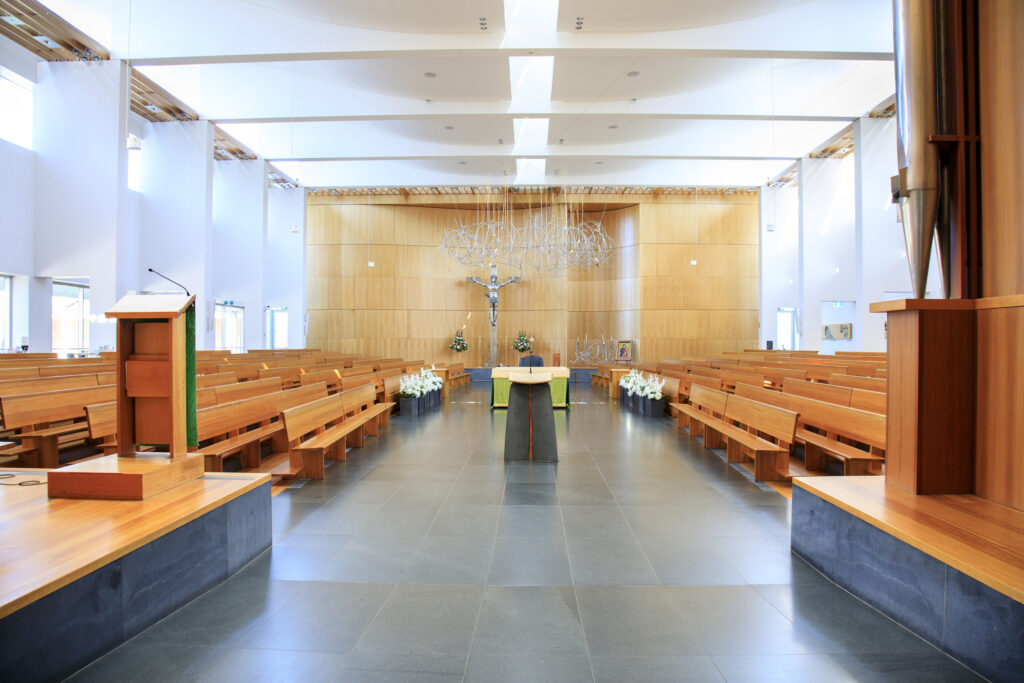
A view of St Patrick’s Cathedral, Parramatta. Image: Diocese of Parramatta
New approaches to sacred space
At the recent Liturgy Congress in Paris, there was a broad consensus that we must approach space differently.
The beautiful and prayerful liturgies we joined were around central altars. These new spaces, crafted within historic churches, evoked unity and engagement.
Everyone recognised that such a change would not be readily accepted, and opposition from clergy and faithful alike remains a challenge. Fortunately, there are already good examples in Australia.
I have launched a website, Assembly and Space, to encourage a central layout that fosters better participation and more united worship of our God.
Justin Stanwix is an active permanent deacon in the Diocese of Wollongong. After 40 years in commercial law practice, he was ordained deacon. He has a love for liturgy and especially for its artful practice dating from Vatican II deliberations. He presents and writes on current Church topics including for some years in La Croix International.
This article was originally published on Flashes of Insight. Reproduced with permission from the author.