

The Shed at the Holy Family Parish site in Emerton is a safe space for First Nations people to connect, find support, access health services, and have a yarn with their mob.
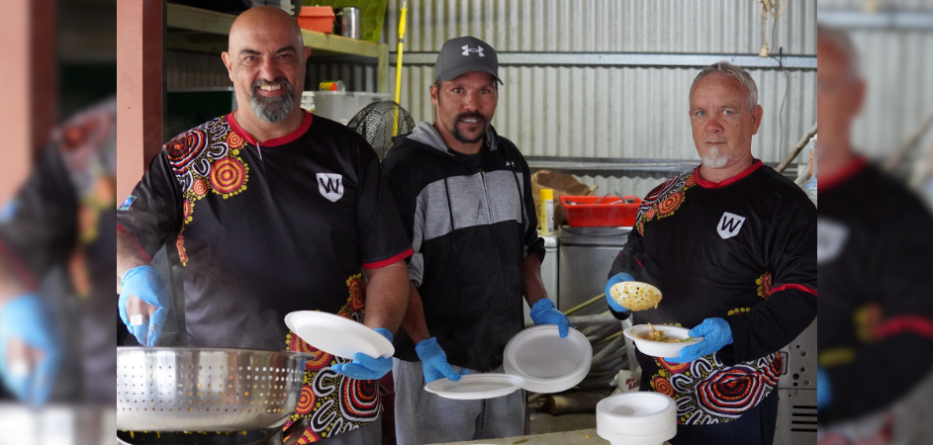
It’s a Wednesday at The Shed, and the yard buzzes with voices, laughter, and the rich aroma of a free lunch – steak on the BBQ, vegetables bubbling in a pot over the campfire.
Adults gather around the fire, while others – like T* – sit quietly with tea or coffee. “I’m no good at cooking vegetables – but rice, that’s my specialty,” he smiled.
The garden is dotted with hand-painted boulders and chairs. Inside, a framed copy of the 2008 Apology to Australian Indigenous Peoples hangs near hand-carved eucalyptus pieces and towering didgeridoos.
At the BBQ, Uncle Donald Mulholland welcomes people with shoulder pats and jokes. This gathering is about more than a meal – it’s about connection and care.
“We operate Monday to Friday, and we allow men to come and discuss their problems,” he explained.
“We wrap a lot of services around them, but that’s how we achieve it – once we’ve created a safe environment that they can open up to, we have plenty of services and referrals – but it’s about finding the right one.”
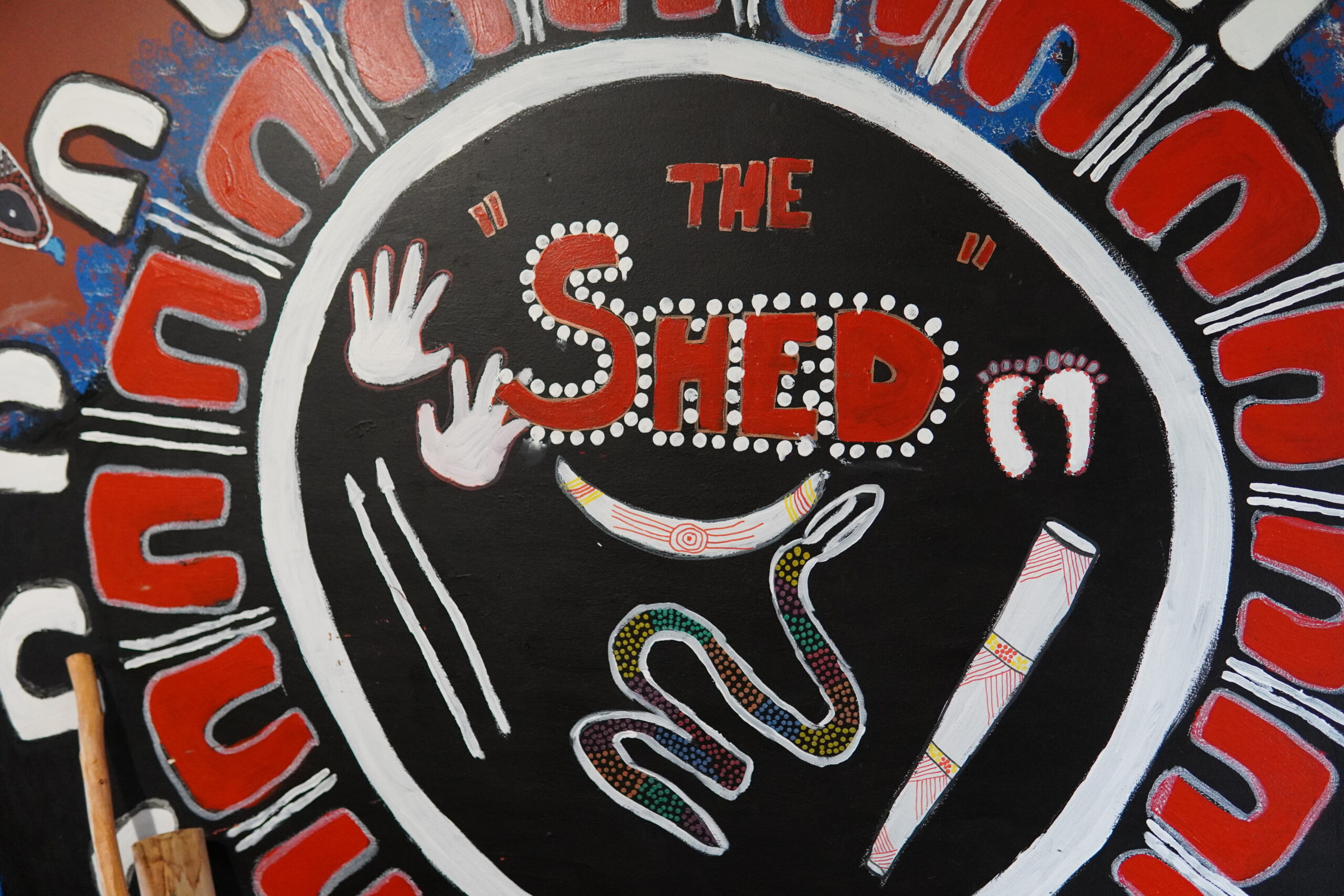
Artwork in The Shed. Image: Diocese of Parramatta
The last stop
Uncle Donald explained why The Shed is such a vital service. “For many, it’s kind of like the last bus stop,” he said metaphorically.
“They’ve already done the rounds for services, but no one’s listening. So when they come to The Shed, we try to understand what it is that they’re not saying – and we connect them to the right services.”
Founded 20 years ago by Fr Paul Hanna, former Parish Priest of Holy Family Parish Mt Druitt, together with Professor John MacDonald from Western Sydney University, and local Aboriginal leaders, The Shed was created to support men’s mental health.
“Fr Paul gave us the opportunity to utilise the church ground.”
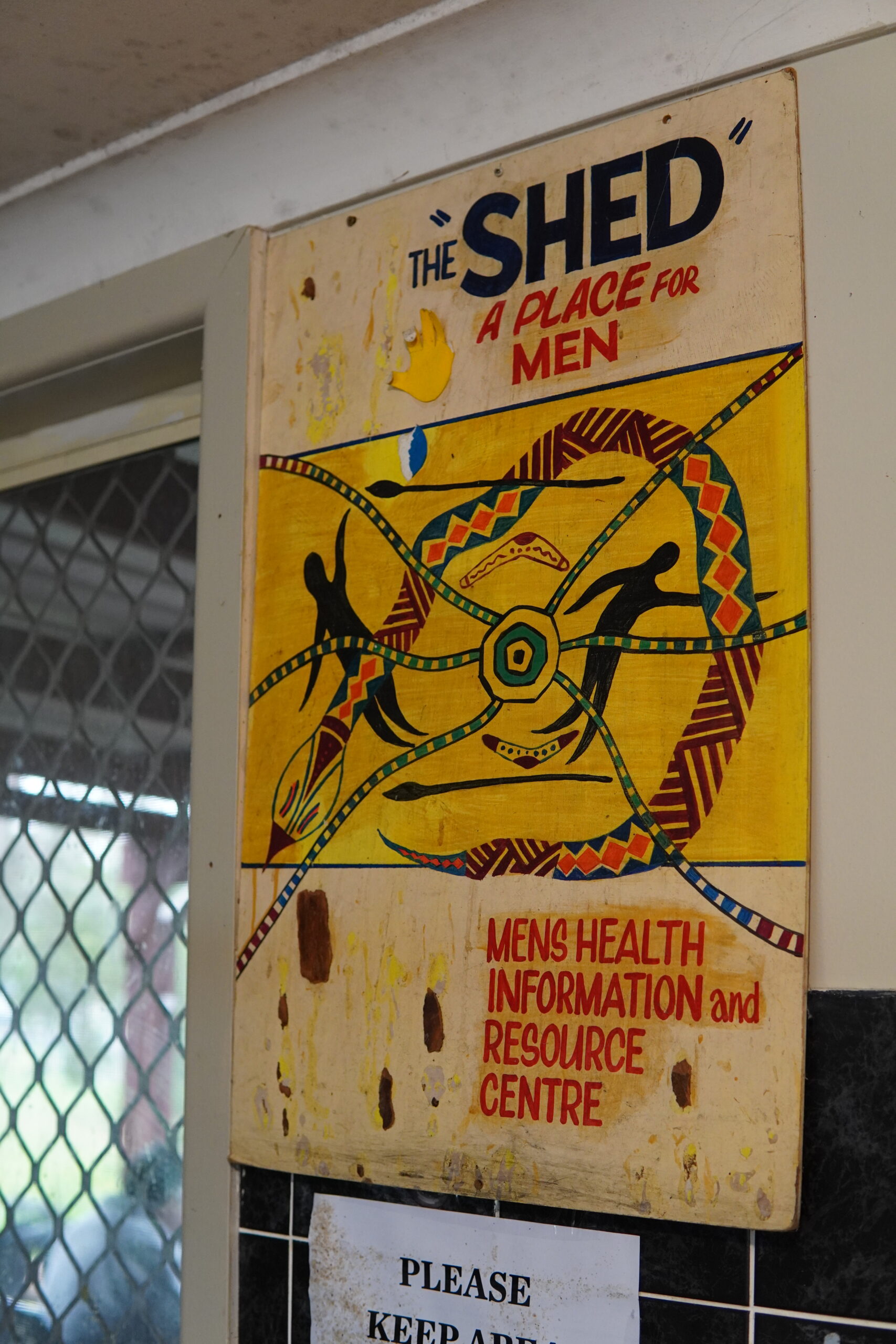
Artwork in The Shed. Image: Diocese of Parramatta
Suicide prevention
Though The Shed began as a men’s space, it now welcomes a broader community.
“It started as a ‘men’s group’… then it was ‘The Men’s Shed’ – but now we just call it ‘The Shed’. We don’t want people thinking they can’t access it.”
Still, its focus remains.
“Our target is Aboriginal males’ suicide prevention,” he said.
“We have links to mental health units in hospitals and medical centres, so we’re always ready to reach out if someone is going through a tough time, needs a review of their treatment, or isn’t feeling themselves.”
Wednesdays are open days.
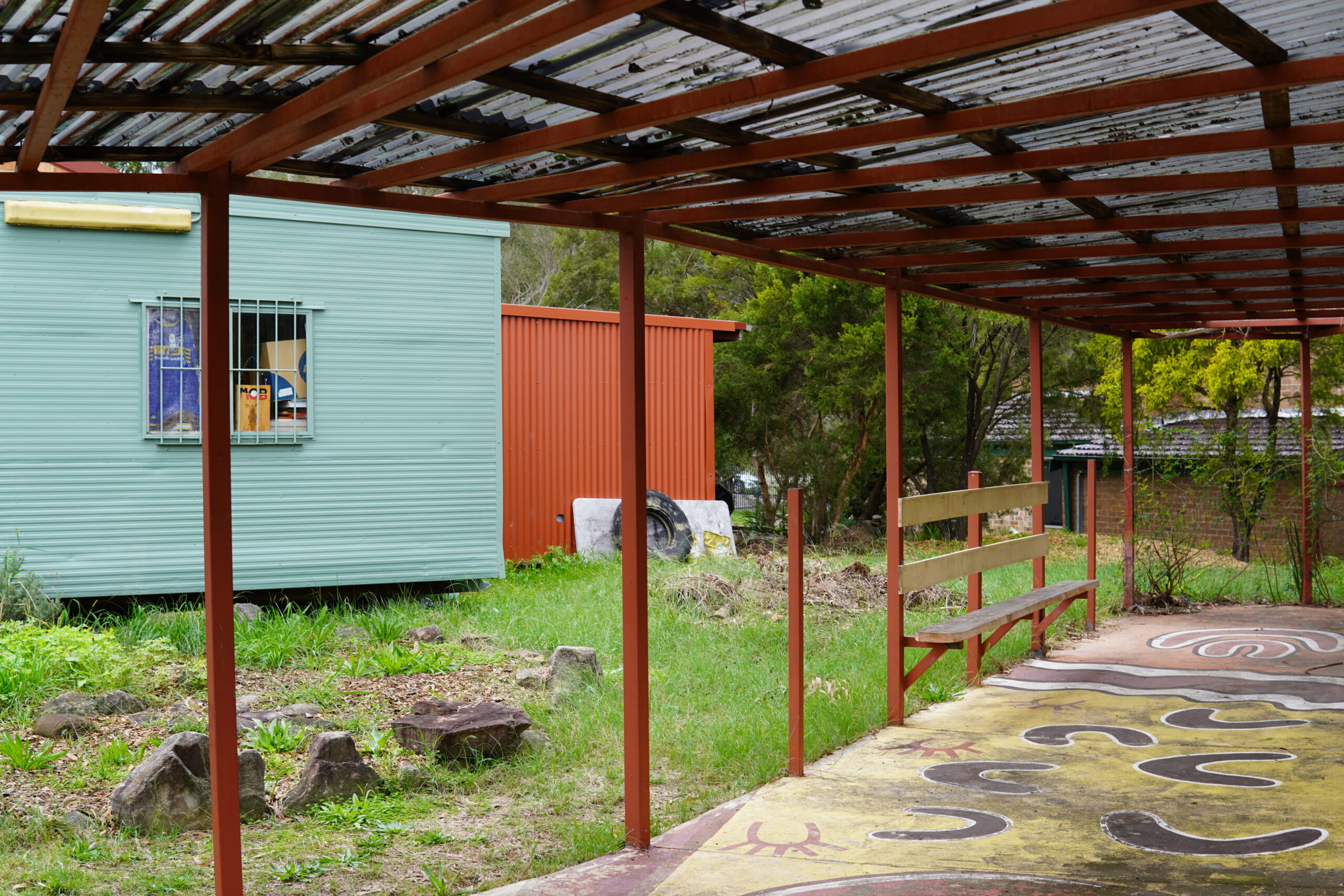
Outdoor space at The Shed. Image: Diocese of Parramatta
“We talk to them and say, ‘Come to lunch this Wednesday, I want to introduce you to someone’. And that may be a counsellor, a psych student, it might be our podiatry team, it might be homeless services, it might be settling – these are the services we wrap around them.”
Thursdays focus on culture and craft. “They’ll make artefacts – that’s where you see all the amazing woodwork.”
Men’s cooking classes also run in partnership with Yenu Allowah, an Aboriginal children and family centre. “Every second week is a men’s cooking class.”
The Shed is supported by WentWest (Western Sydney Primary Health Network) and Western Sydney University. Still, Donald sees the need for more funding.
“My vision is that it’s not broken, so it doesn’t need to be fixed… but the structure does,” he said.
“We get funded yearly but I’m looking for longevity: long-term funding to support our services.”
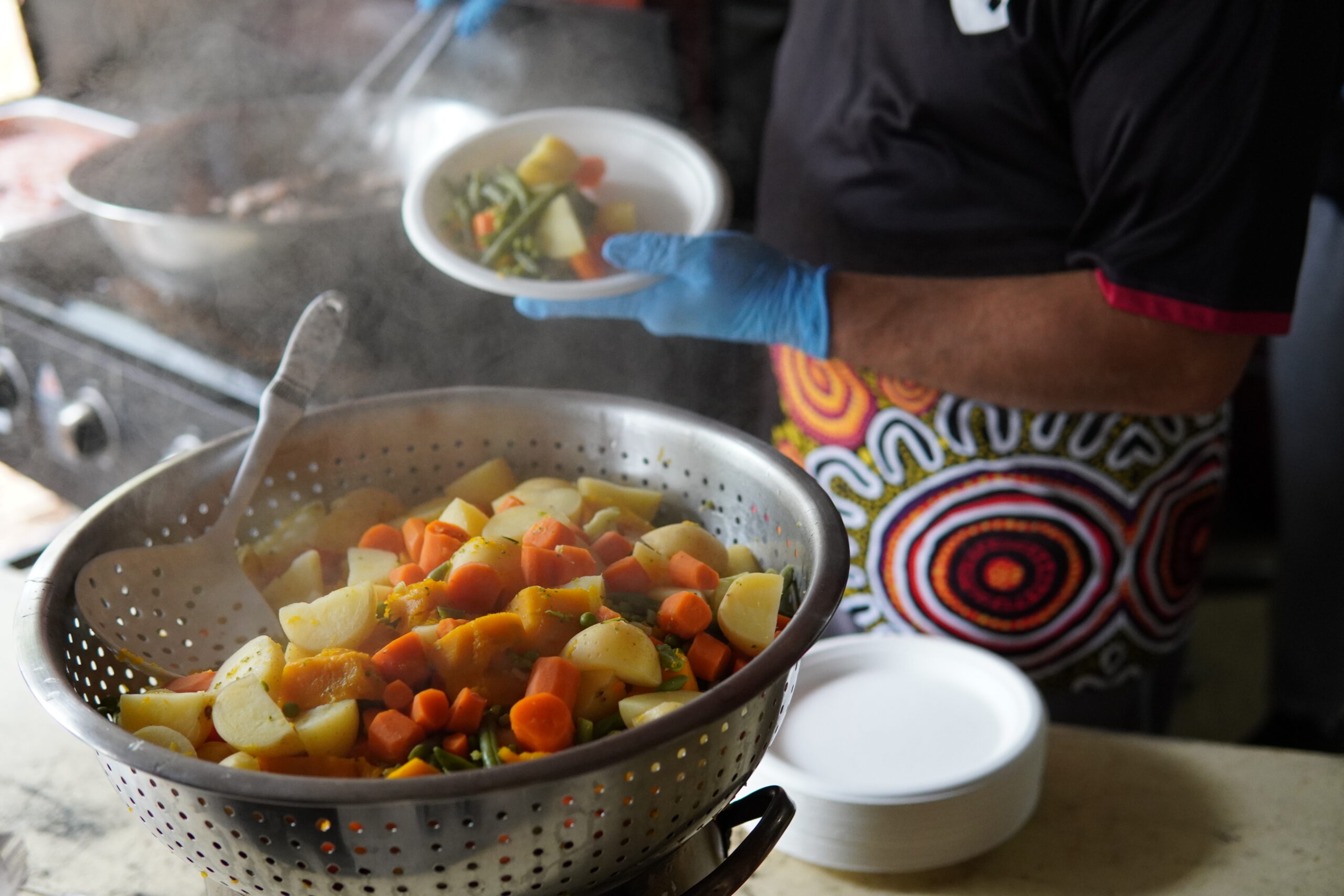
A meal being prepared by members of The Shed. Image: Diocese of Parramatta
A shared mission – The Diocesan Pastoral Plan
The Shed’s work aligns closely with the Diocese of Parramatta’s Pastoral Plan for a Synodal Church 2024 – 2028, which prioritises inclusive, culturally safe spaces and stronger relationships with Aboriginal and Torres Strait Islander peoples.
Alongside The Shed, Catholic Care Western Sydney and the Blue Mountains – the Diocese of Parramatta’s social welfare agency – is one of several community-focused organisations based in the Holy Family Parish precinct in Emerton, as well as Holy Family Primary School, Jesuit Refugee Services, and Baabayn Aboriginal Corporation.
Learn more about The Shed.
Name withheld.